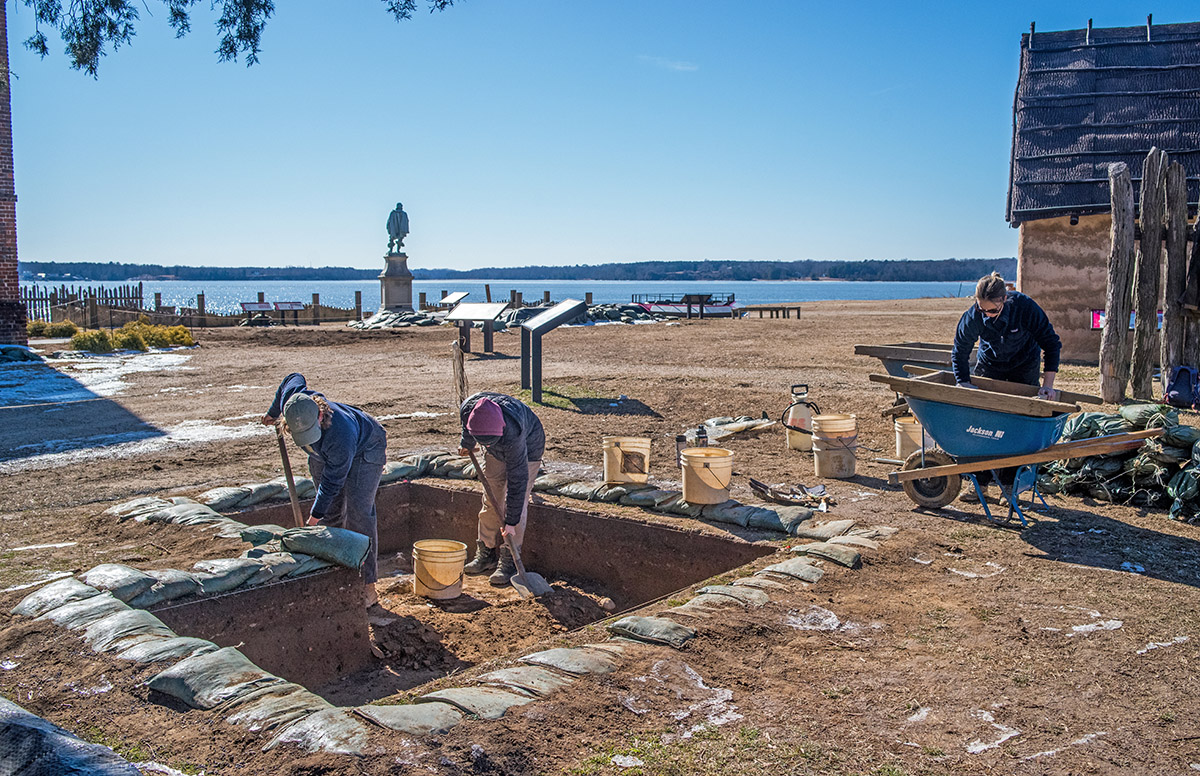
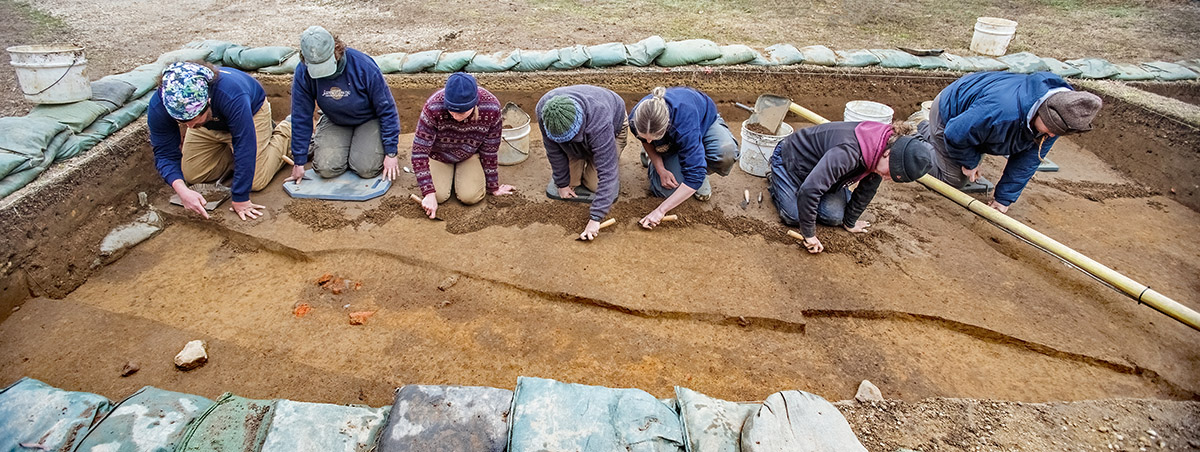
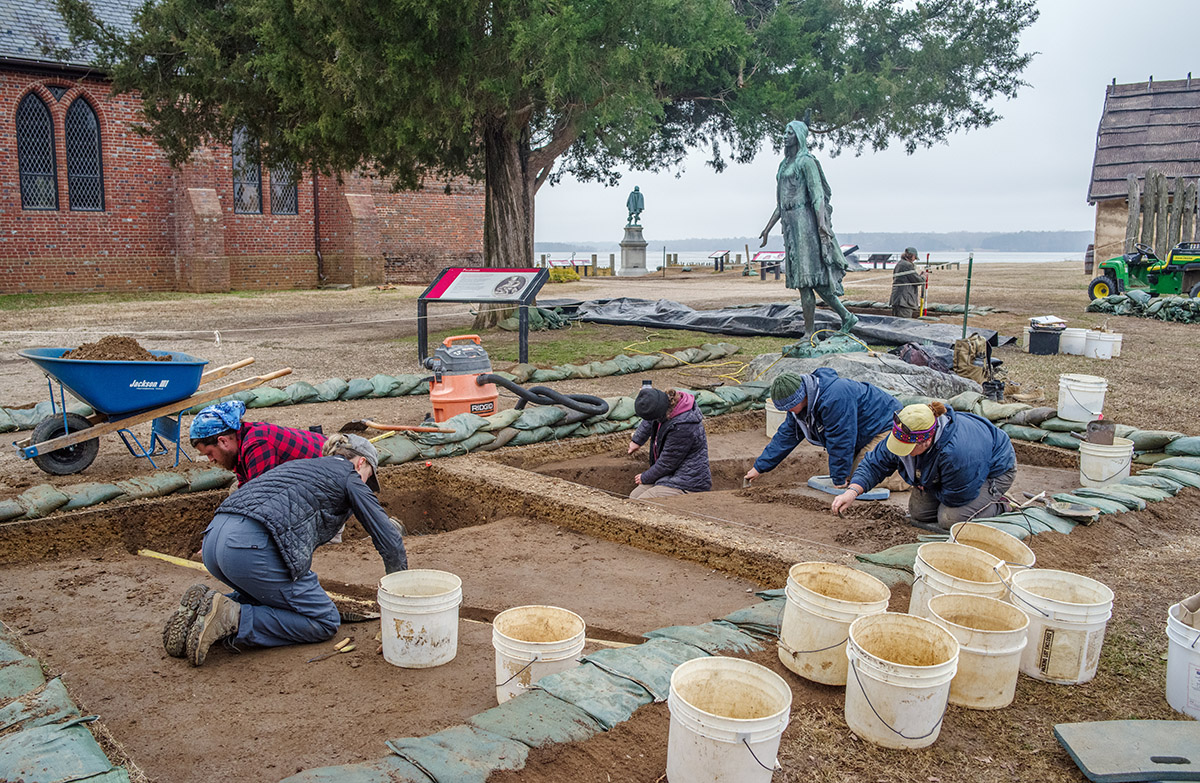
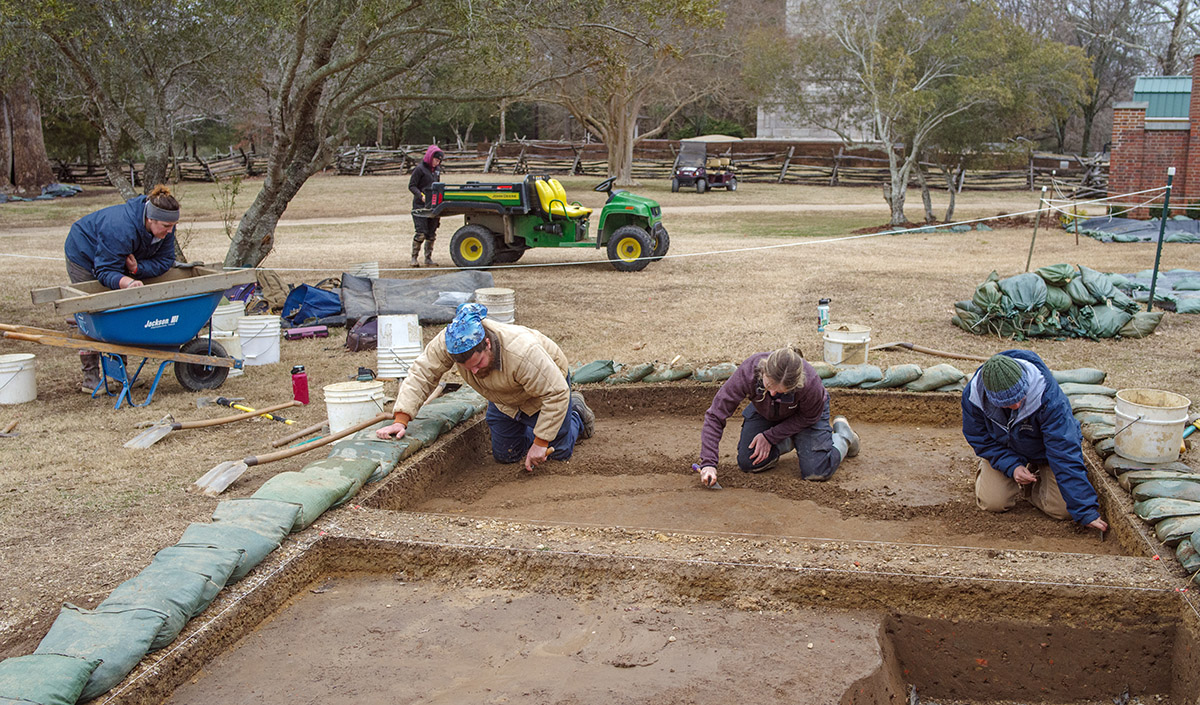
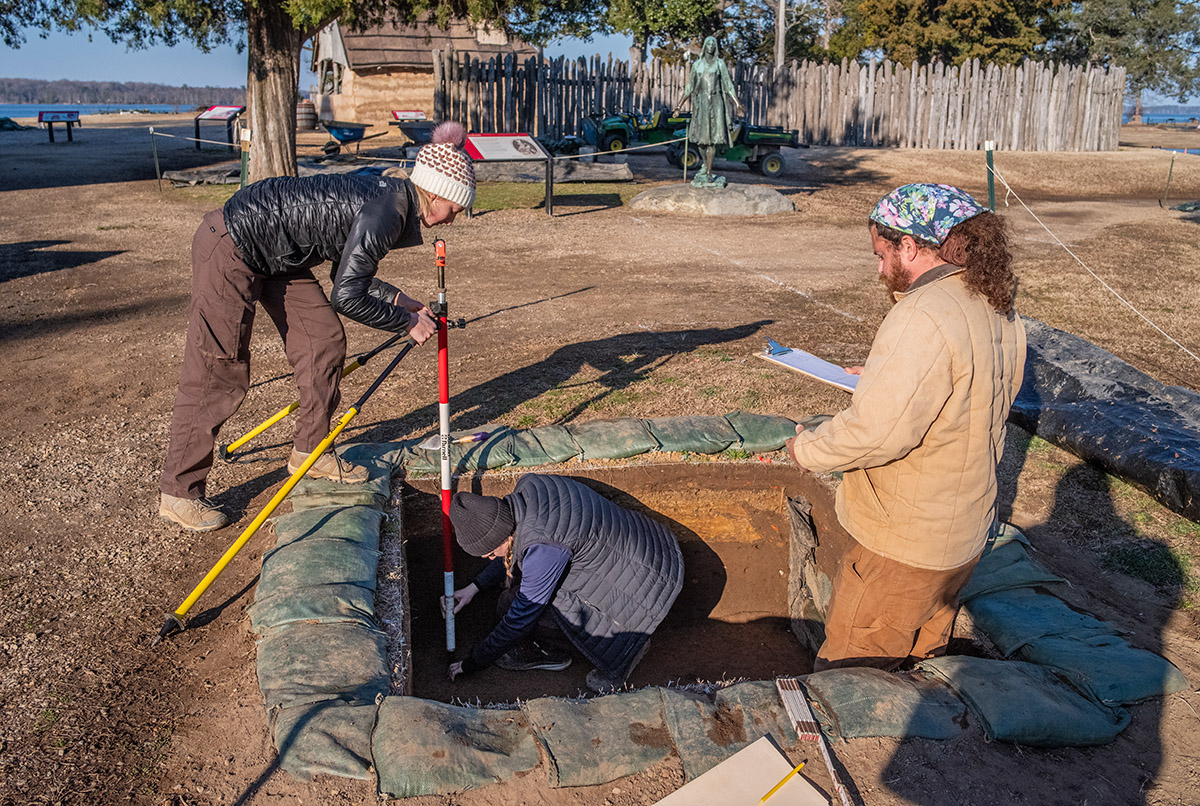
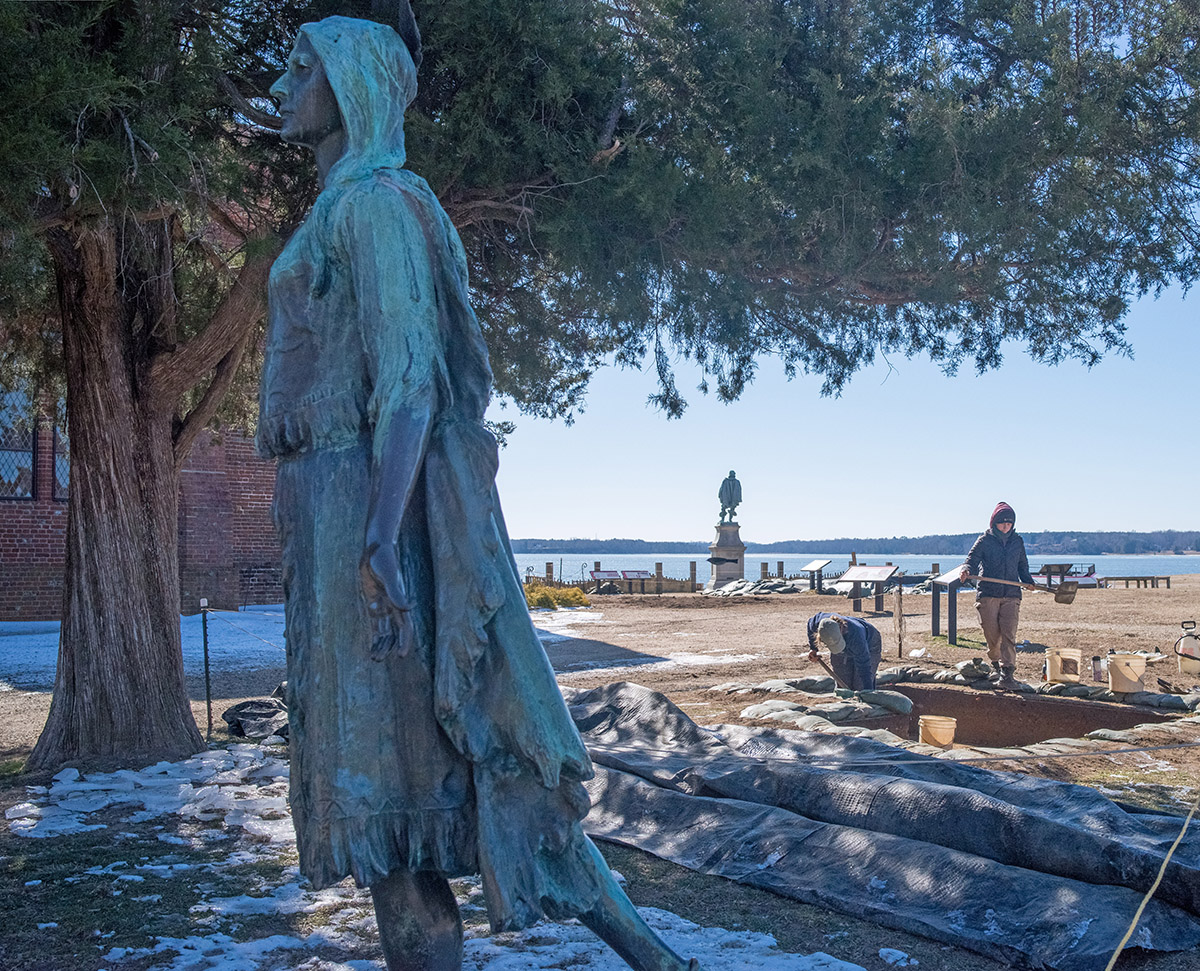
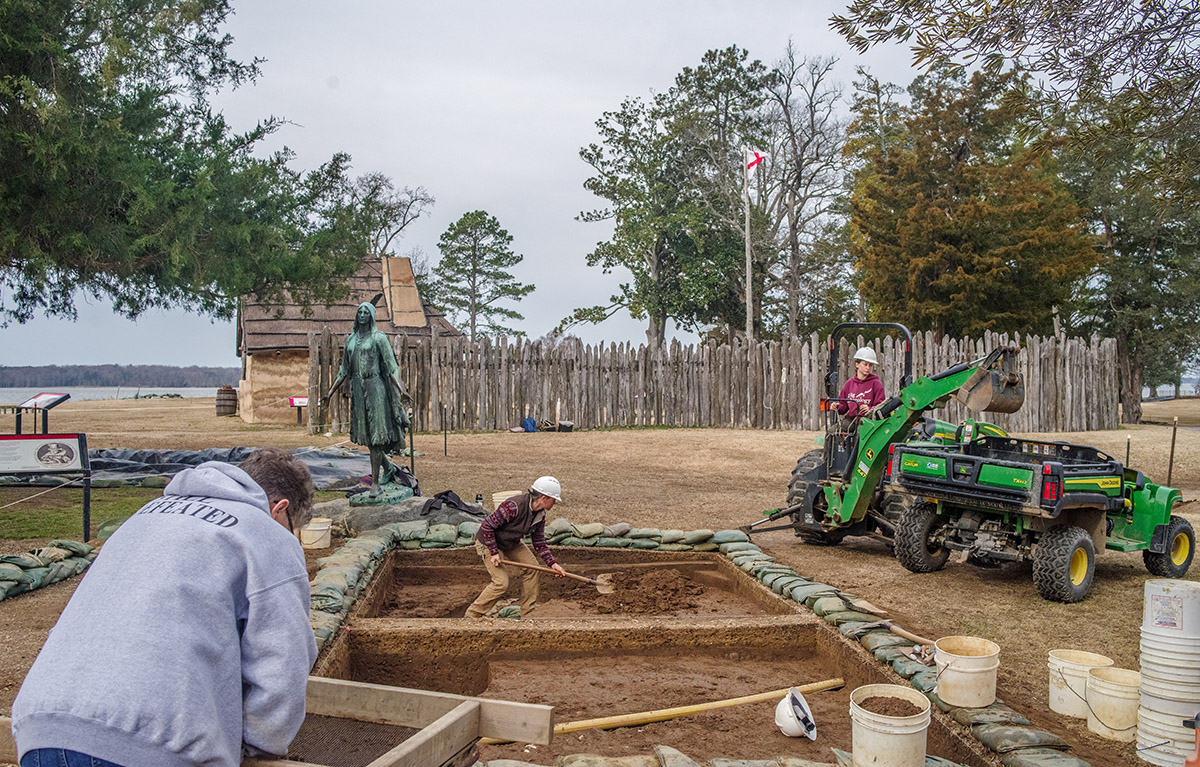
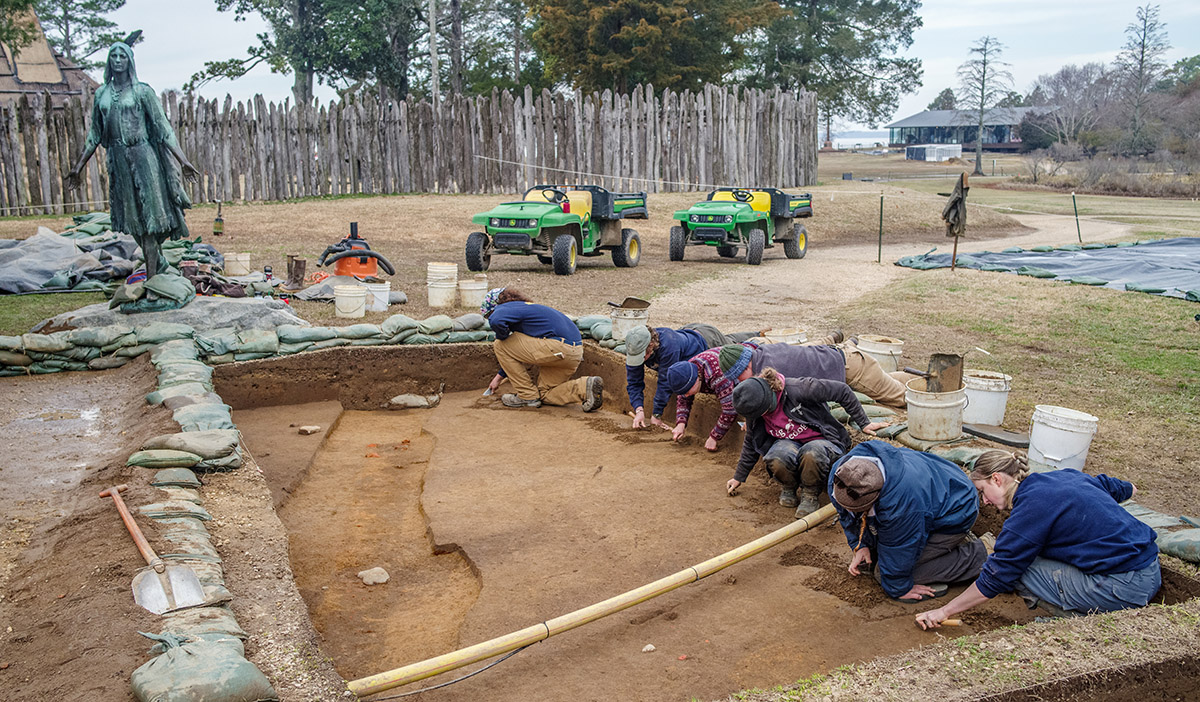
North of the Memorial Church, at a site called “North Church” by the archaeologists, the team is working furiously to excavate the areas that will be affected by upcoming construction. Workers will soon break ground on a pathway that spans from James Fort to the Archaearium museum. The pathway will be raised, allowing the site to be used even during flooding, and will also be ADA compliant, enabling wheelchair users to more easily travel the length of the Preservation Virginia portion of Jamestown.
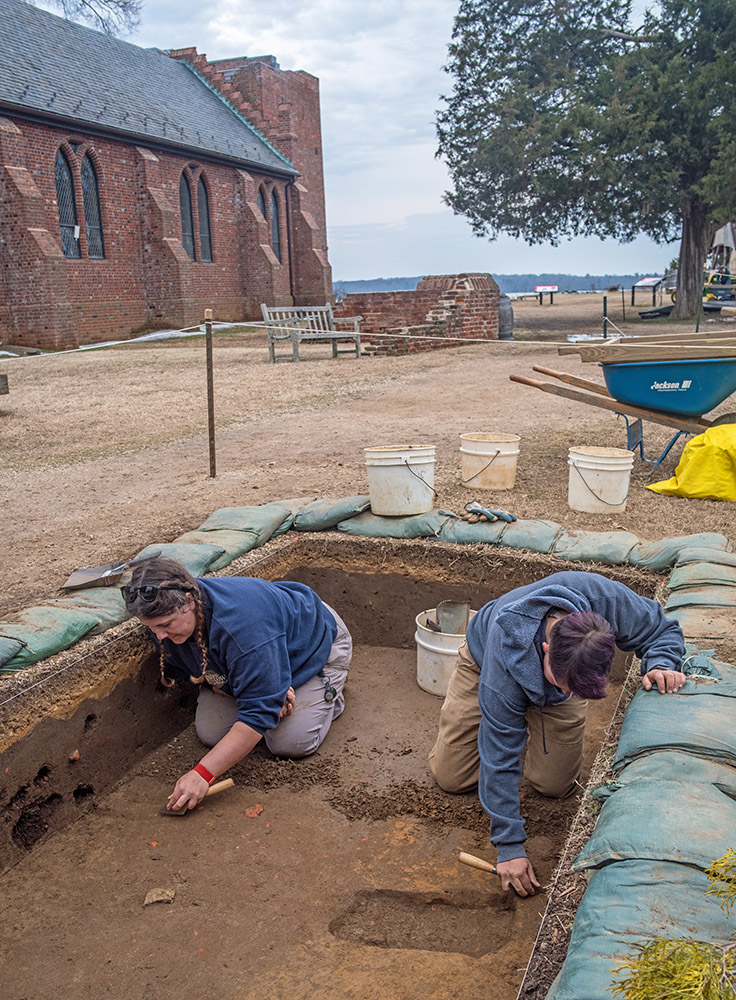
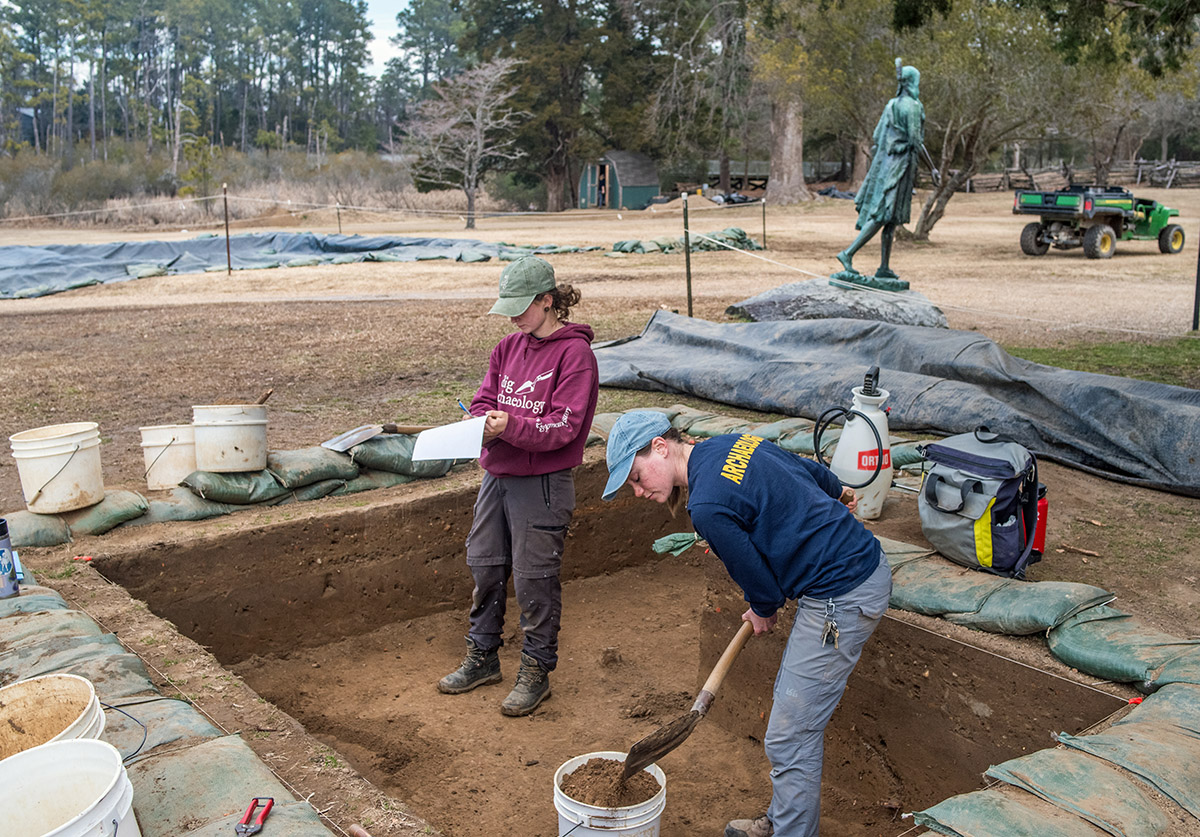
The eastmost excavations opened last month, close to the beginning of the proposed path, have been completed. Staff Archaeologist Caitlin Delmas and Archaeological Field Technician Hannah Barch found part of a boundary ditch here running east/west that has turned up in other squares to the west as well. The ditch separates the church property from that of John Howard, a colonist who patented the property to the north in 1694. Caitlin and Hannah also found fence postholes here, running parallel to the ditch. The ditch cuts part of the postholes, indicating that the ditch is newer than the postholes. Both the ditch and the fence postholes served the same purpose, separating the two properties, and the archaeological evidence suggests there were multiple iterations of fence posts in the same locations, with replacements likely installed when the original posts rotted.
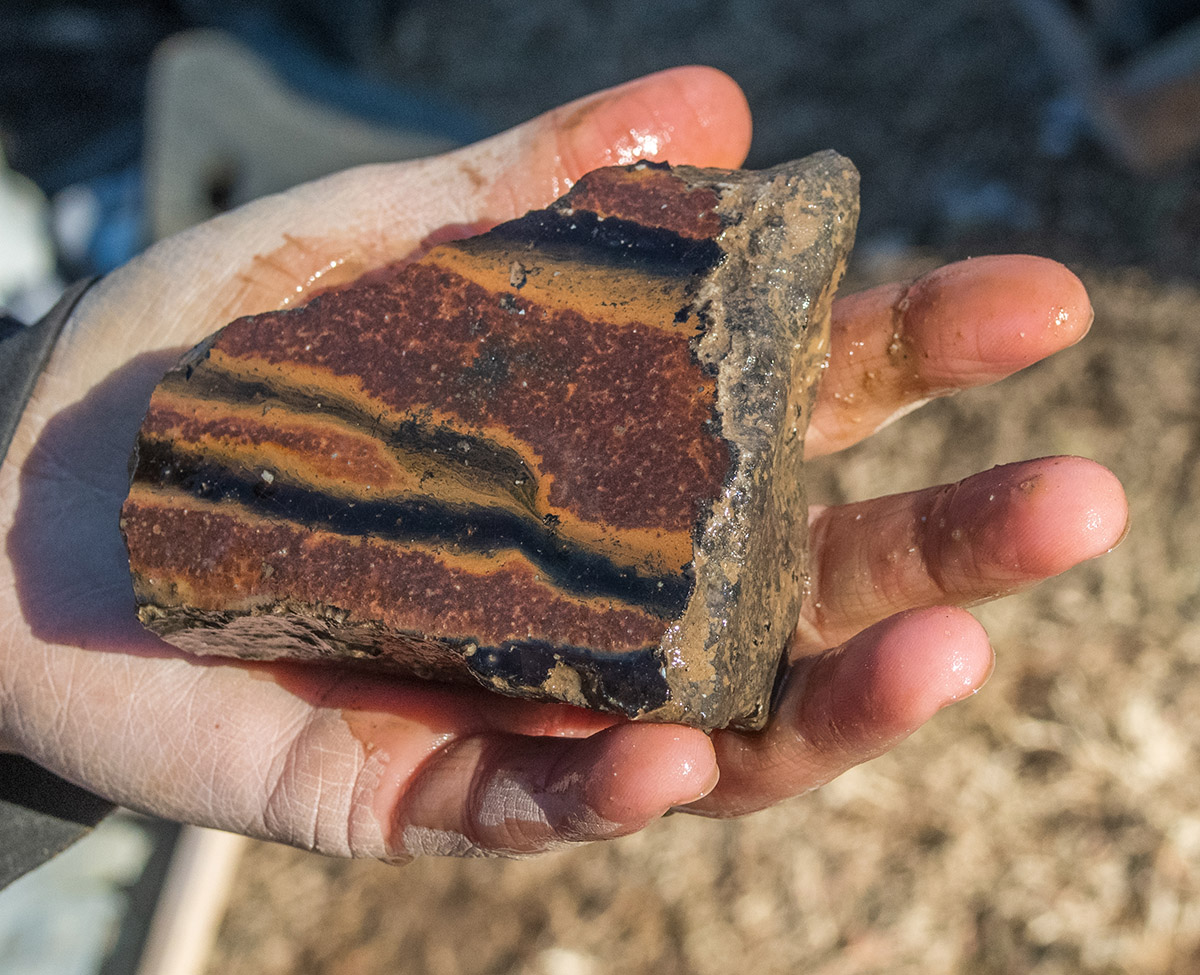
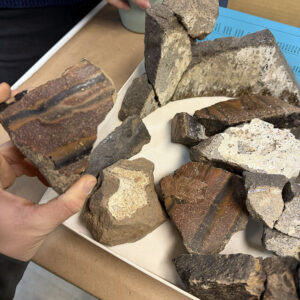
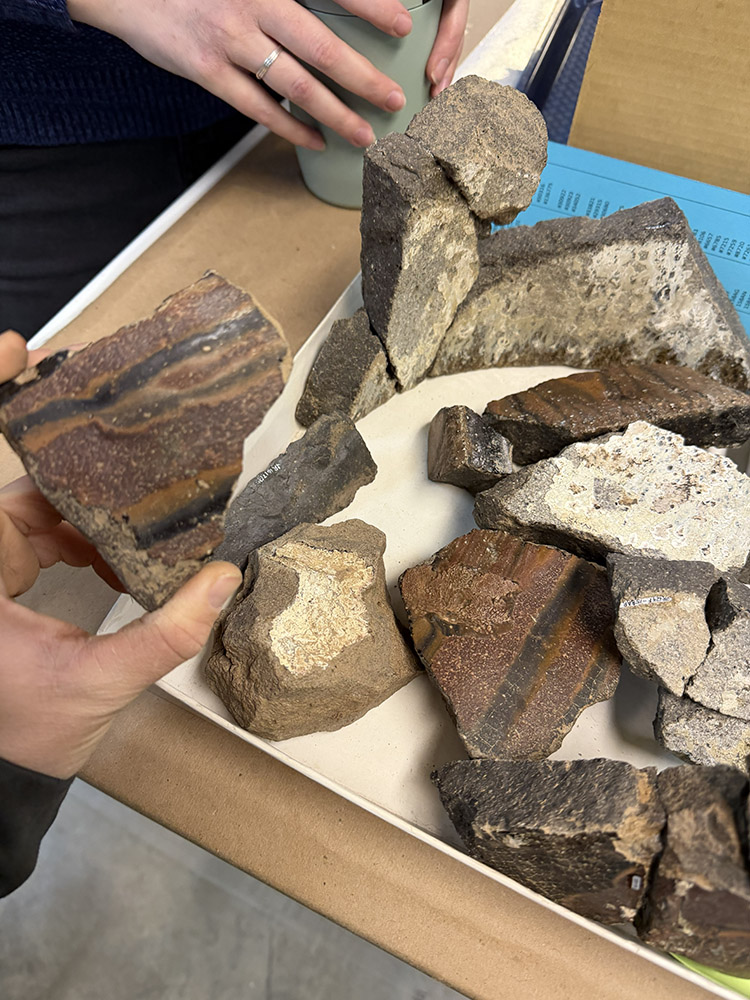
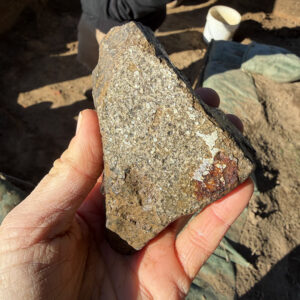
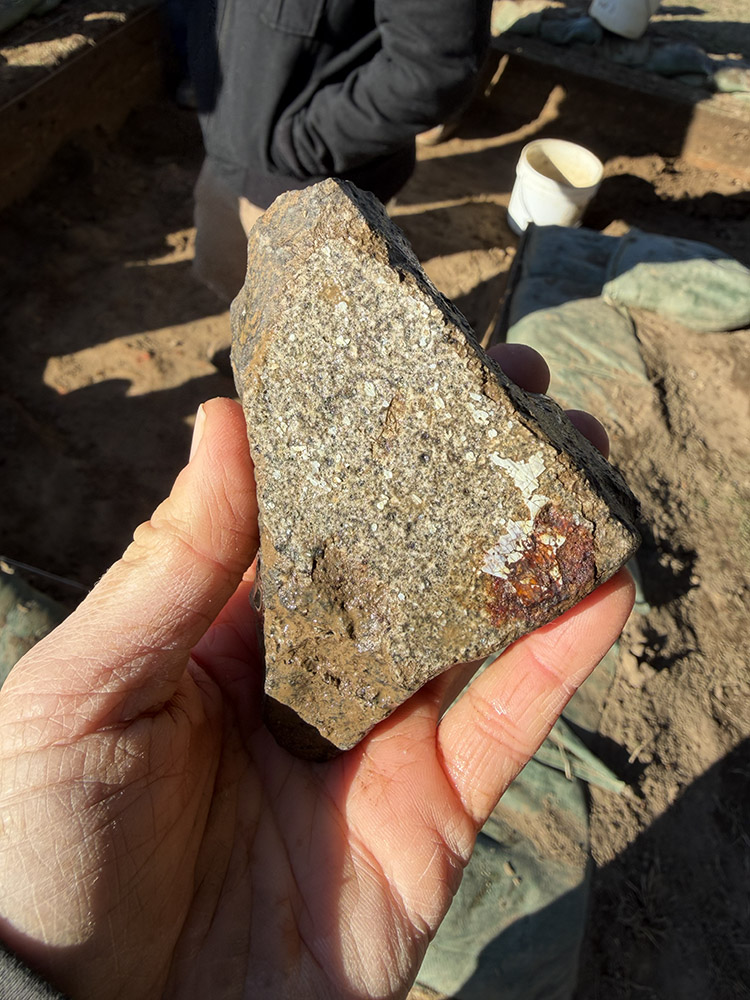
A large, thick sherd of ceramic with striking brown, orange, and black residues on the exterior was found in these eastmost excavations this month. This fragment is part of a melting pot. Melting pots were used for different types of activities which required extremely high heat. The melting pot at Jamestown may have been used to make a “trial of glass” that was sent back to England in 1609. Senior Curator Leah Stricker is excited to see if the sherd mends to the rest of the vessel, some of which is on display in the Archaearium museum.
In the westmost square, called the “Tetris Square” by the archaeologists because its “L” shape resembles a piece from the video game, Staff Archaeologists Natalie Reid, Ren Willis, and Archaeological Field Technician Eleanor Robb have discovered another portion of the churchyard/Howard ditch. Including previous excavations, the team have now found both ends, 130 feet part, matching the dimensions listed on the plat of John Howard’s property. As with the eastern side of the ditch, Natalie, Ren, and Eleanor have found postholes here that were once part of a fenceline separating the two properties. The archaeologists have also found three additional postholes in this square that are currently of unknown purpose.
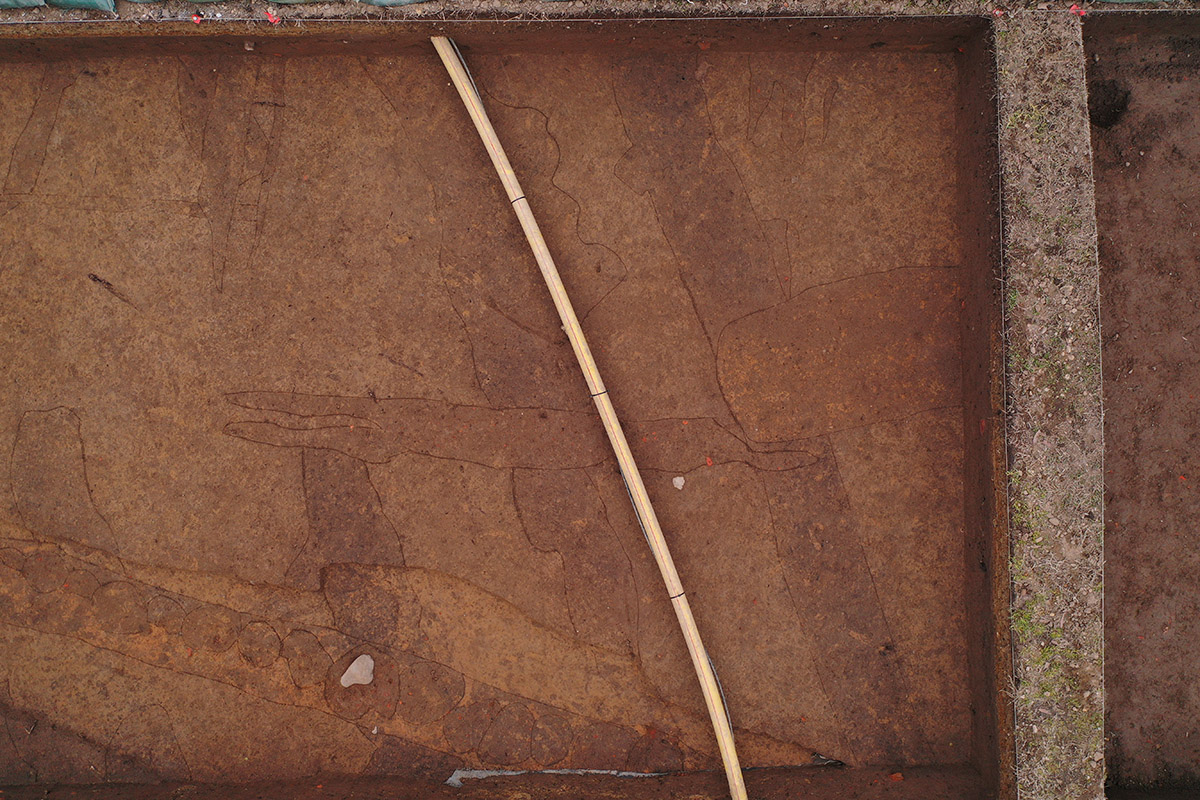
Moving to the squares a few feet to the east, the team discovered planting furrows dating to 1607/1608. These furrows are among a group of them discovered in this area over the past several years, this new section being the northmost extent of the furrows. Senior Staff Archaeologist Anna Shackelford explained that other sections of these furrows have been found inside the footprint of the Memorial Church, and also outside the south wall of the Church. The furrows predate the first church of four to be built on the same spot there (the 1617 church) by around a decade.
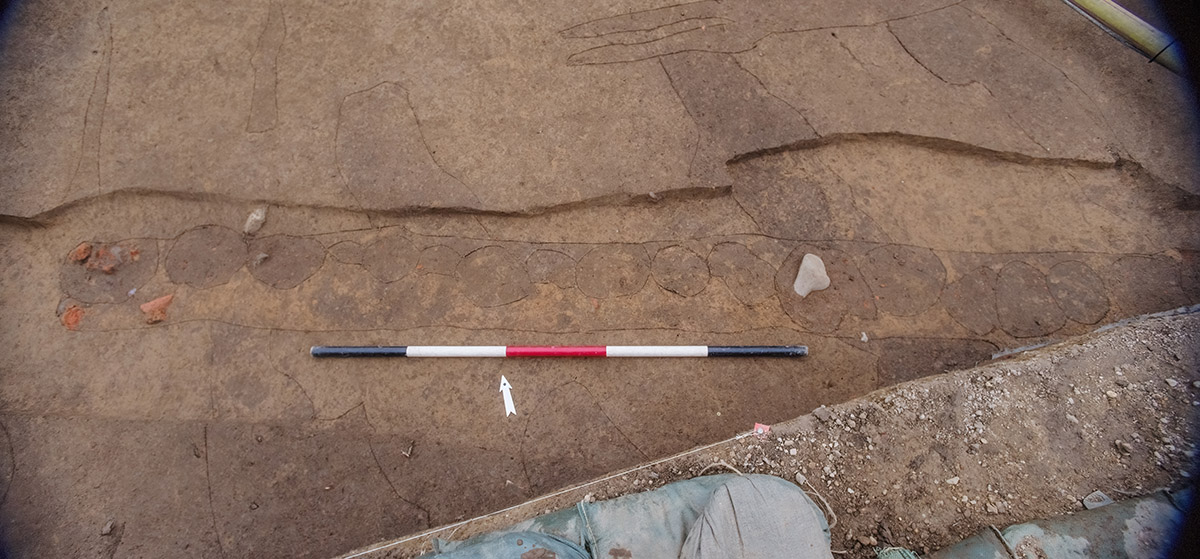

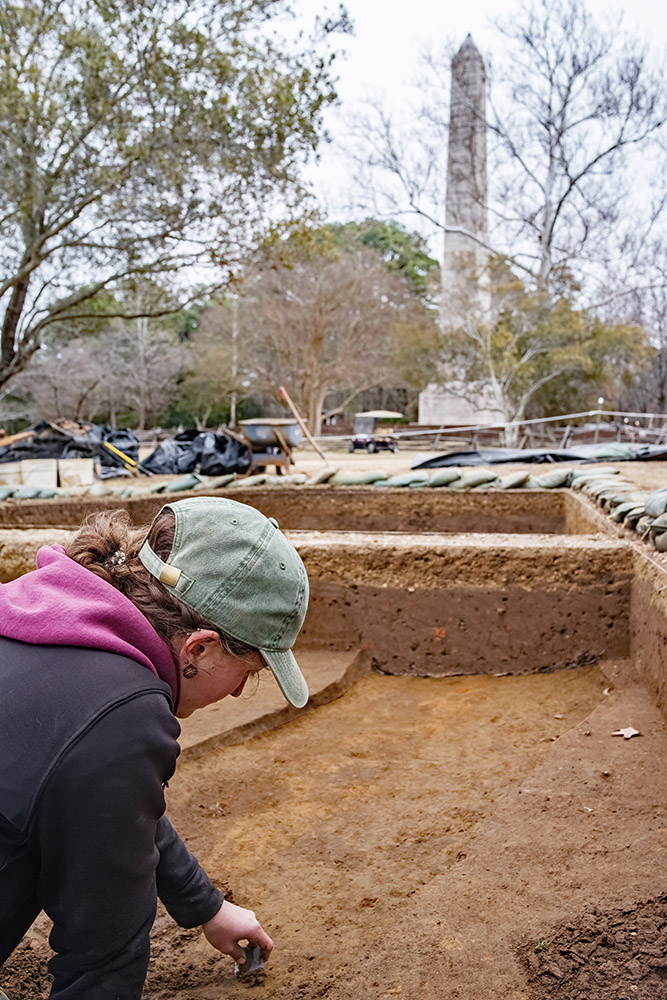
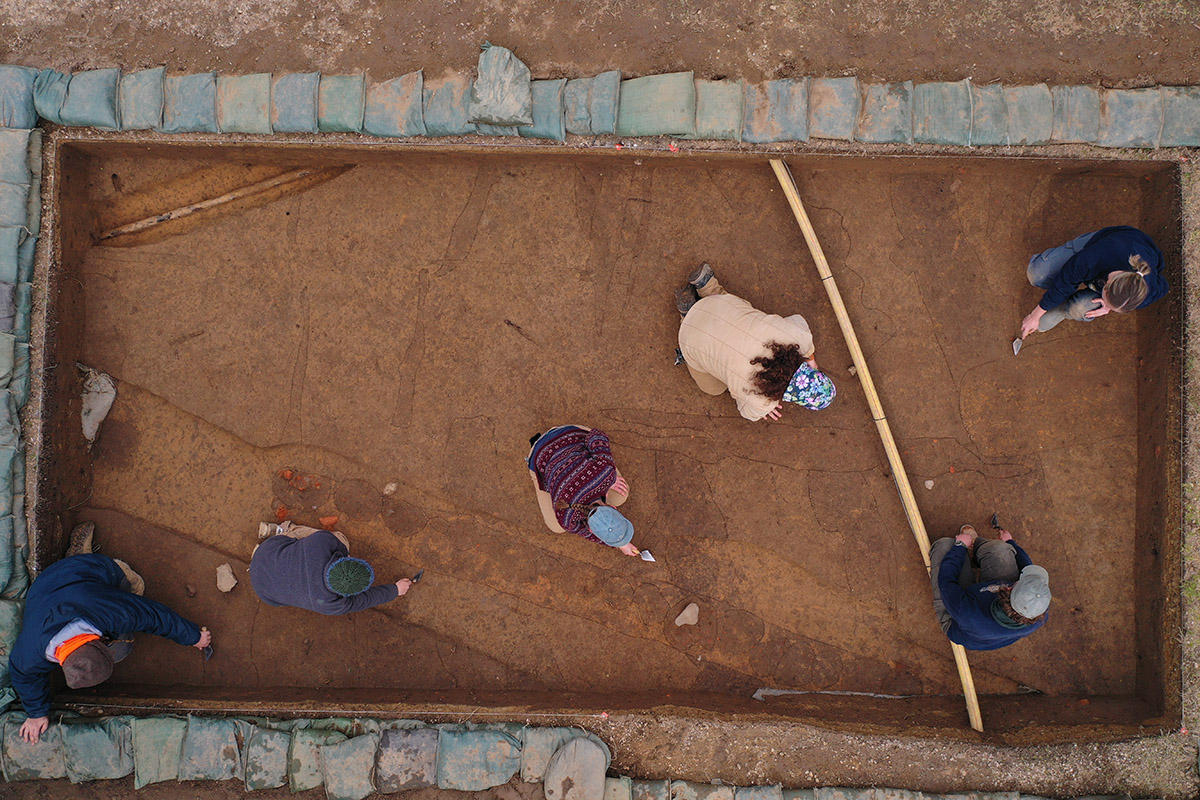
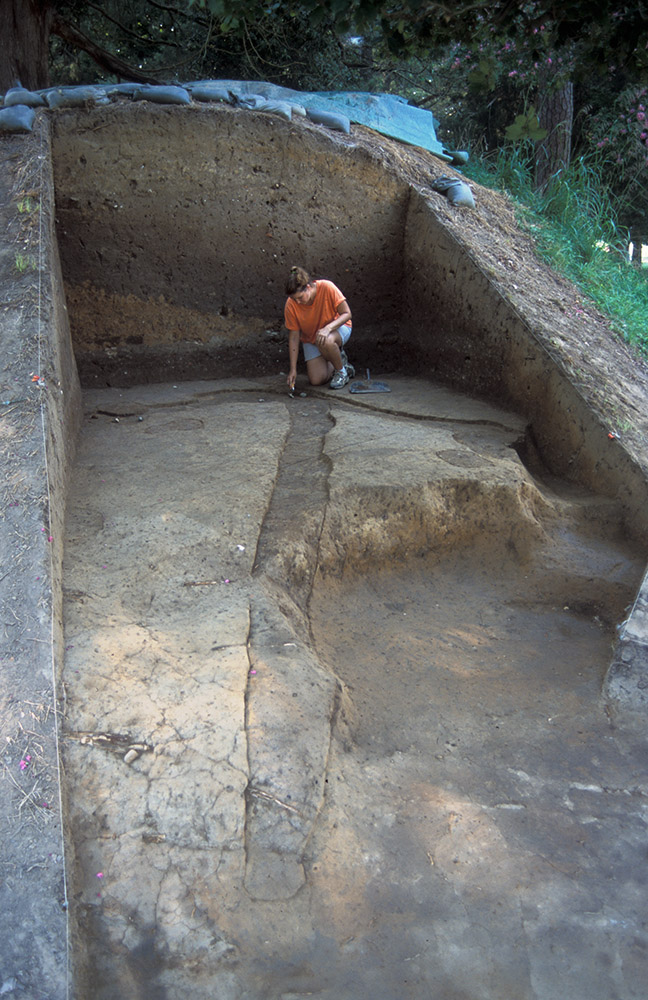
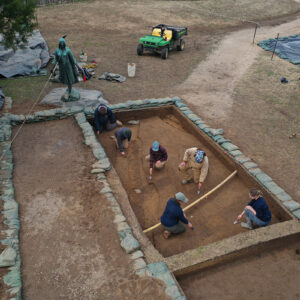
Perhaps the most interesting feature to be exposed during the excavations is the footprint of the 1608 palisade extension. This wall of logs was the northmost section of an expansion that transformed James Fort from a three-sided structure to a five-sided one. This northern wall of the 1608 extension was discovered by archaeologists in 2009 but not all of it was exposed. The team knew that the wall should pass through some of the squares they were opening and they were not disappointed. The wall’s post molds — that is the rotted wood-stained soil where each log once stood — are readily visible. This extension cut the planting furrows, meaning that the furrows are older than the extension. The furrows run parallel to the triangle fort’s east wall, a possible clue that they were situated with respect to the 1607 fort and were created very early in the settlement’s existence.
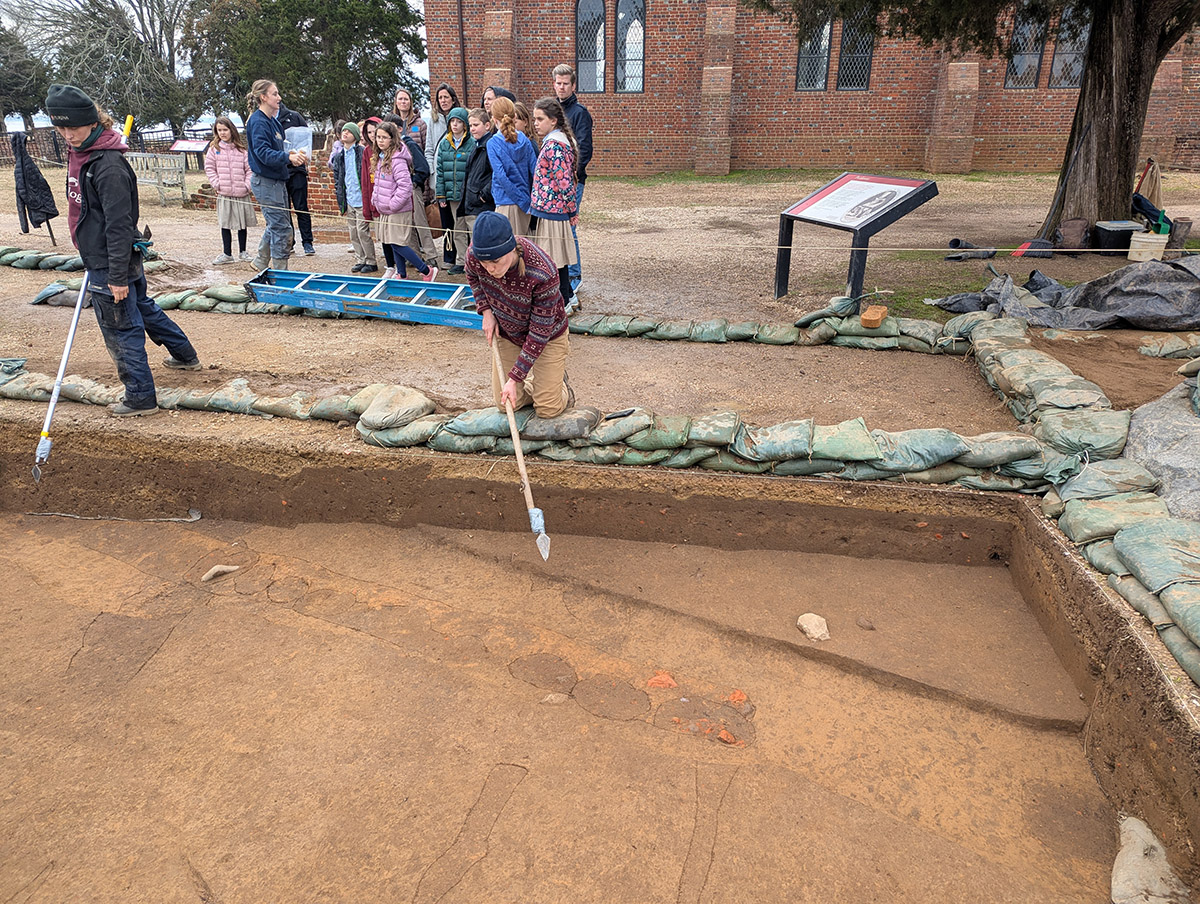
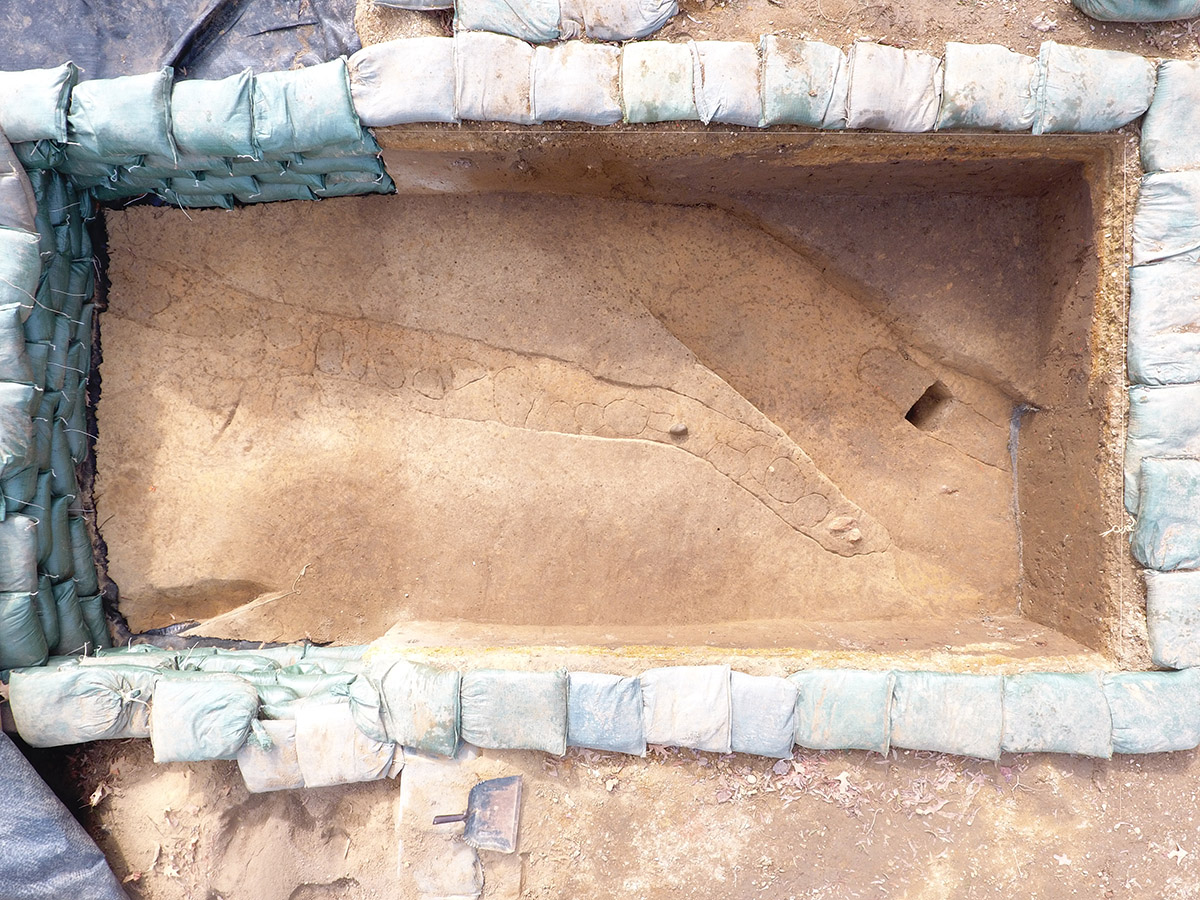
The post molds really stand out, even to the untrained eye, but just as interesting is where there aren’t post molds. There is a break in the line, about 2.75 feet wide, that is almost certainly the location of a gate. In 2017, along the same wall but several feet to the east, the archaeologists found another break in the palisade, but this one was smaller. The ends of the palisade on either end of that break were offset from the wall’s normal angle by several degrees, forming a tiny hallway that might have been a sally port. Just to the north of the palisade in the current excavations lies a burial which cuts one of the planting furrows, indicating that it’s newer than the furrow. Multiple thin features, likely plowscars, blemish the squares containing the palisade extension.
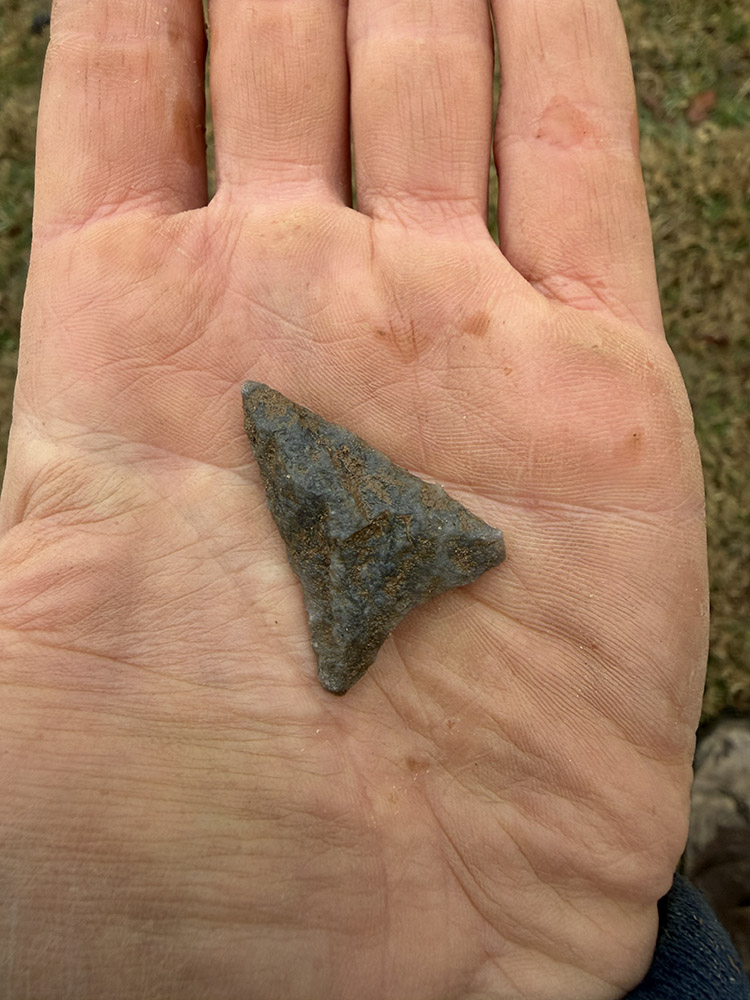
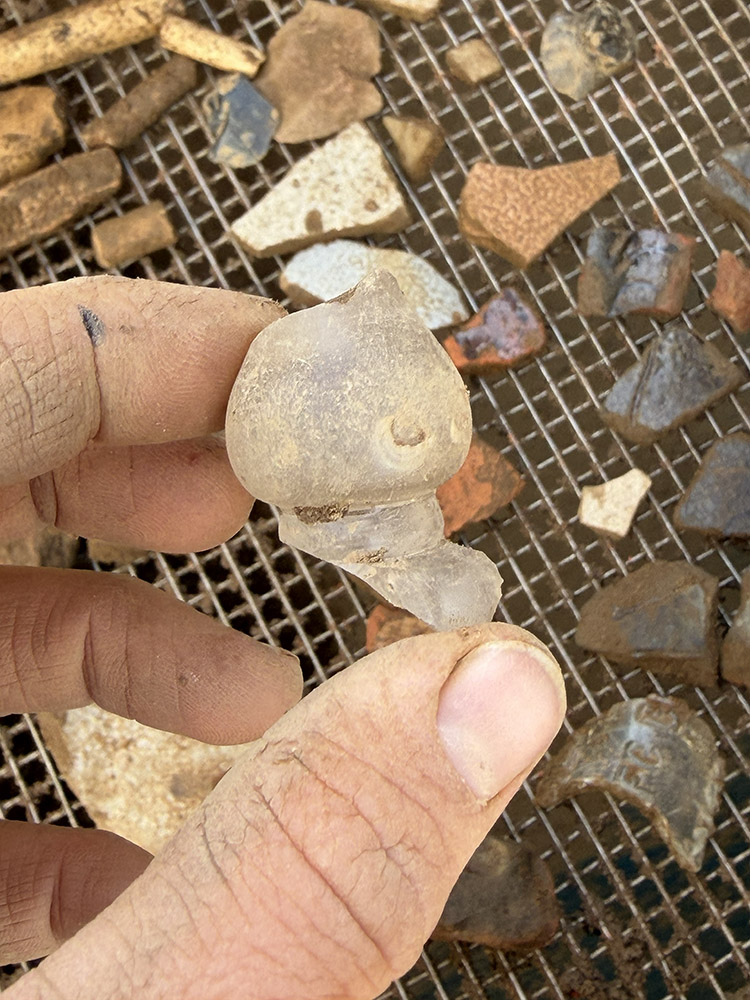
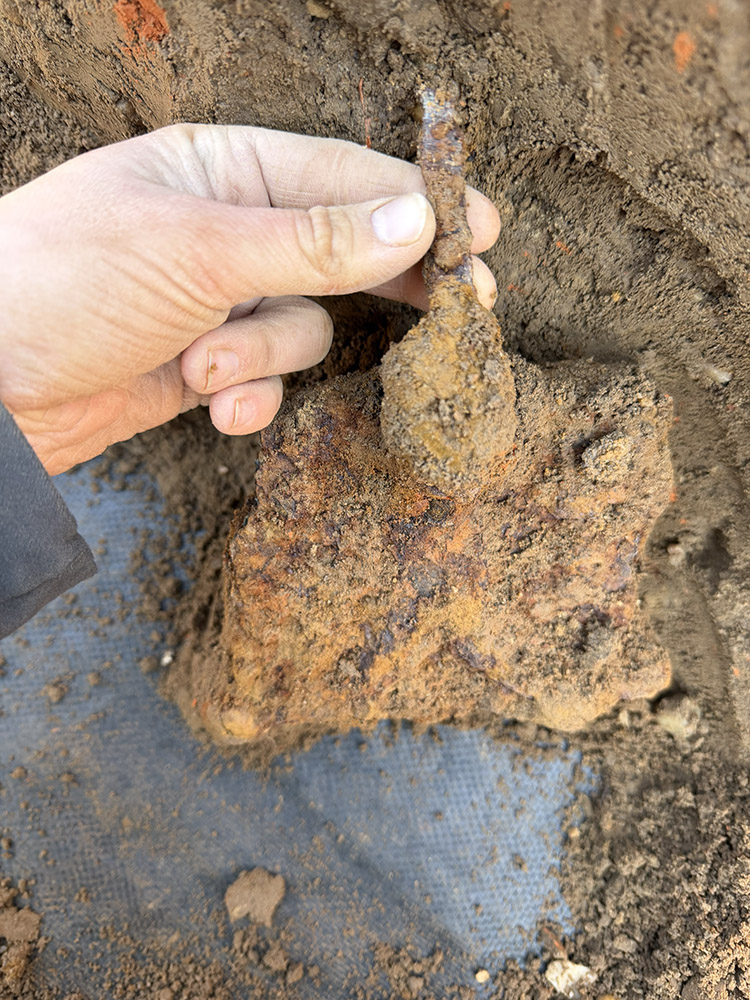
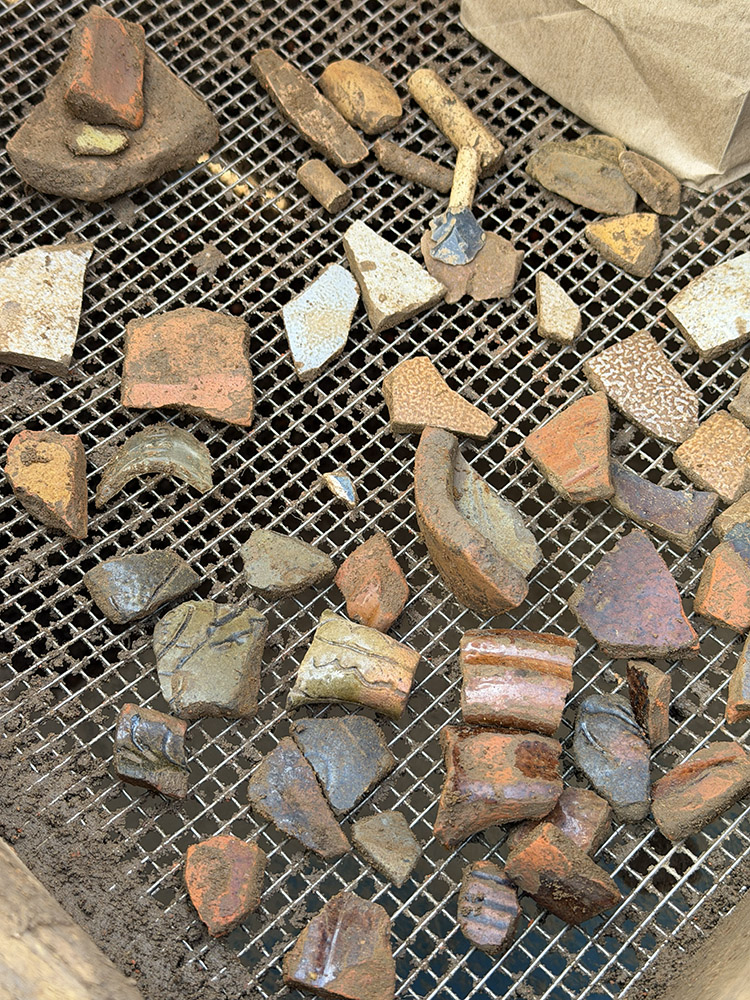
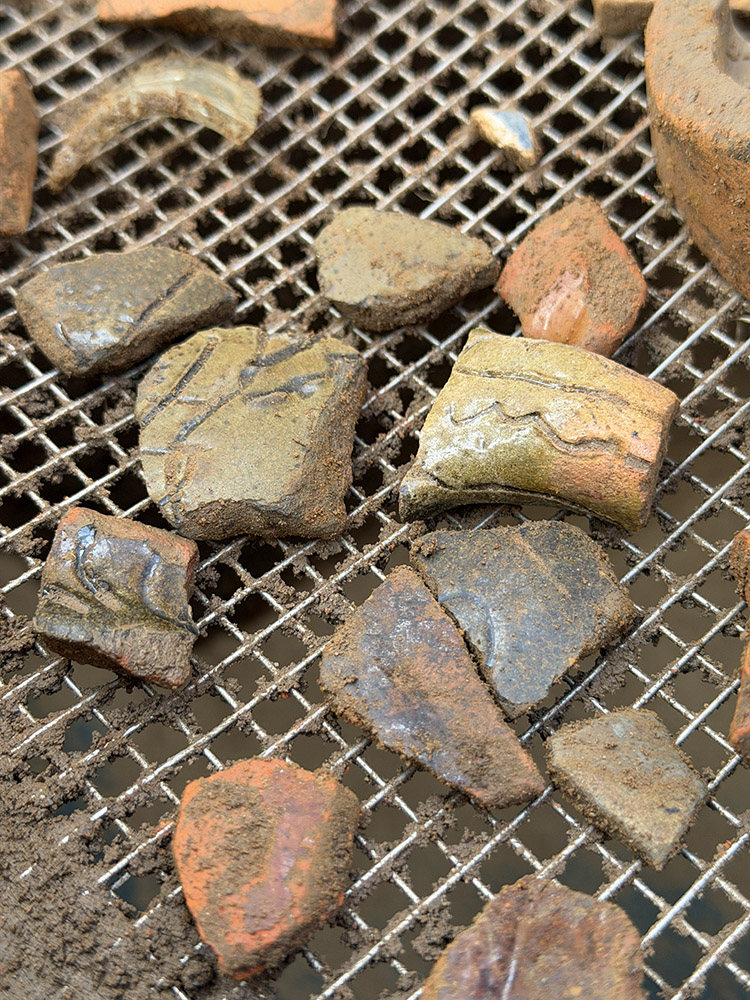
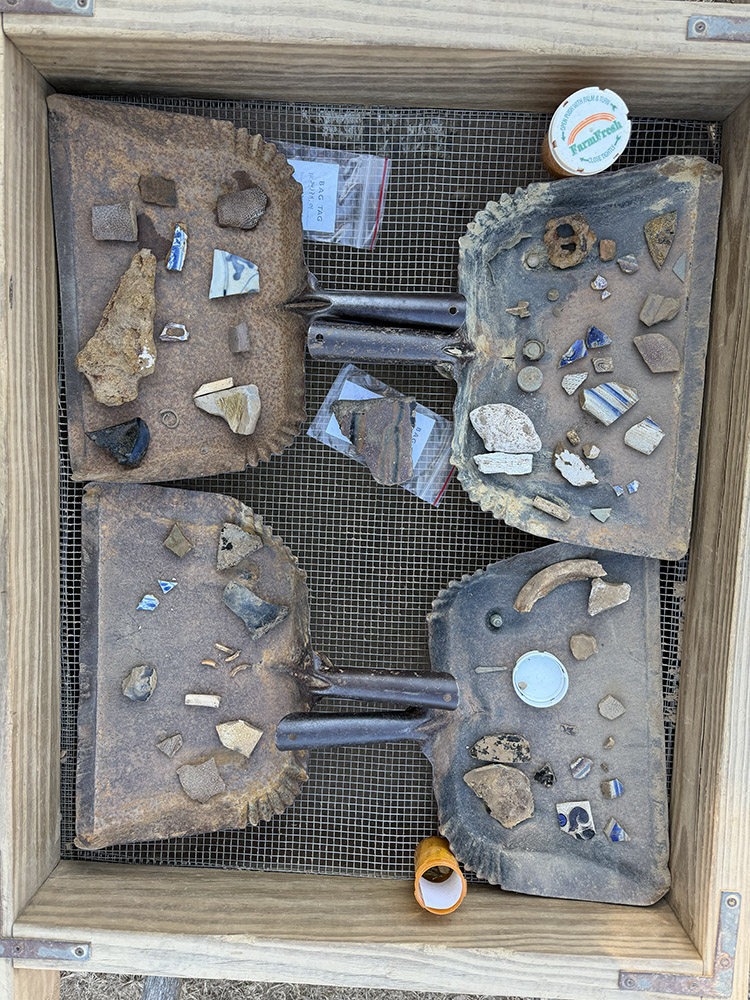
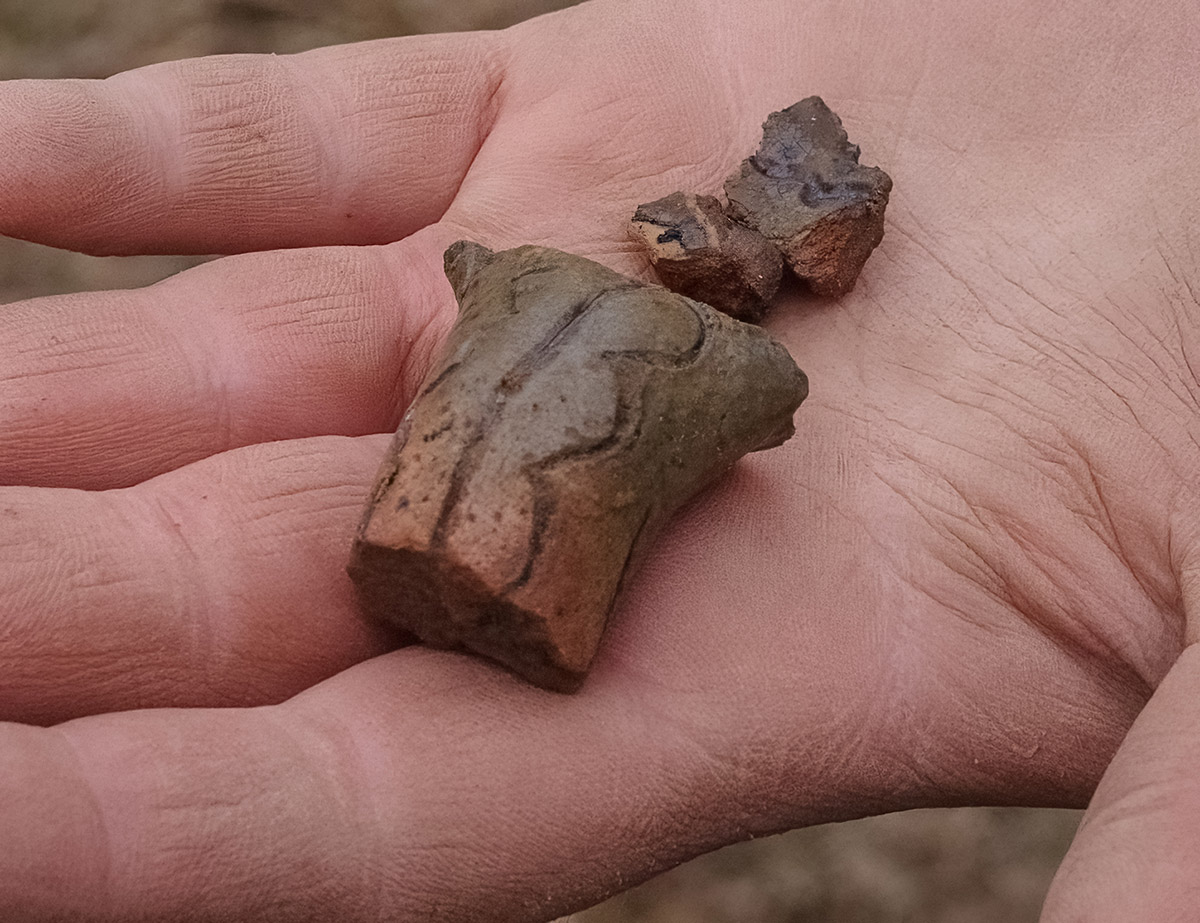
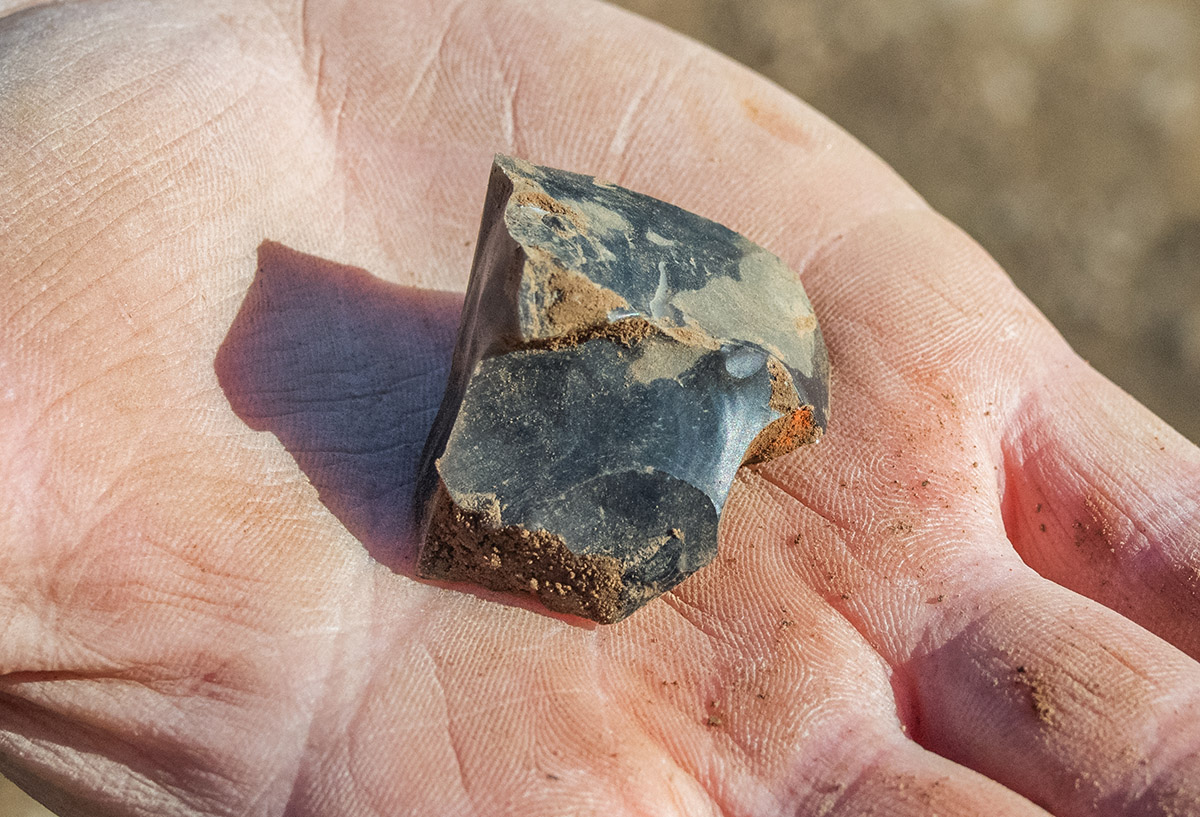
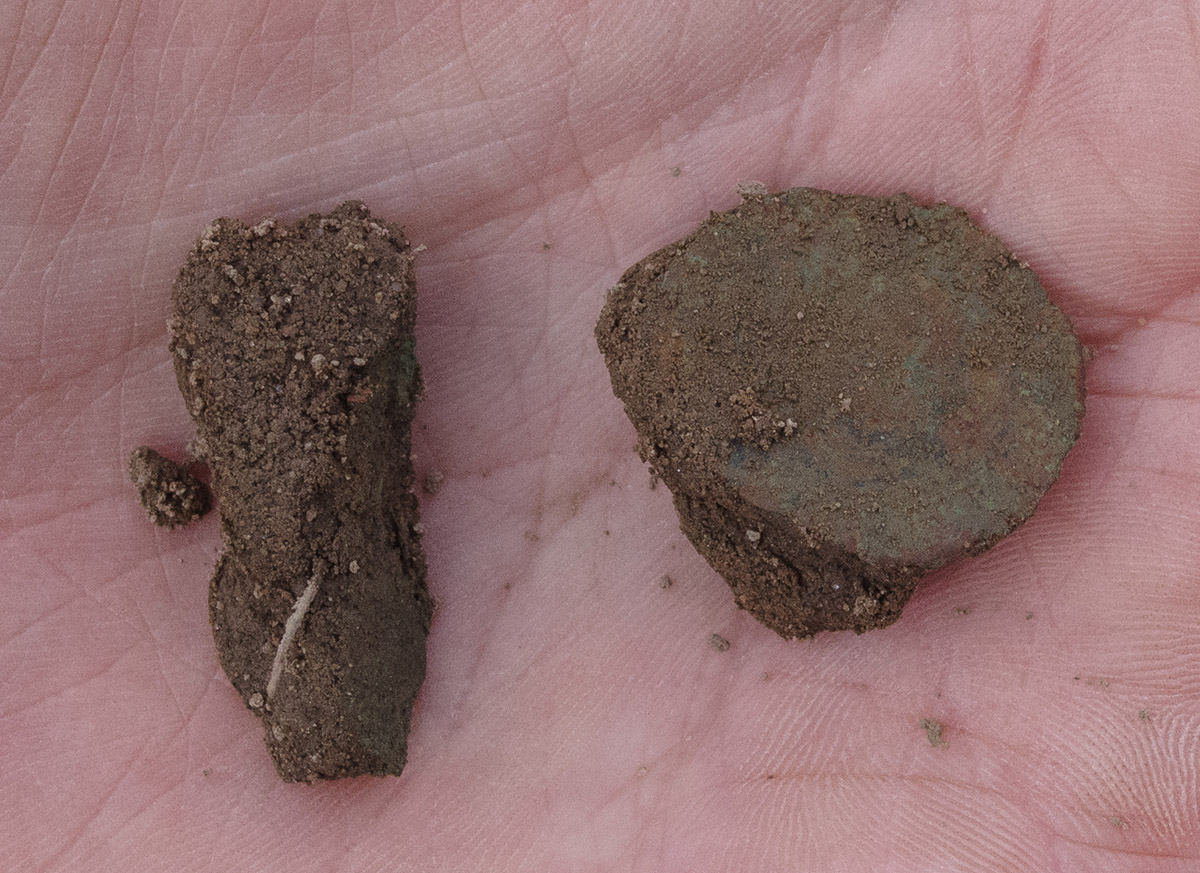
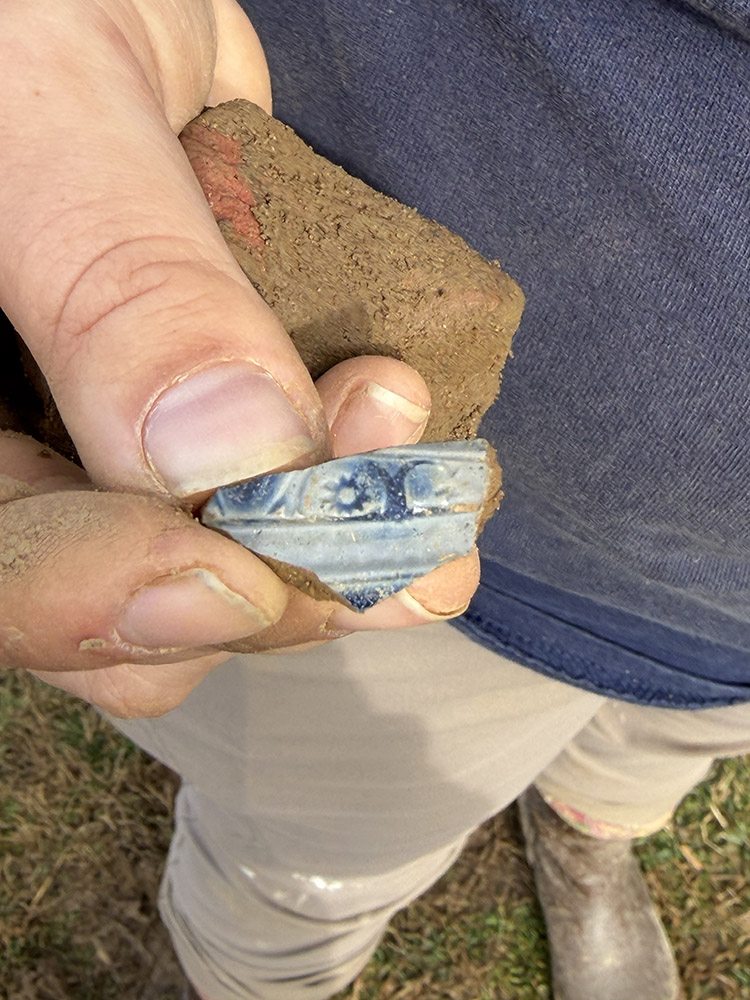
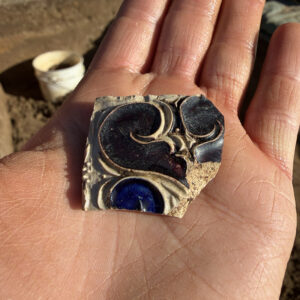
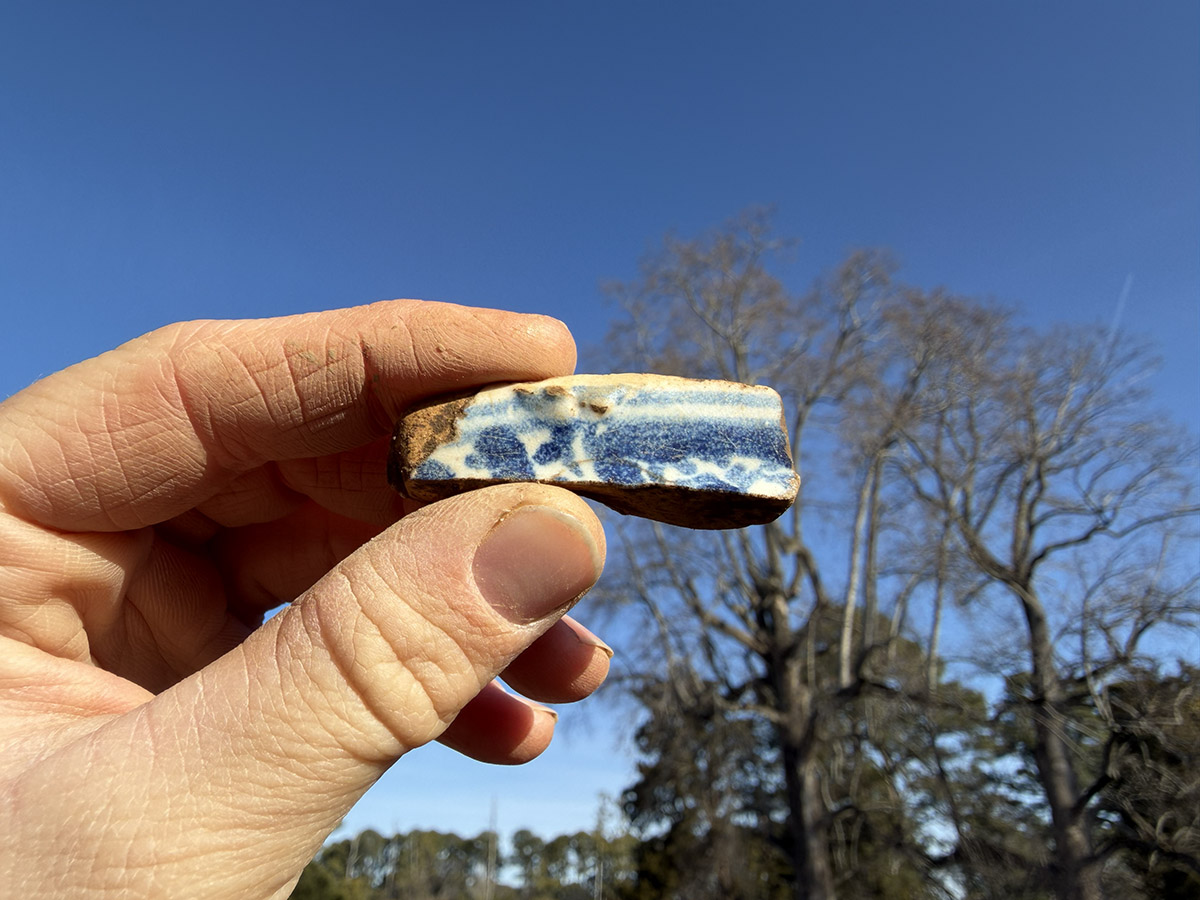
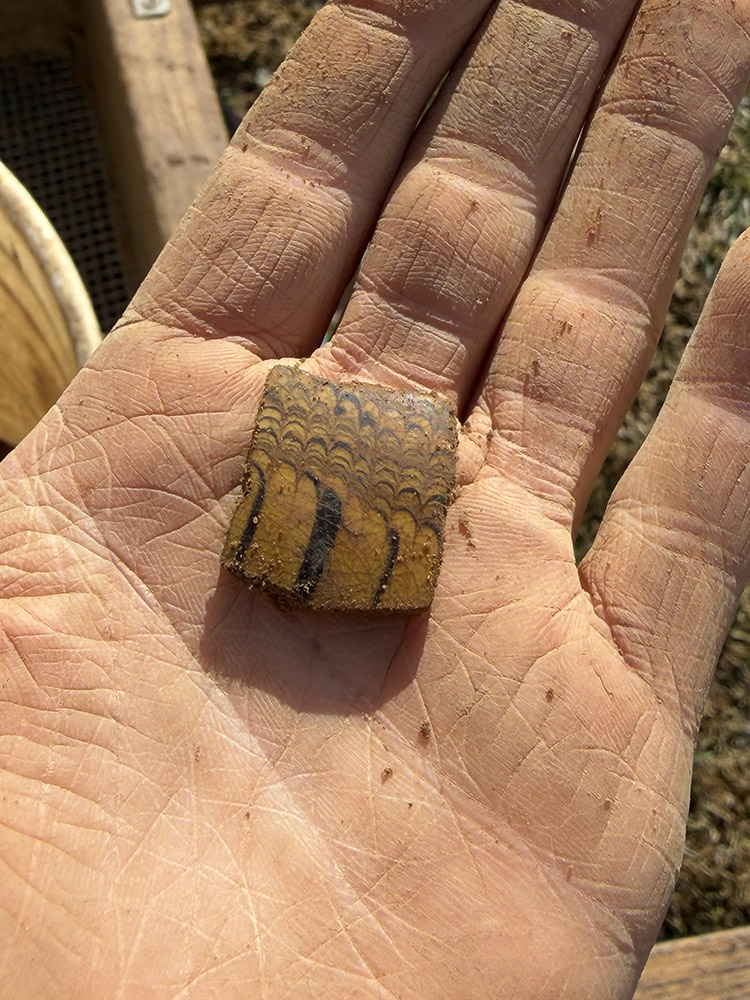
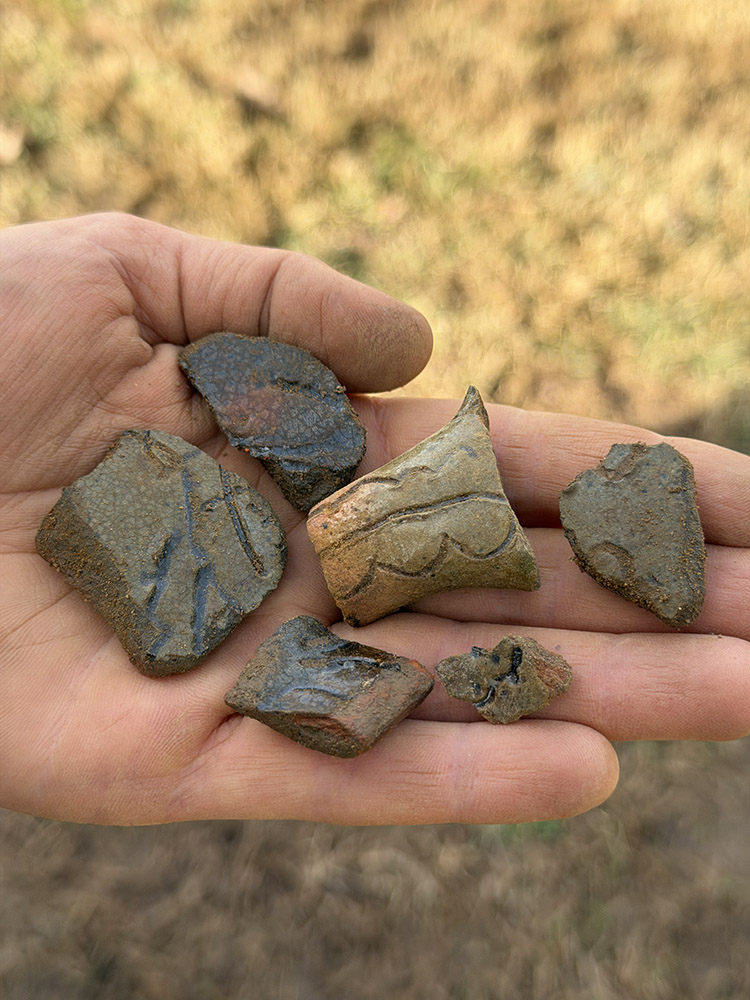
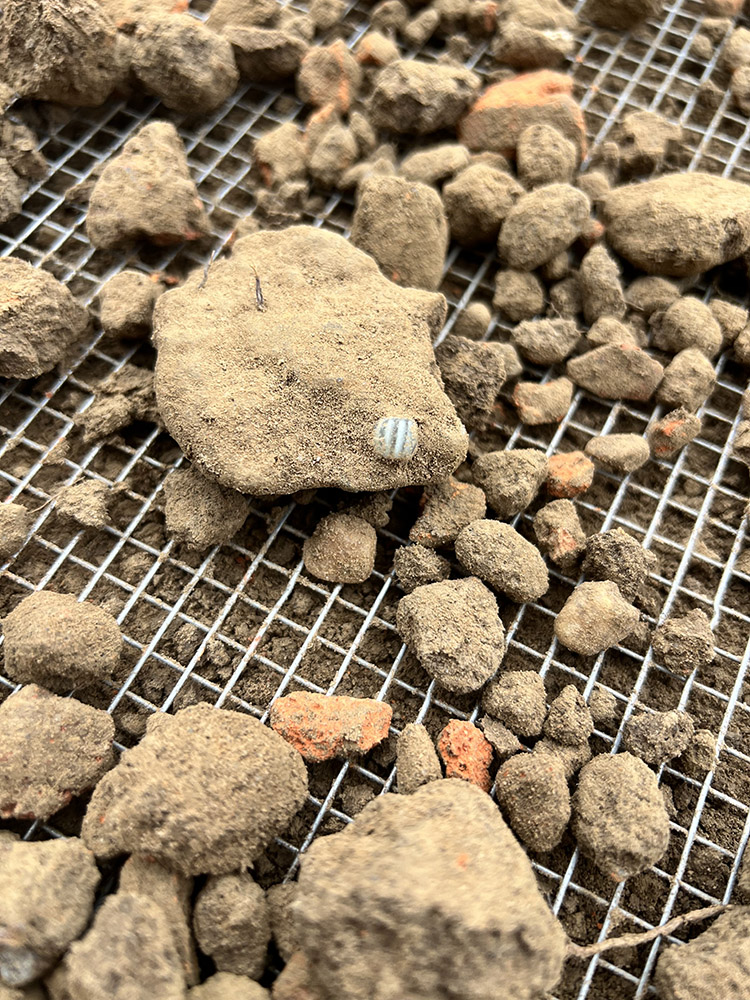
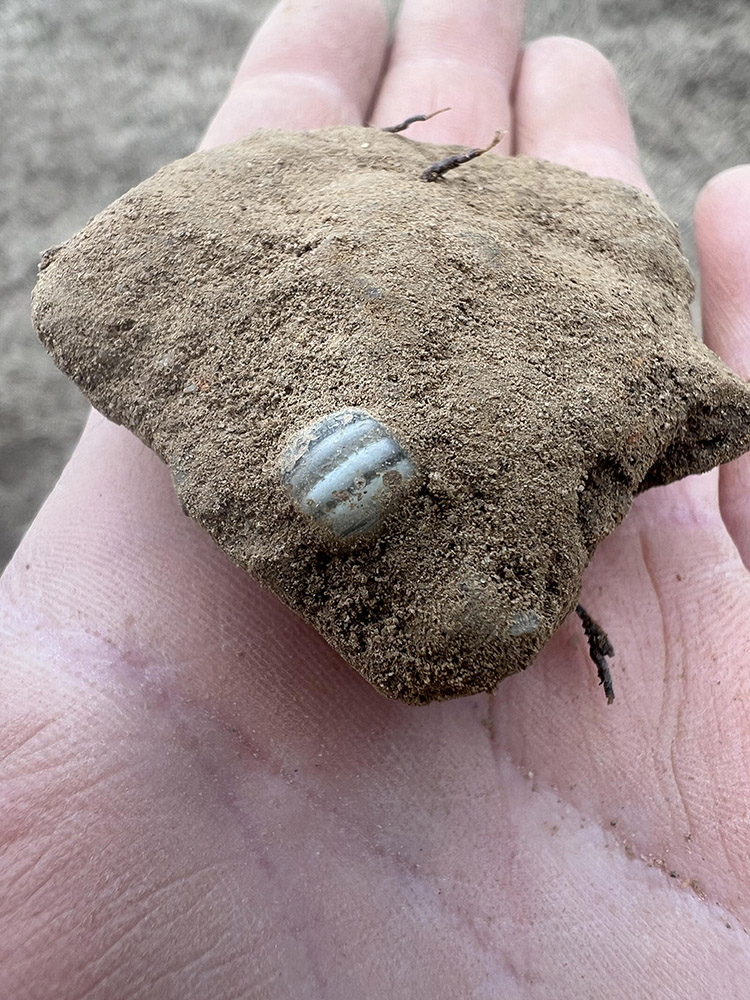
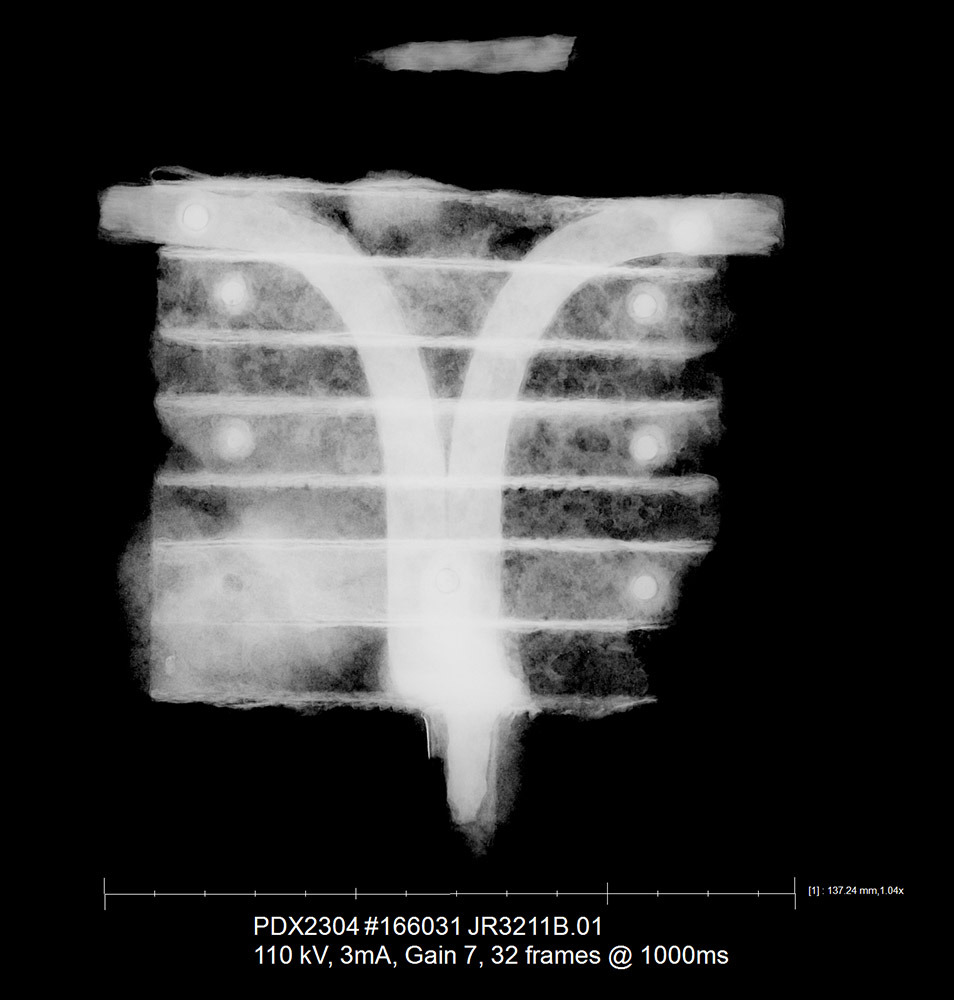
In addition to the melting jar, quite a few other artifacts have been found in the North Church excavations this month. A lead seal was found, but at this point, before conservation, no details are readily discernible. Wine bottle glass, a jetton, a Yadkin projectile point, an abundance of glass, flint, a gooseberry bead, and dozens of ceramic sherds have been found including Spanish olive jar, Frechen, sgraffito, Westerwald, and more. Senior Conservator Chris Wilkins took an X-ray image of a rusted iron object found in the North Church excavations this month. The X-ray revealed the object to be a curry comb, a brush used for grooming horses, with the design suggesting that it dates to the late 19th or early 20th century.
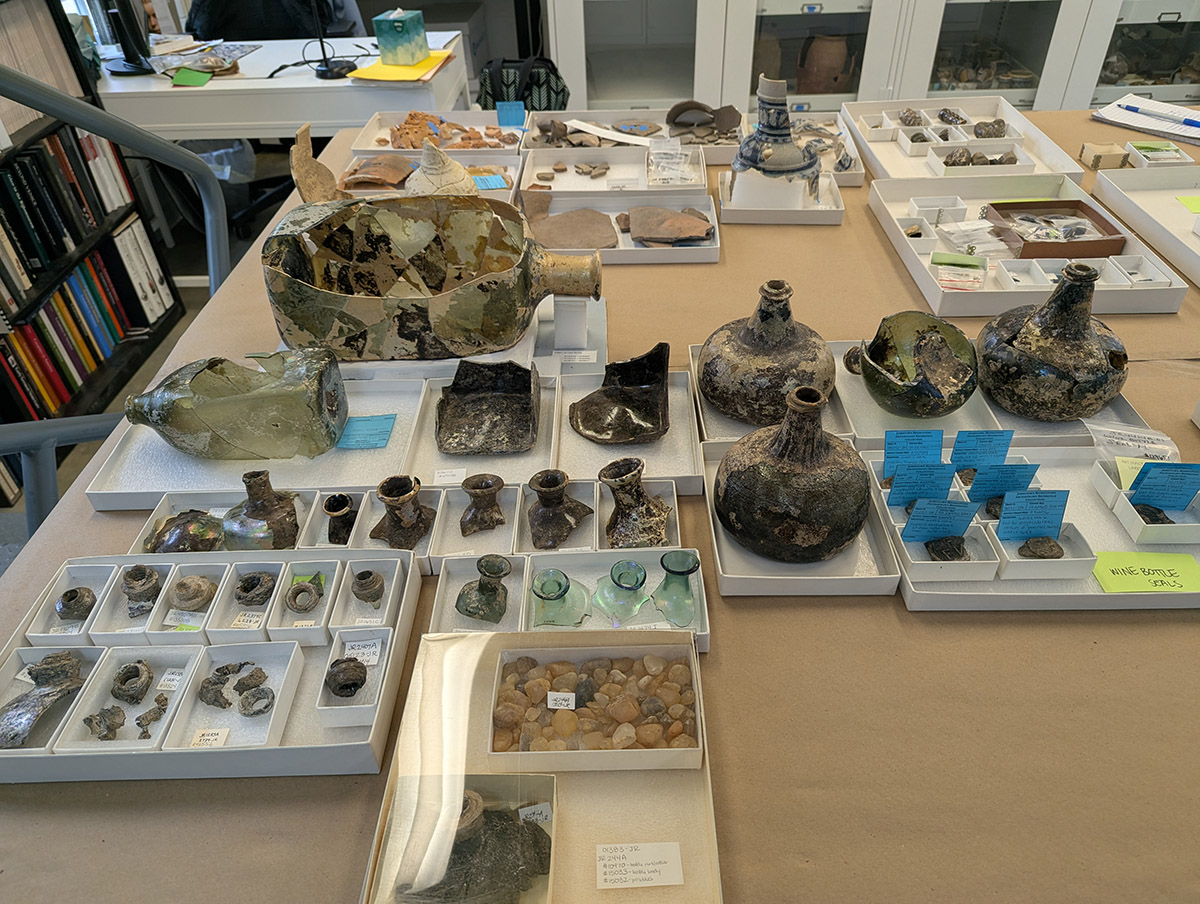
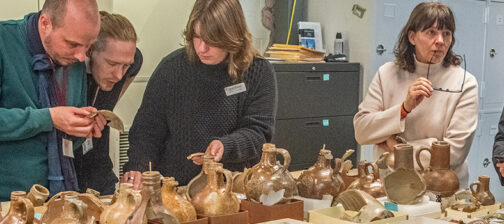
Senior Curator Leah Stricker is in the beginning stages of creating the glass reference collection. As with other artifact types, the glass reference collection will include unique and representative examples of each type of glass artifact in the Jamestown collection. By viewing the reference collection, typically housed in a drawer or a set of neighboring drawers, staff and researchers have a convenient place to examine examples of each artifact type in one place. Should they need to see additional examples, the artifacts can be pulled from archive storage.
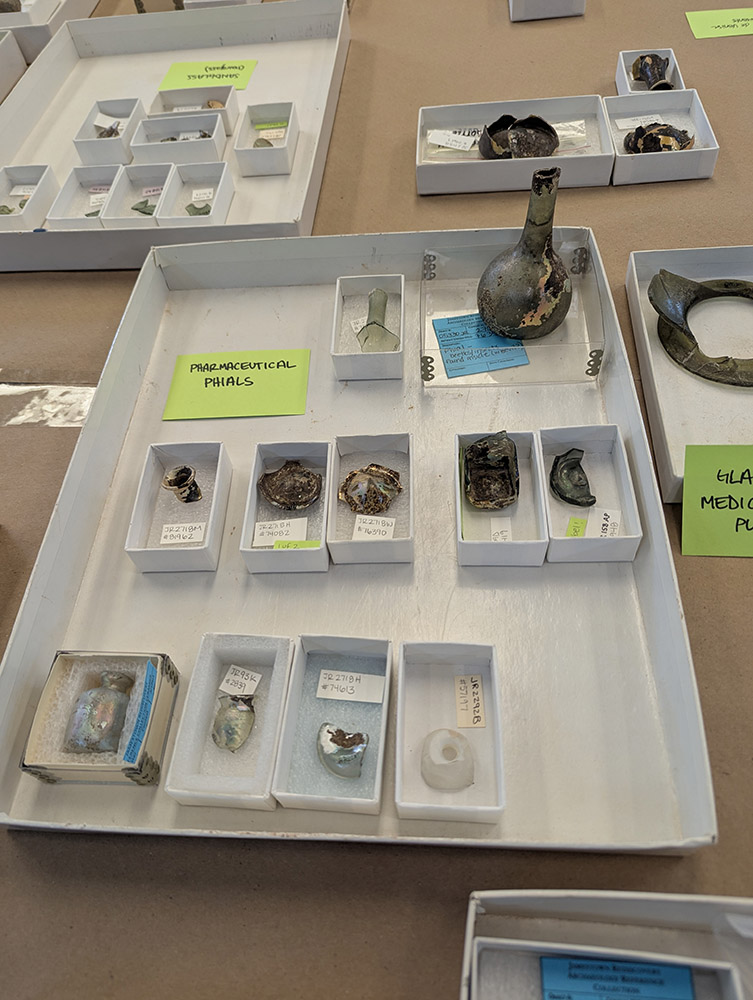
One of the first steps Leah has taken is to assemble all glass artifacts under consideration for the reference collection on the main display table in the Vault. There are a multitude of glass object types that our archaeologists have found over the years. These include drinking vessels, scientific instruments, window panes, linen smoothers, and more. Some highlights of the glass in the collection include pharmaceutical phials, cupping glasses, wine bottle seals, and decorative figurines. The collection not only includes finished objects, but also evidence of glassmaking, with waste pieces found in abundance. While she is gathering and analyzing these artifacts, Leah is flagging any that need conservation work. Look for progress reports on the creation of the glass reference collection in future updates.
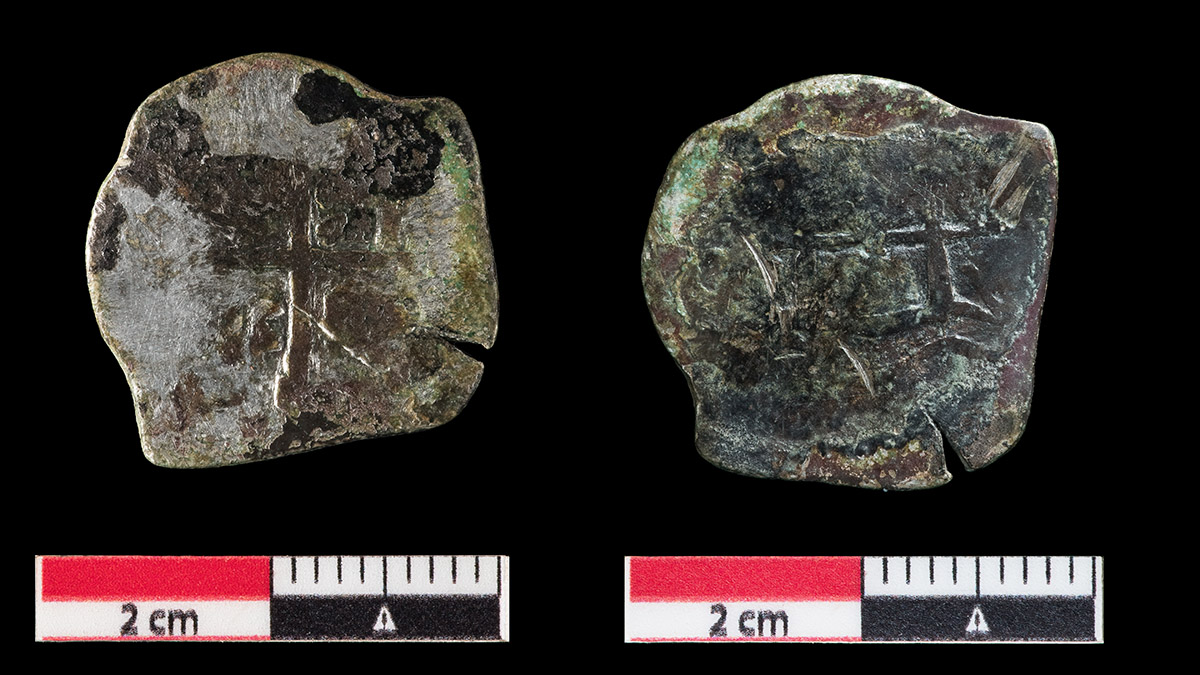
The collections team has a bit more information on a Spanish coin found last September in the cellar excavations. Thanks to a cleaning by Senior Conservator Dan Gamble, a few more details can now be seen. On the obverse, few markings of this well-worn coin can be seen save the Jerusalem cross, a clue that it was a coin of the Spanish Empire. On the reverse, the Pillars of Hercules can now be discerned as can an ocean wave (representing the Atlantic) just below. Unfortunately wear has destroyed other details on the coin, but this design would typically bear markings representing mint location, date, an assayer’s mark, and denomination. Senior Curator Leah Stricker speaks about this coin in the latest edition of Dig Deeper.
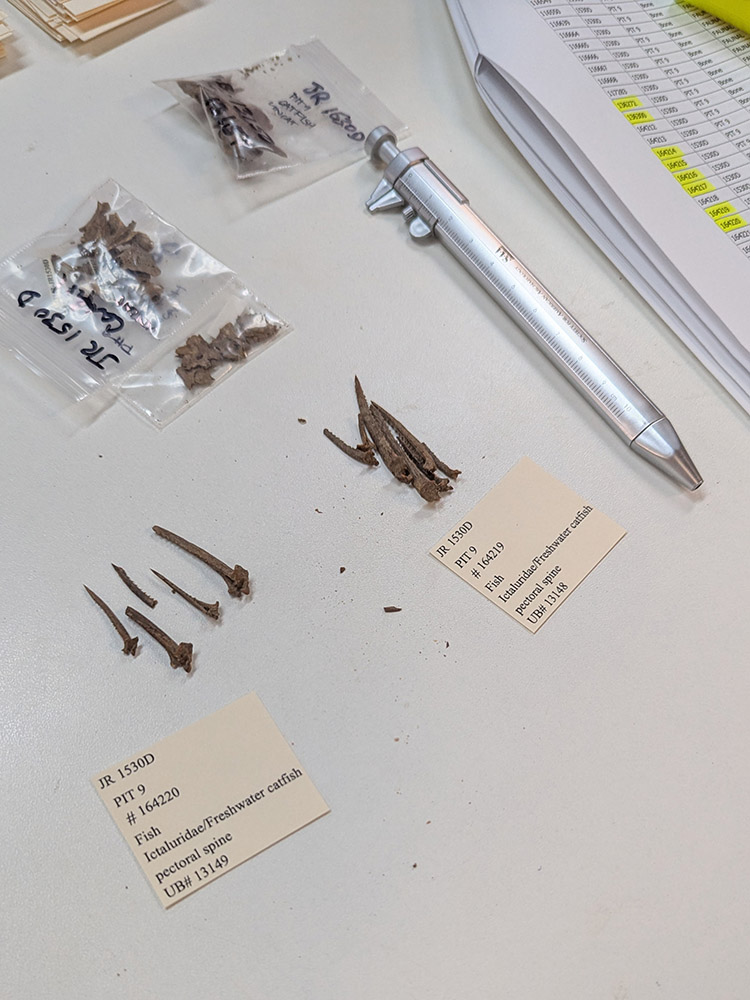
In the Vault, Assistant Curator Magen Hodapp is working through a variety of faunal remains analyzed by outside zooarchaeologists Susan Andrews, Steve Atkins, and Dr. Joanne Bowen. These researchers have lent their expertise to many projects at Jamestown, including the analysis of the remains Magen is working on from Pits 5, 9, 10, 11, and Structure 166, known as “the Quarter“. Magen is grouping remains by type and feature and bagging them up, including a label containing information used to identify them. She is then entering all the information into our artifact database. This allows our staff and researchers to view artifacts by criteria such as context or type, a powerful tool for research that allows one to get the “big picture” without needing to pull a single artifact from the archives.
related images
-

- Jamestown’s archaeologists at work at the North Church dig site
-

- The team trowel cleans a test unit in order to record the next layer and identify any features.
-
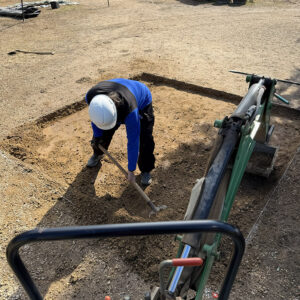
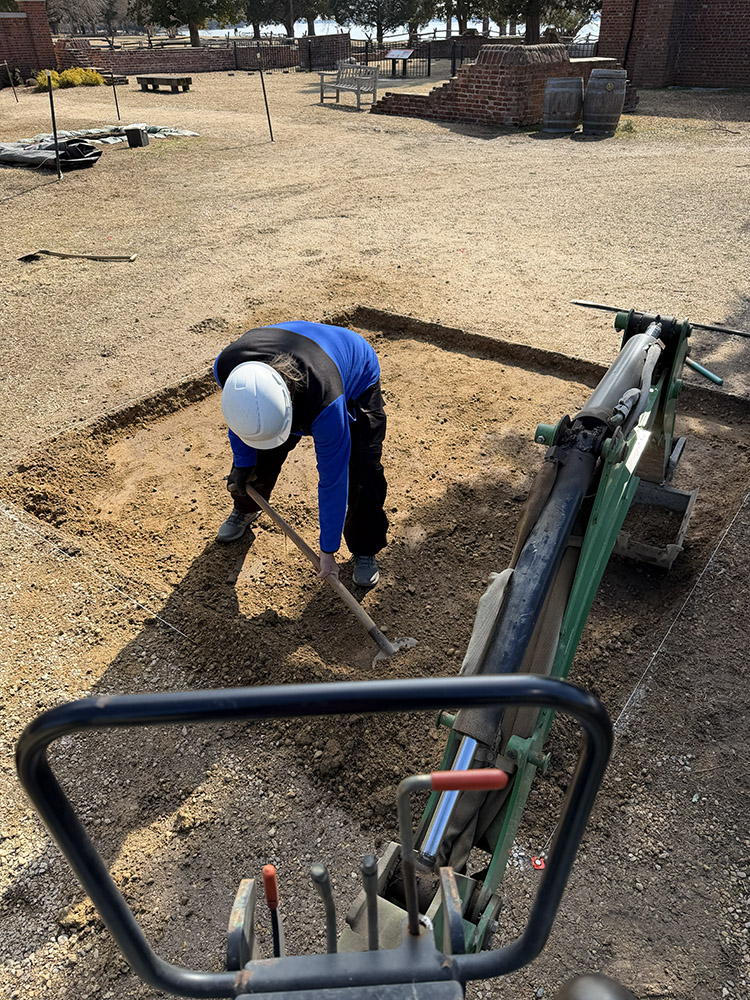
- Ren Cam: Staff Archaeologist Ren Willis takes a photo from her perch atop the backhoe as Senior Staff Archaeologist Dr. Chuck Durfor excavates a new square in the North Church dig.
-
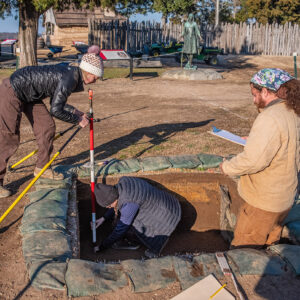
- Archaeological Field Technician Katie Griffith, Archaeological Intern Aubrey Strand, and Archaeological Field Technician Josh Barber prepare for a survey of features inside an excavation square.
-
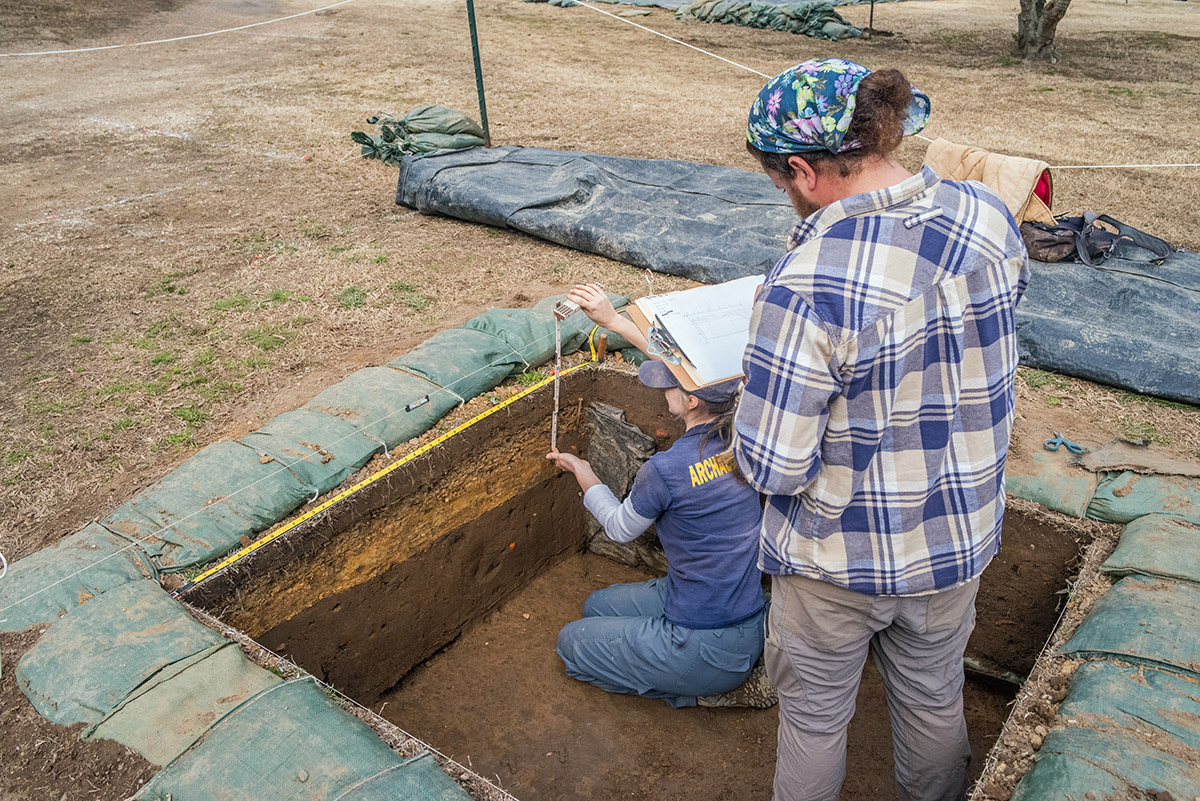
- Archaeological Field Technicians Katie Griffith and Josh Barber take measurements of soil layers to create an accurate profile drawing of one of the excavation squares.
-

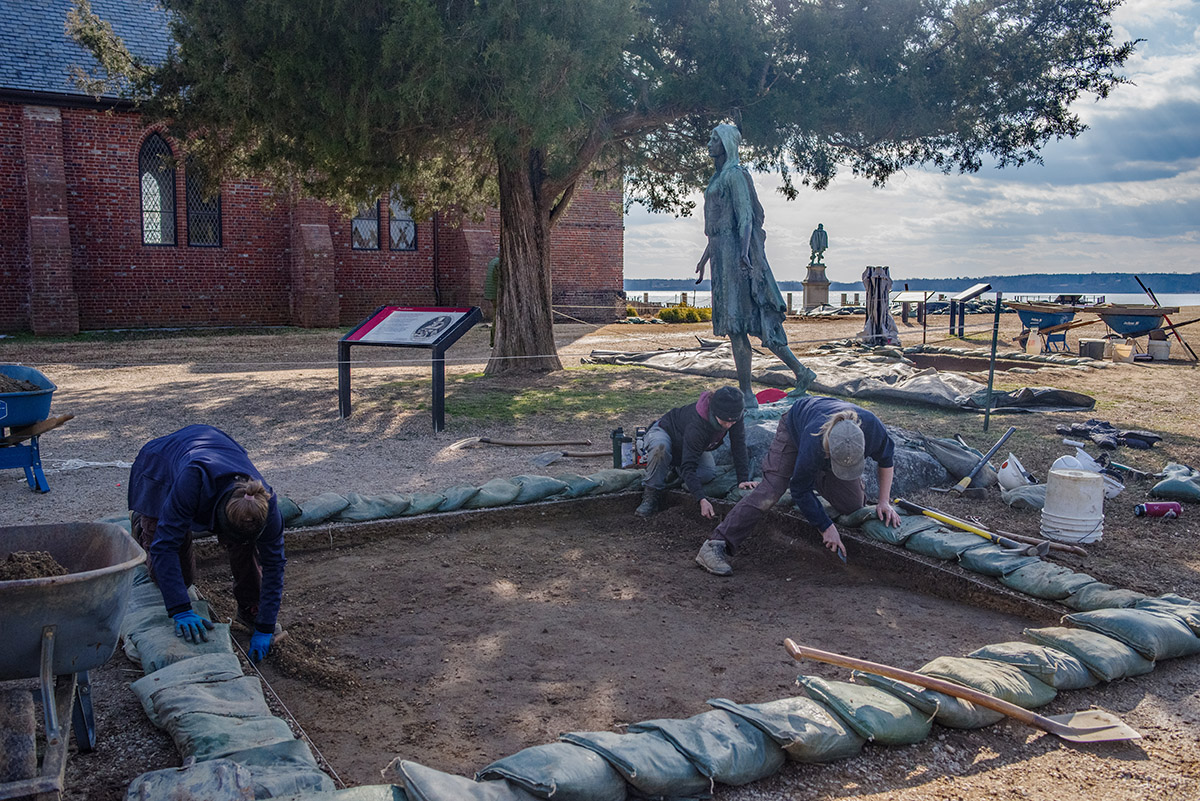
- Archaeologists in the early stages of excavating one of the squares in the North Church dig
-

- Staff Archaeologists Ren Willis and Natalie Reid dig in the “Tetris Square” at the western edge of the North Church excavations.
-
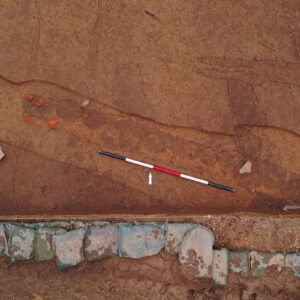
- A closeup shot of the 1608 palisade extension. The post molds have been scored to make them easier to see. At the left side of the photo, a gap in the post molds and trench likely indicates the location of a gate.

-

- Staff Archaeologist Ren Willis trowel cleans the 1608 palisade extension
-
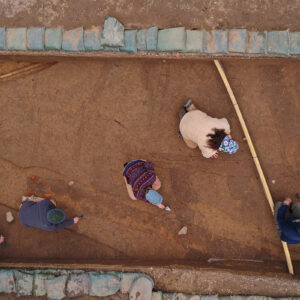
- The archaeology team inside two of the squares in the North Church site. The 1608 palisade extension’s post molds can be seen running left to right near the bottom of the photo. An early twentieth-century utility line can be seen at the top left and a modern yellow conduit can be seen in the right side of the photo. At top right, Archaeological Field Technician Katie Griffith points to a burial.
-

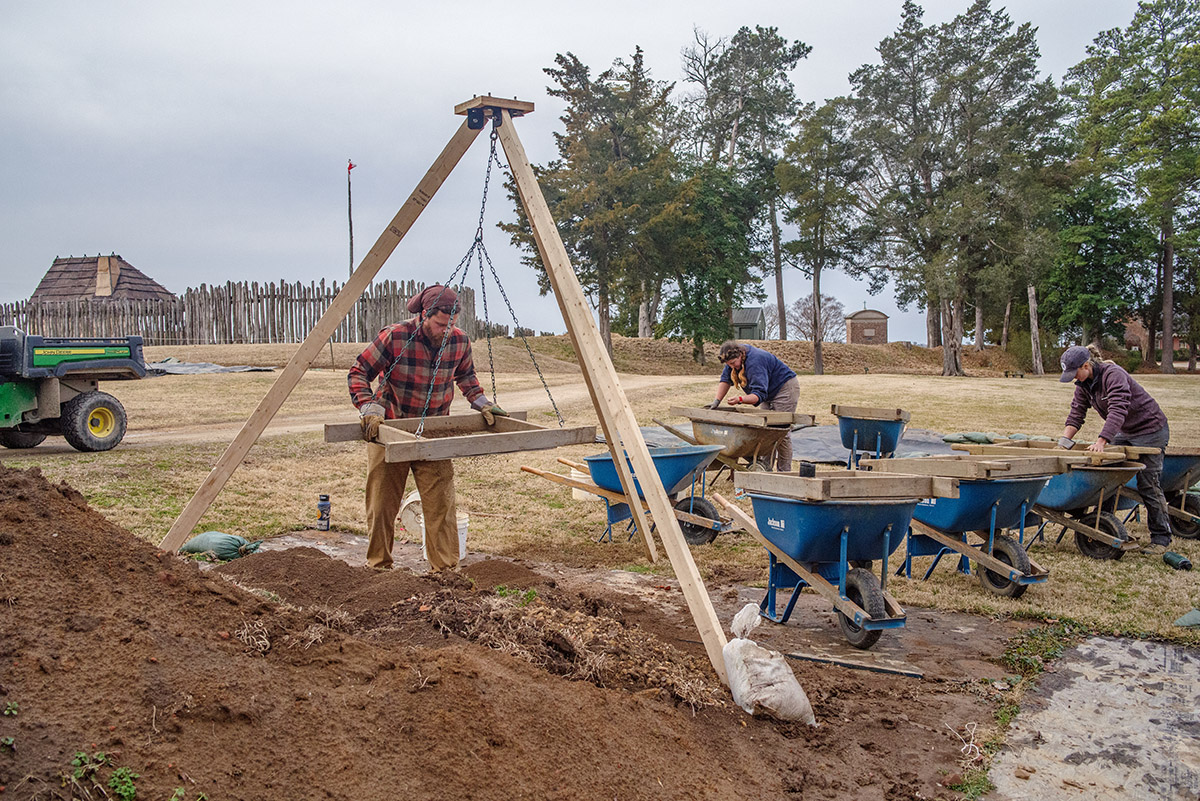
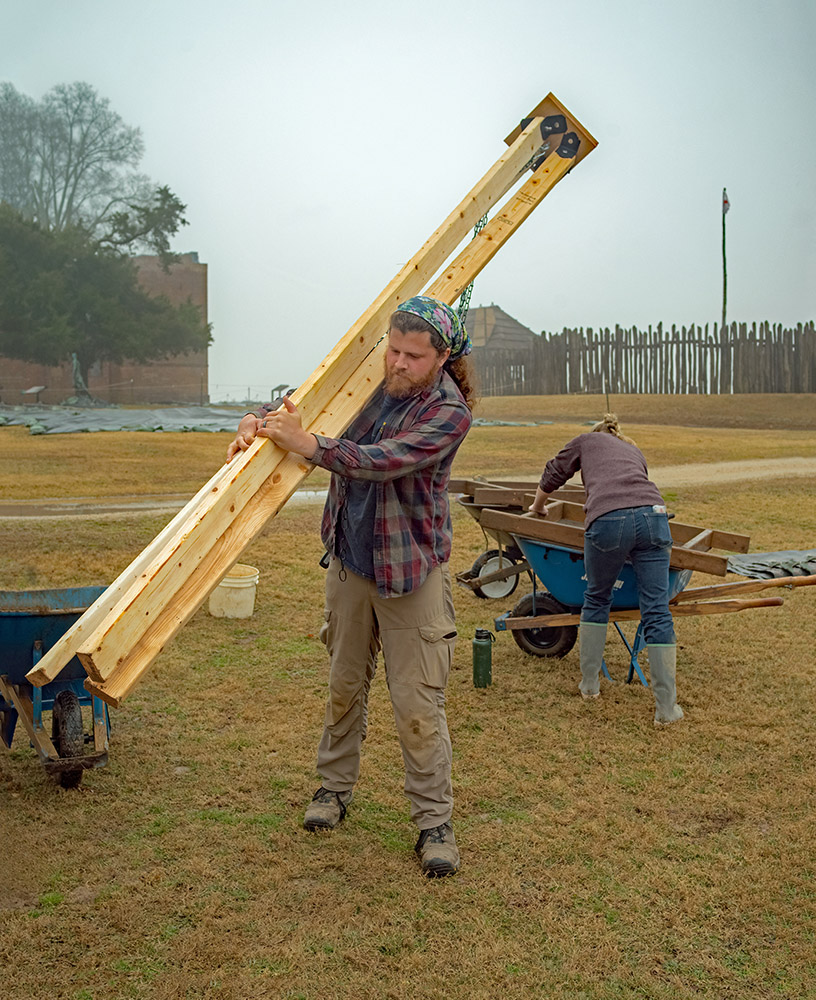
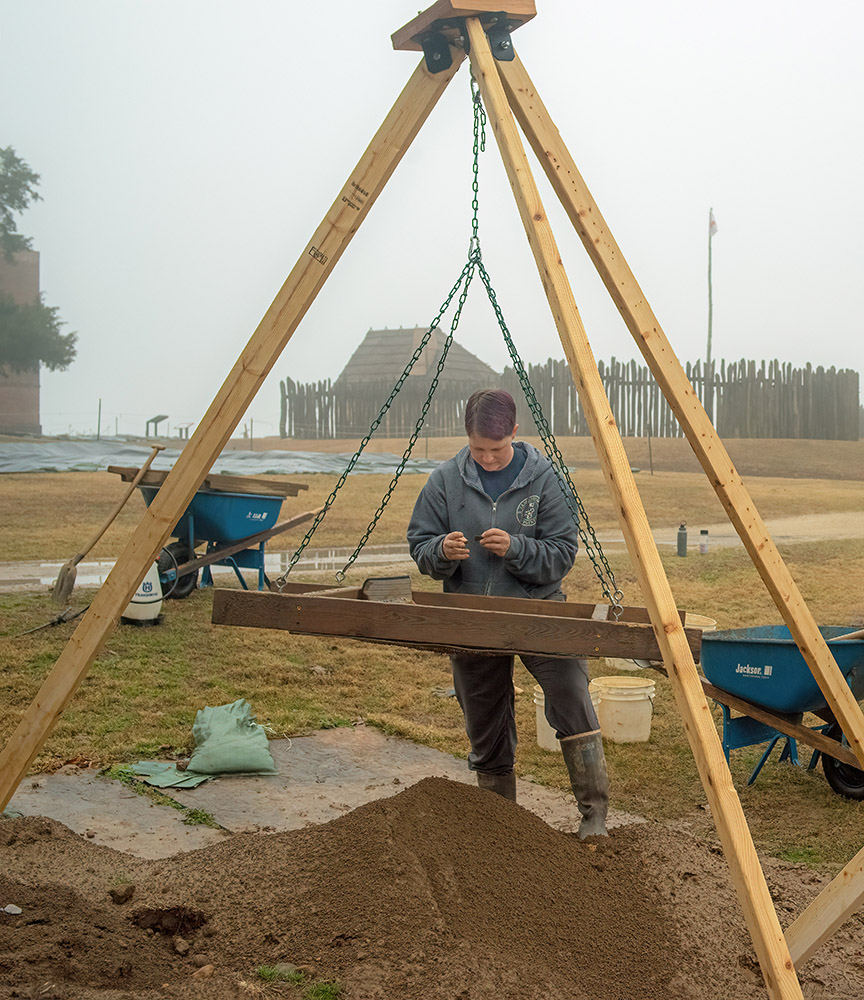
- Archaeological Field Technicians Josh Barber, Hannah Barch, and Katie Griffith screen for artifacts in soil excavated from the North Church dig. Josh is using a newly-built shaker screen that speeds up the process.
-

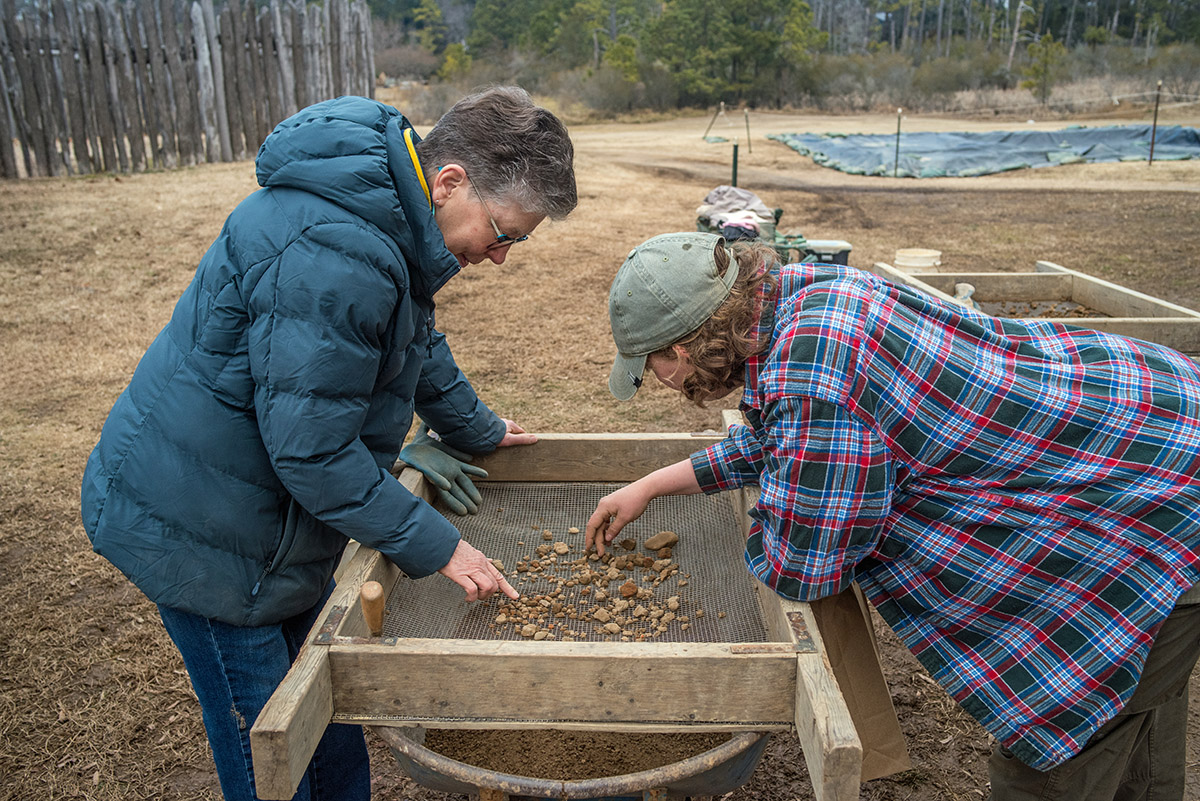
- Volunteer Cynthia Garman-Squier and Archaeological Field Technician Eleanor Robb screen for artifacts.
-
- The “Tetris Square” at the North Church excavations
-

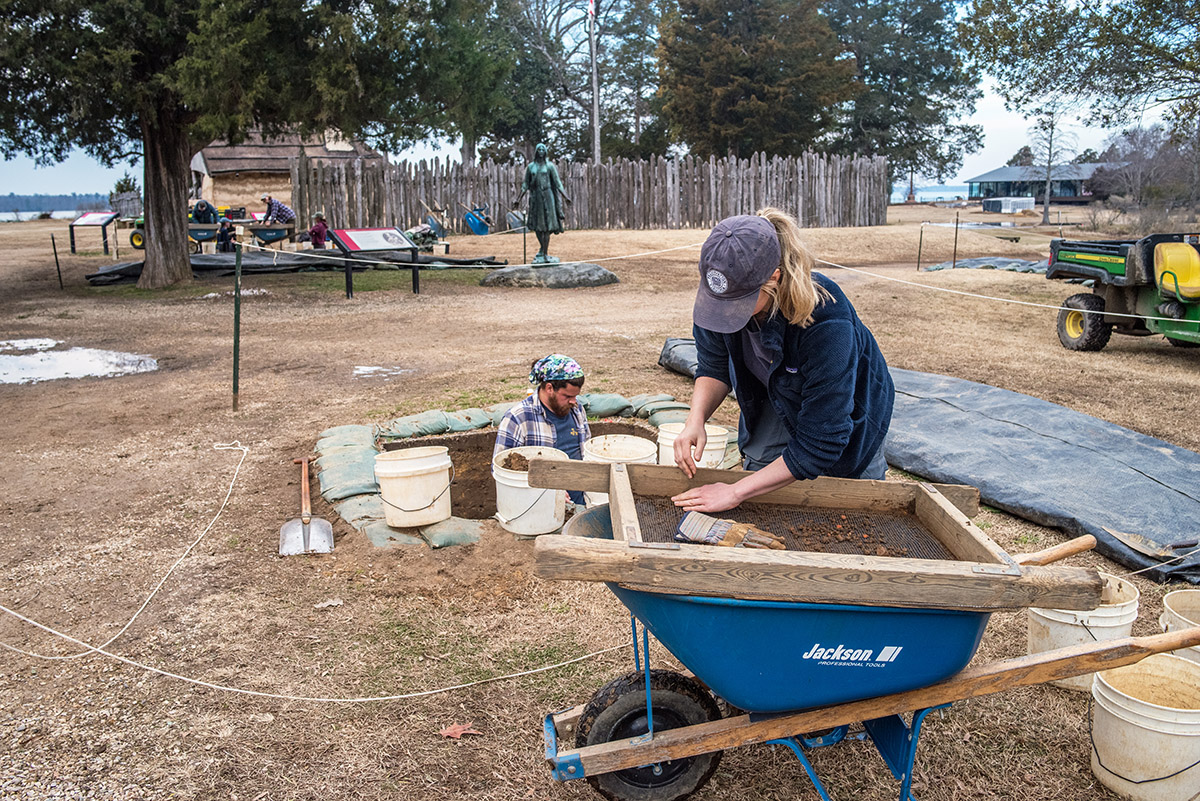
- Archaeological Field Technician Katie Griffith screens soil from Archaeological Field Technician Josh Barber’s excavations behind her.
-

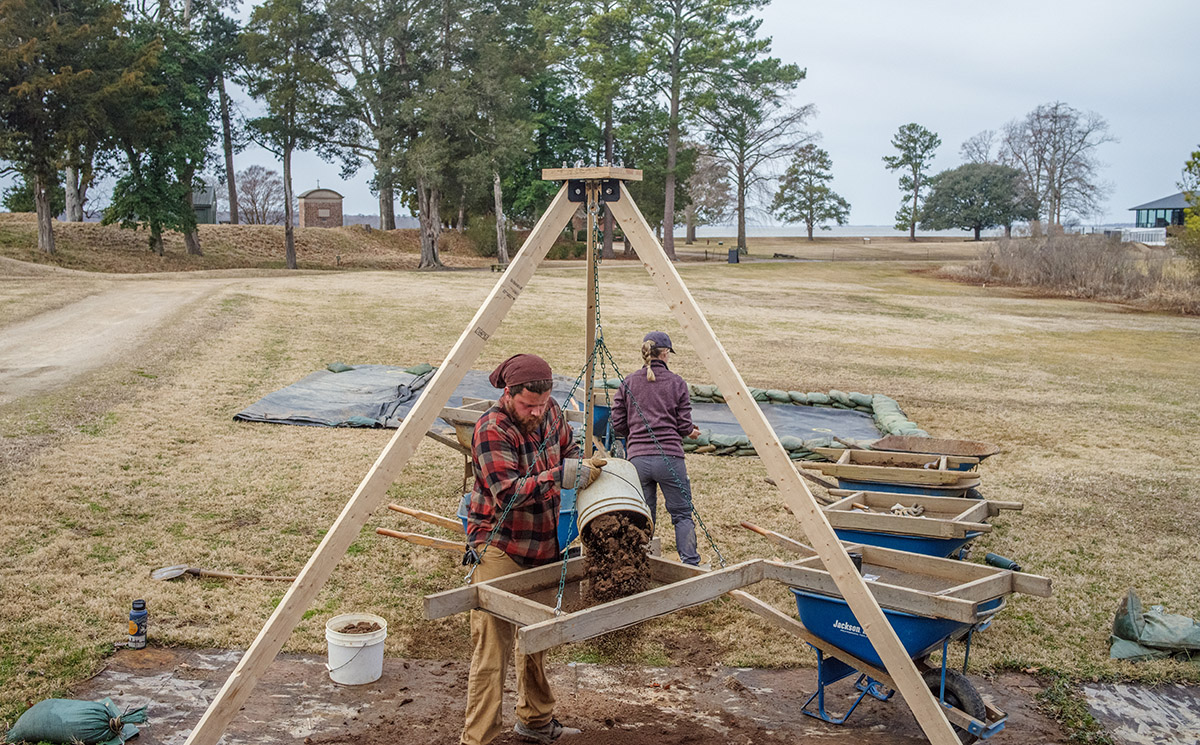
- Archaeological Field Technician Josh Barber loads another bucket of excavated soil into a screen to look for artifacts.
-

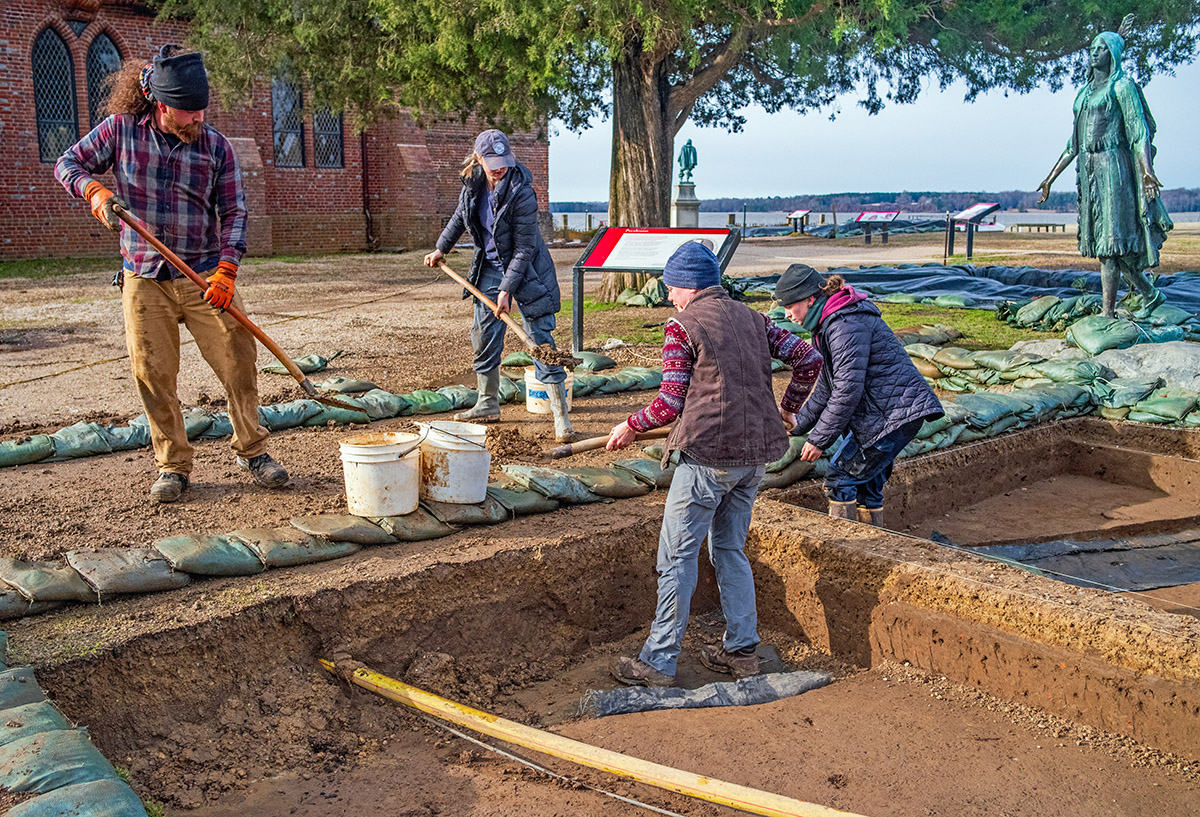
- Archaeological Field Technicians Josh Barber and Katie Griffith and Staff Archaeologists Natalie Reid and Ren Willis make progress in two squares at the North Church site.
-

- Staff Archaeologists Ren Willis and Natalie Reid use their harpoons to score the 1608 palisade extension’s post molds.
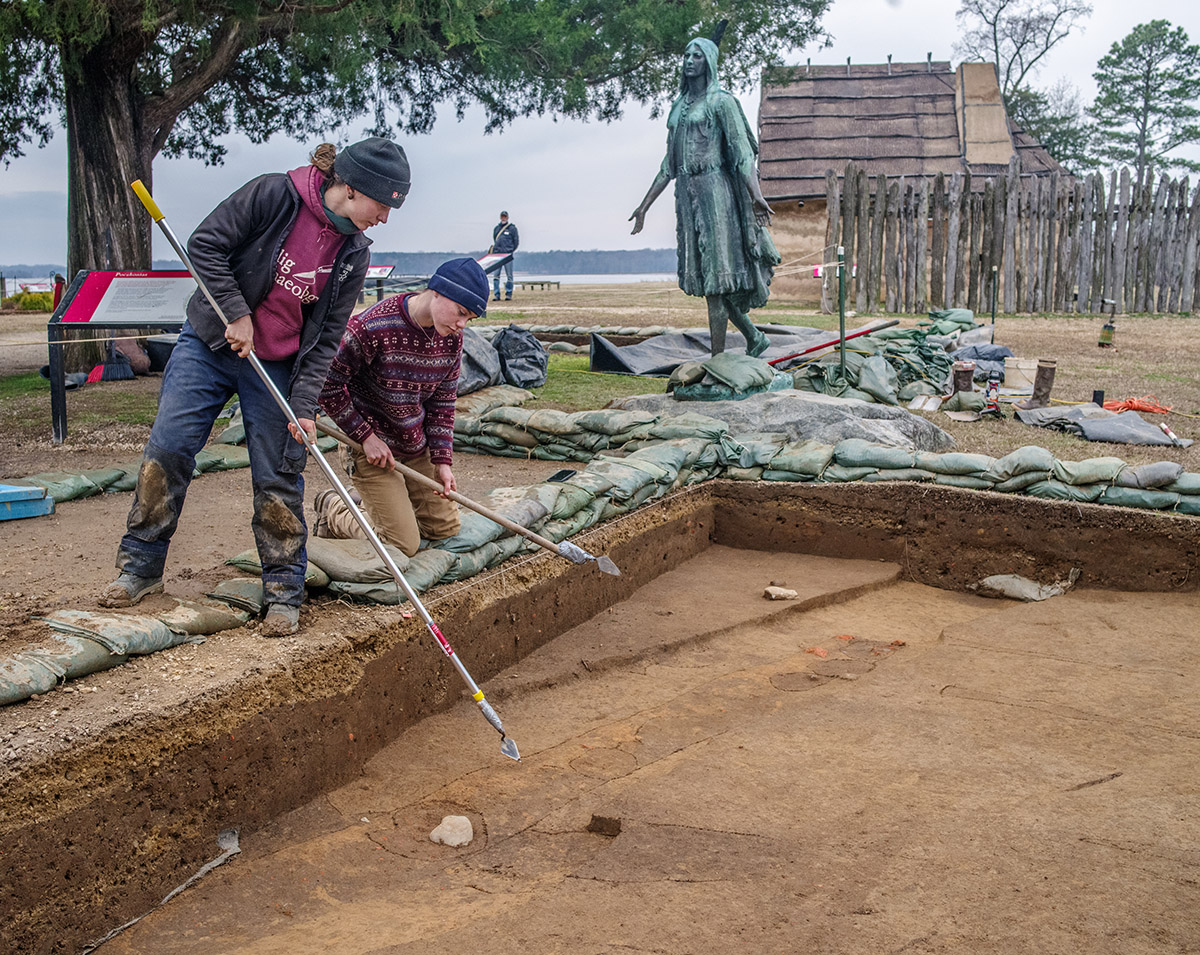
-

- Archaeological Field Technician Katie Griffith shares recently-found artifacts with visitors.
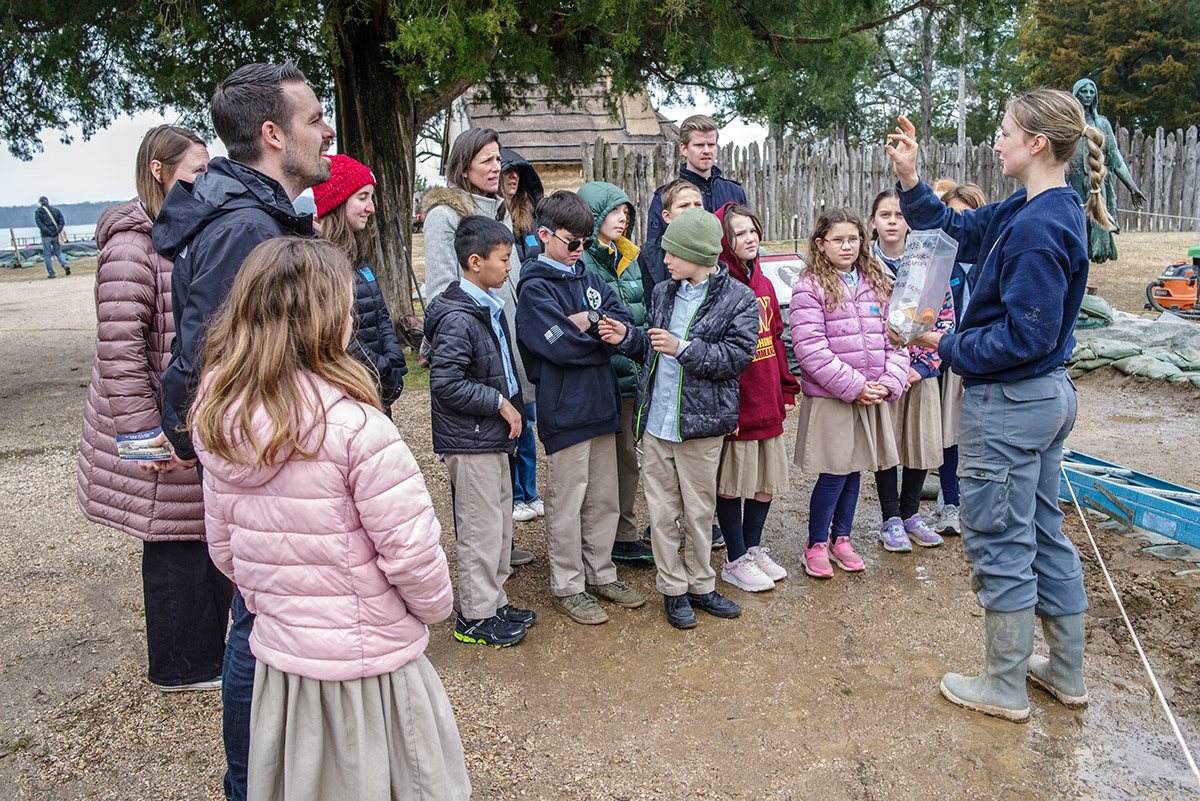
-

- The archaeological team uses their “harpoons” (trowels taped to poles) to score features prior to record photography. The squares have been “cleaned” for their photographs and the team uses their harpoons so that no footprints mar the photos.
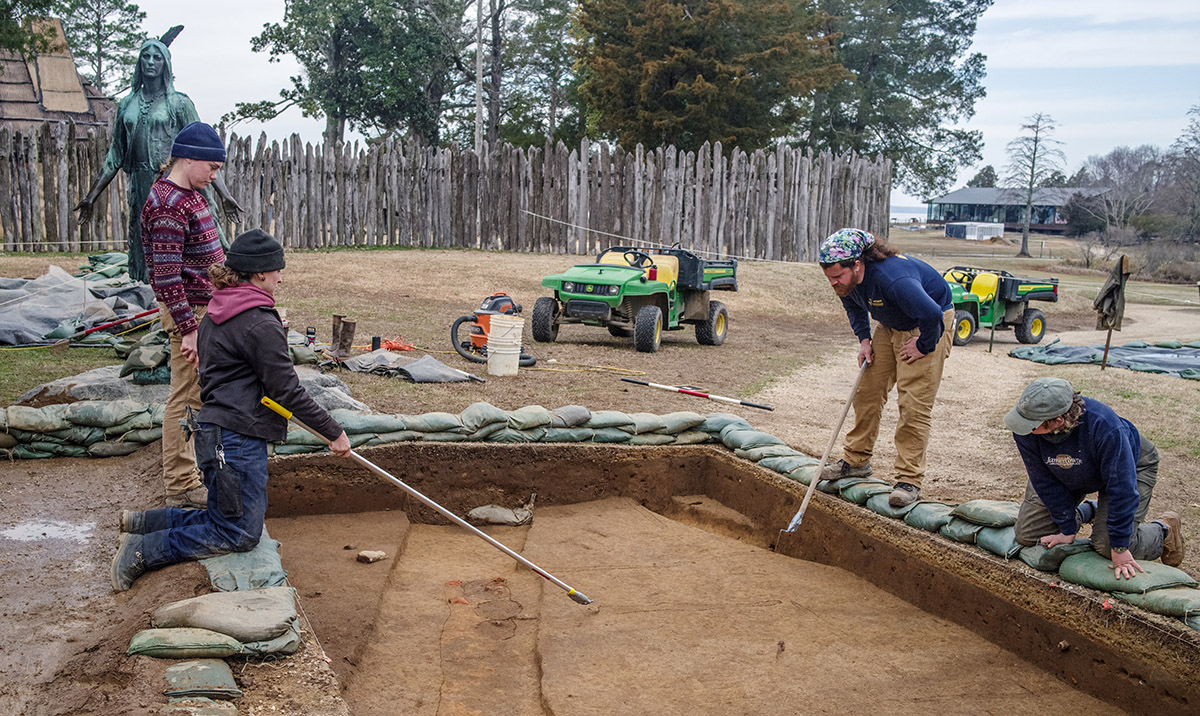
-
- In this 2009 photo archaeologist Jamie May points to the spot where the 1608 palisade extension (coming towards the photographer) meets the eastern palisade wall (towards the photographer’s left) and the curve of the north bulwark (to the photographer’s right). The earthworks behind Jamie are part of Confederate Fort Pocahontas, built on the same high ground that the colonists used to build their fort.
-
- In this 2017 photo, a section of the 1608 extension palisade wall to the east of the current excavations shows an opening flanked by angled wall portions creating a tiny hallway that may have been used as a sally port.
-

- Volunteer Cynthia Garman-Squier screens for artifacts while Staff Archaeologist Natalie Reid excavates one of the squares in the North Church dig. Staff Archaeologist Ren Willis mans a backhoe, moving excavated soil to a Gator for transport to the screening area.
-
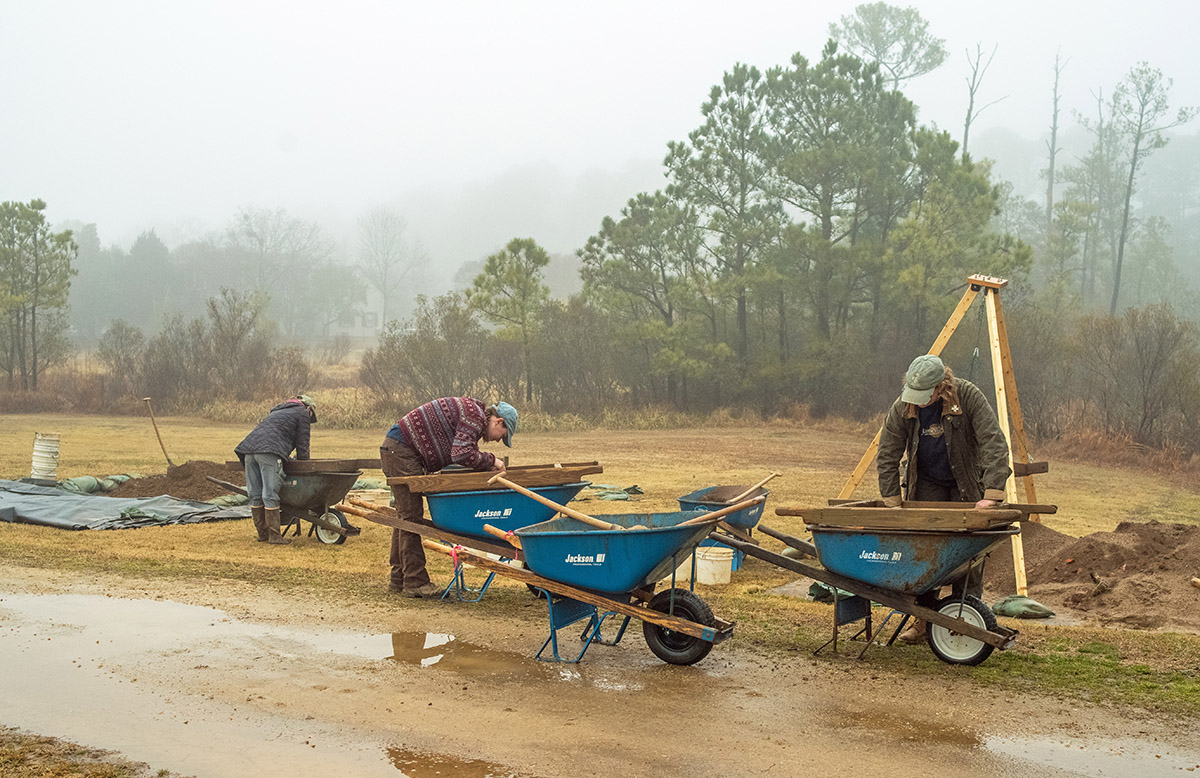
- Despite the crummy weather the team continued their excavations in order to complete them before pathway construction begins.
-
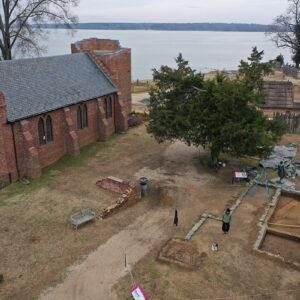
- A drone shot of the North Church excavations

-
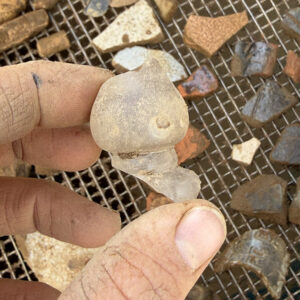
- A broken glass object found in the North Church excavations
-
- A different perspective of the North Church excavations. The team points to different features inside the squares containing the 1608 palisade extension.

-

- The archaeological team prepares two squares in the North Church site for record photography.
-

- The archaeological team gently scrapes away the top layer of soil in the 1608 palisade extension squares to make features pop for record photography.
-
- Archaeological Field Technician Eleanor Robb is part of a bucket brigade removing water from the “Tetris Square” after a rainstorm.
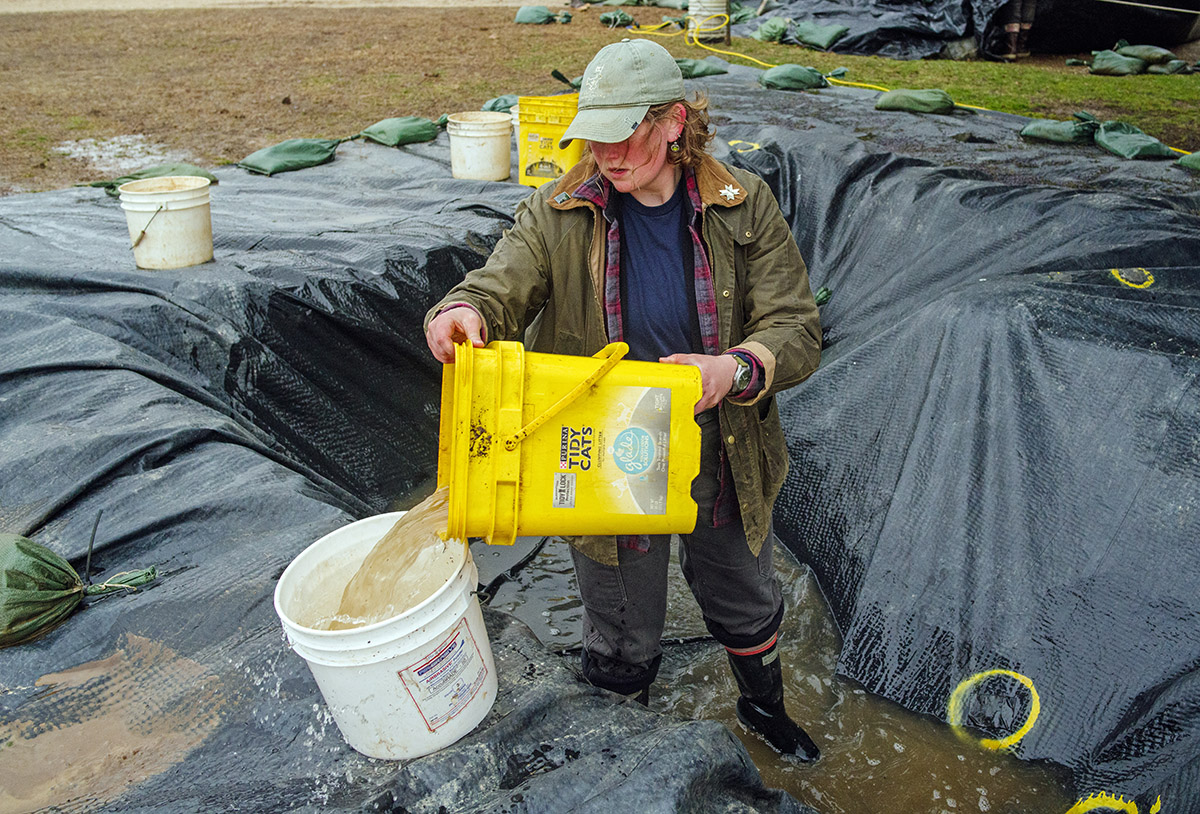
-

- Archaeological Field Technician Hannah Barch uses a broom to push water towards a pool that is being removed via an electric pump.
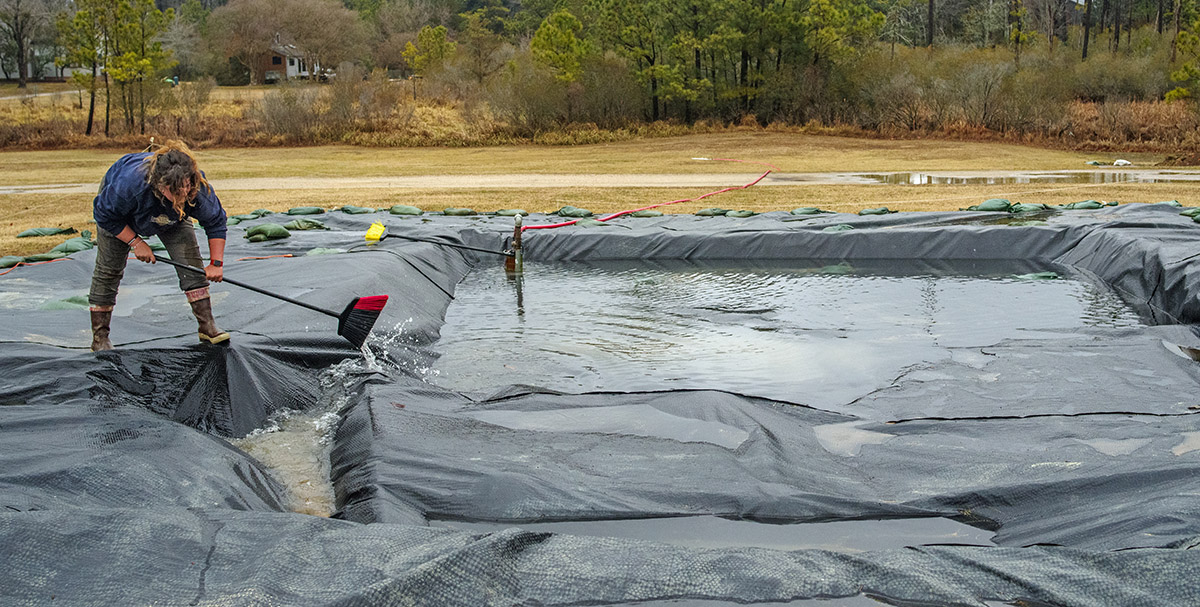
-

- Archaeological Field Technician Katie Griffith adjusts a pump removing water from excavations after a rainstorm.
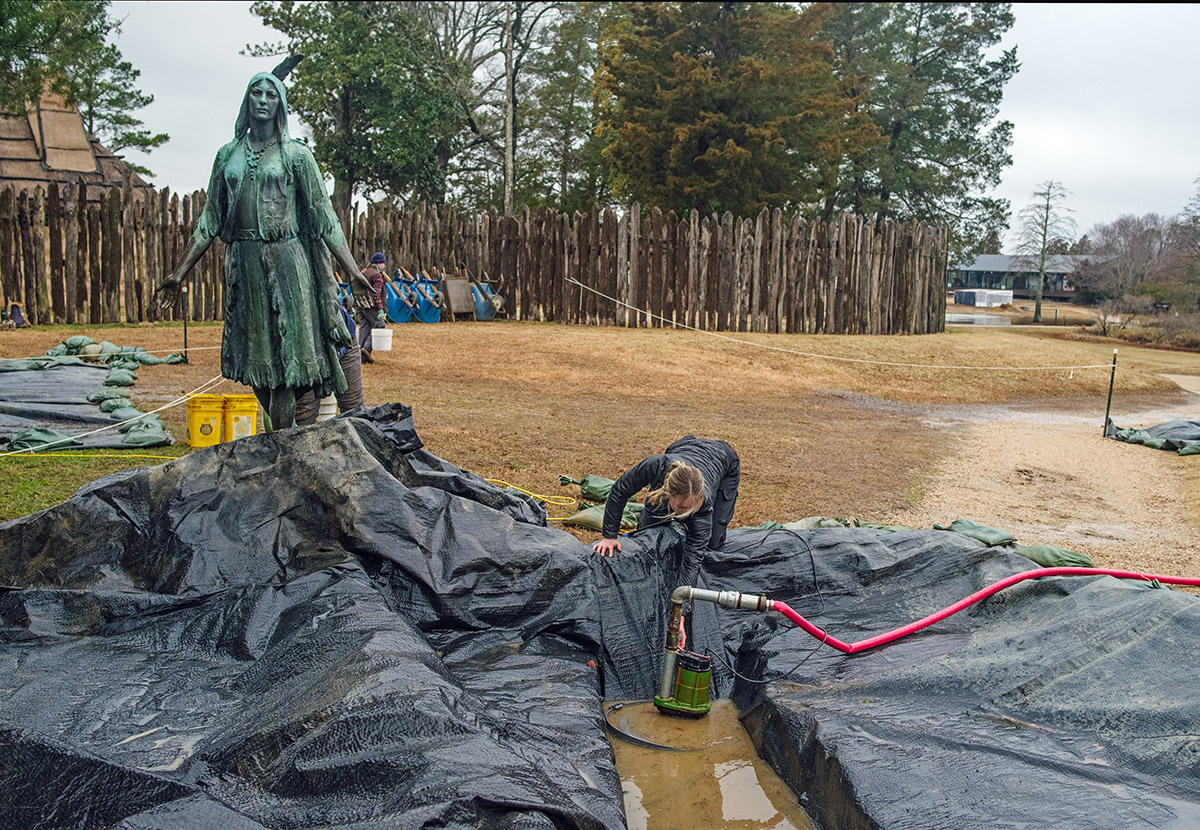
-

- Water pumped from the North Church excavations after a rainstorm is released near the Pitch and Tar Swamp.
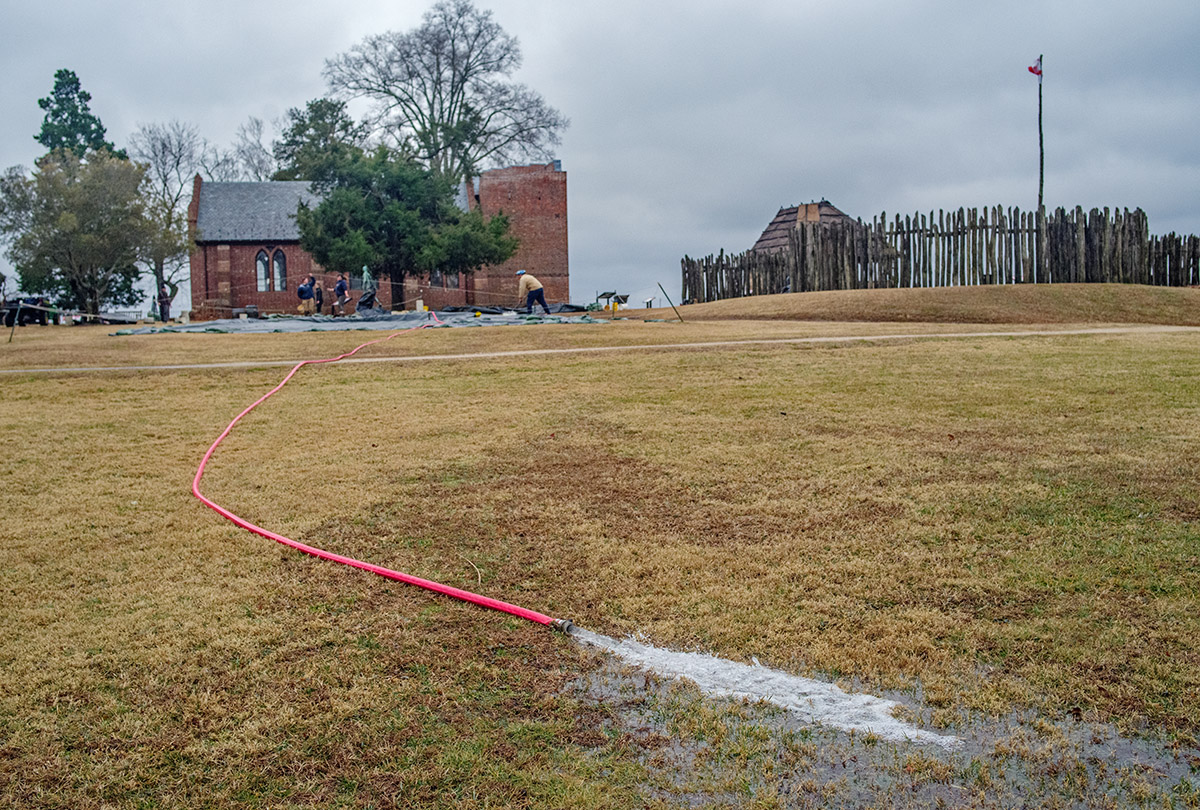
-

- Staff Archaeologist Caitlin Delmas examines an artifact she found while screening.
-
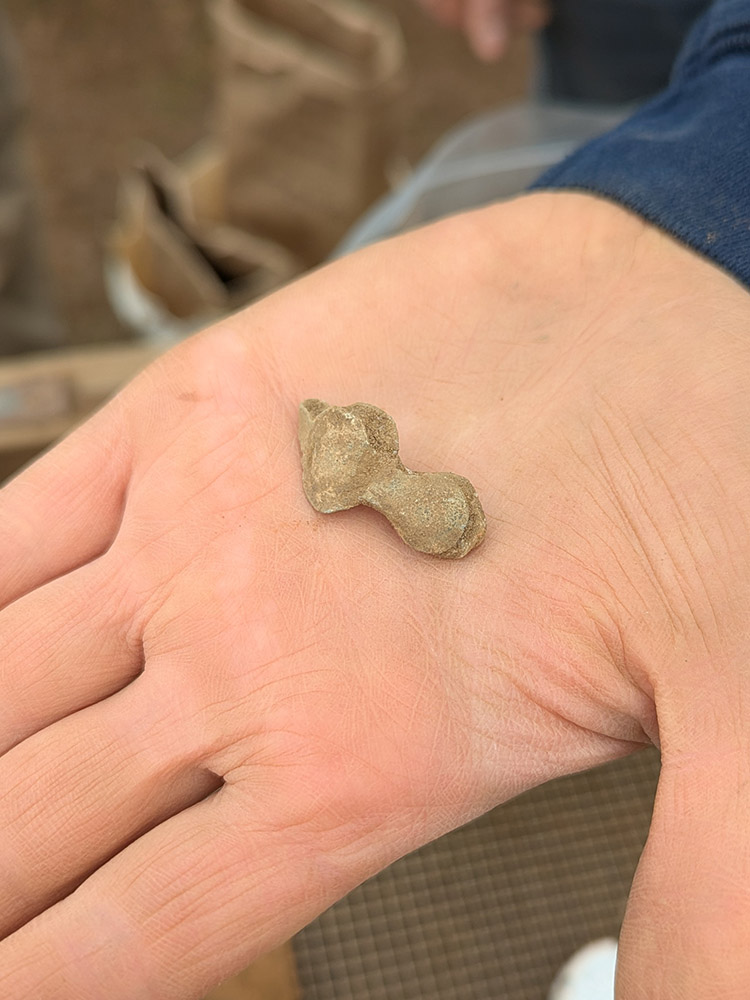
- A lead seal found in the North Church excavations this month. It’s hard to make out any details currently but it’s possible some may come to light during conservation.
-
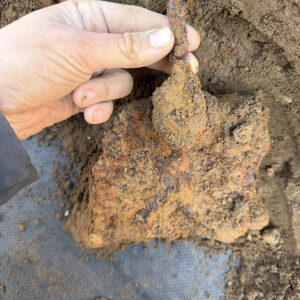
- A “UFO” (Unidentified Ferrous Object) was revealed as a curry comb after being X-rayed.
-
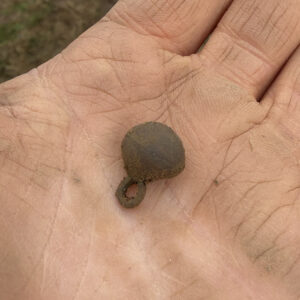
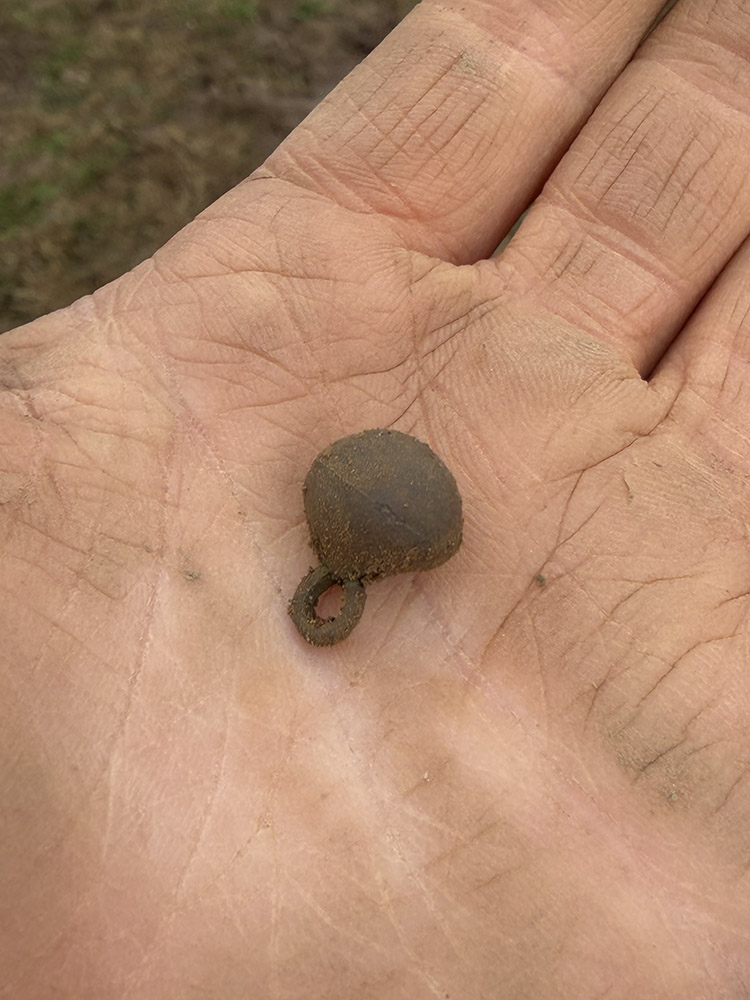
- A button found in the North Church excavations
-
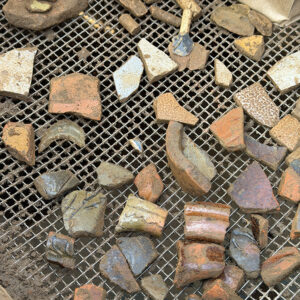
- A screenful of ceramic sherds found by archaeologists in February
-
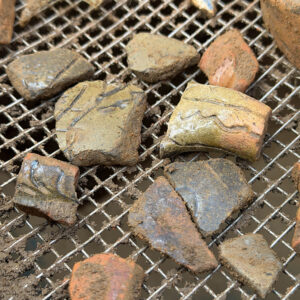
- A closeup of sgraffito ceramics found in North Church excavations this month
-
- Trays of artifacts found this month in the North Church excavations
-

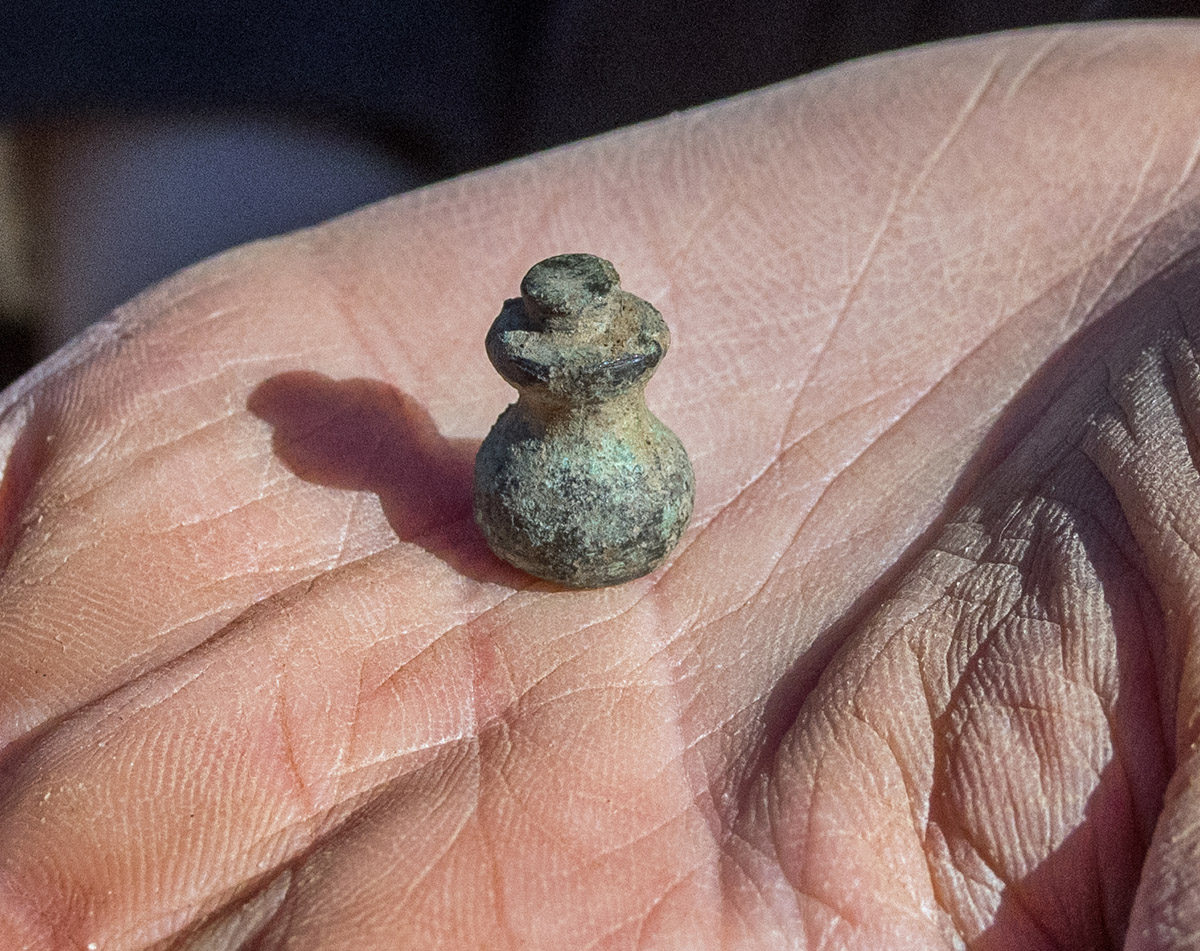
- A small as-yet-unidentified object excavated from the North Church dig
-
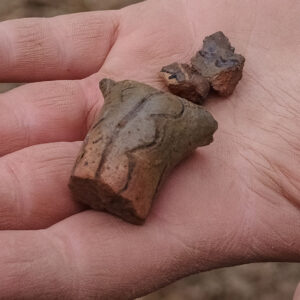
- A sherd of sgraffito ceramic likely part of a vessel’s handle
-
- A flint stone found this month in the North Church excavations
-
- A jetton found this month in the North Church excavations. The green tinge hints that it’s likely made of a copper alloy.
-
- A sherd of Westerwald ceramic found in the North Church excavations this month
-
- A sherd of Westerwald pottery found in the North Church excavations this month
-
- The newly discovered sherd of melting pot is held and compared to an existing partial jar already in the collection. The new piece likely belongs to the same vessel.
-
- The interior surface of the melting jar sherd contains residues from materials heated inside it.
-

- A ceramic sherd excavated from the North Church dig
-
- A sherd of Staffordshire slipware found in the North Church excavations this month
-
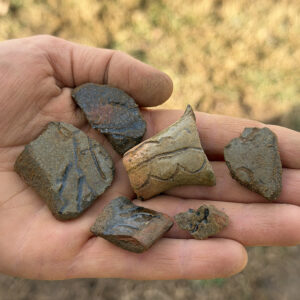
- Sherds of sgraffito ceramics found in the North Church excavations this month
-
- A gooseberry bead found by Archaeological Field Technician Eleanor Robb while screening through soil excavated from the North Church dig.
-
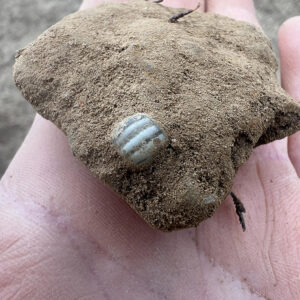
- A closeup of the gooseberry bead
-
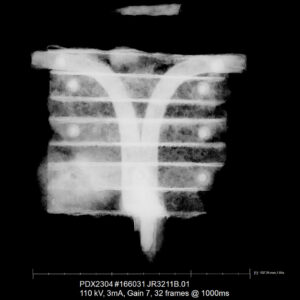
- An X-ray of an iron curry comb found in the North Church excavations
-
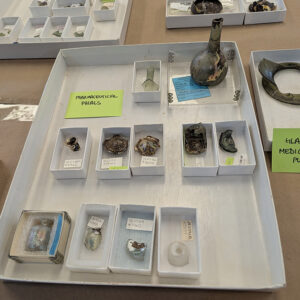
- Glass pharmaceutical phials in the Jamestown collection. These are some of the artifacts gathered in the initial stages of creating the glass reference collection.
-

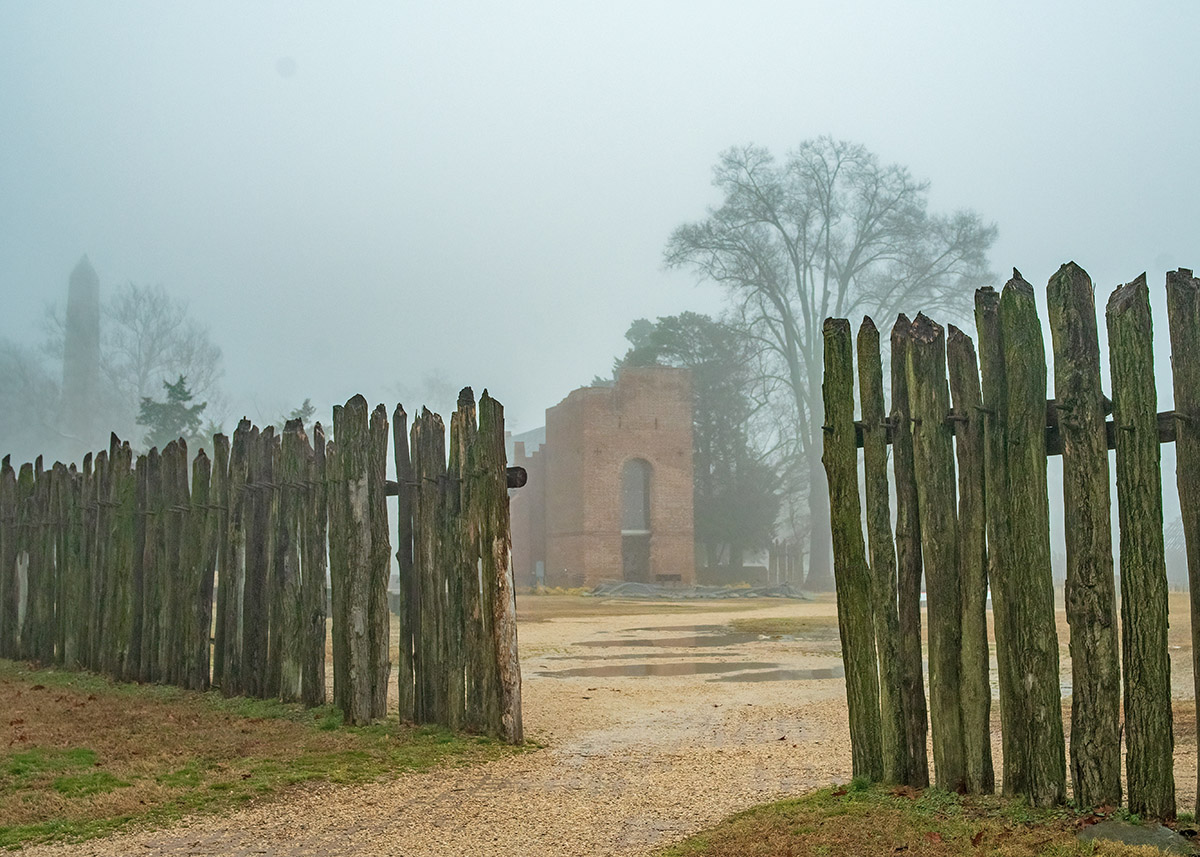
- The 1680s Church Tower is framed by the western palisade wall on a foggy February day.