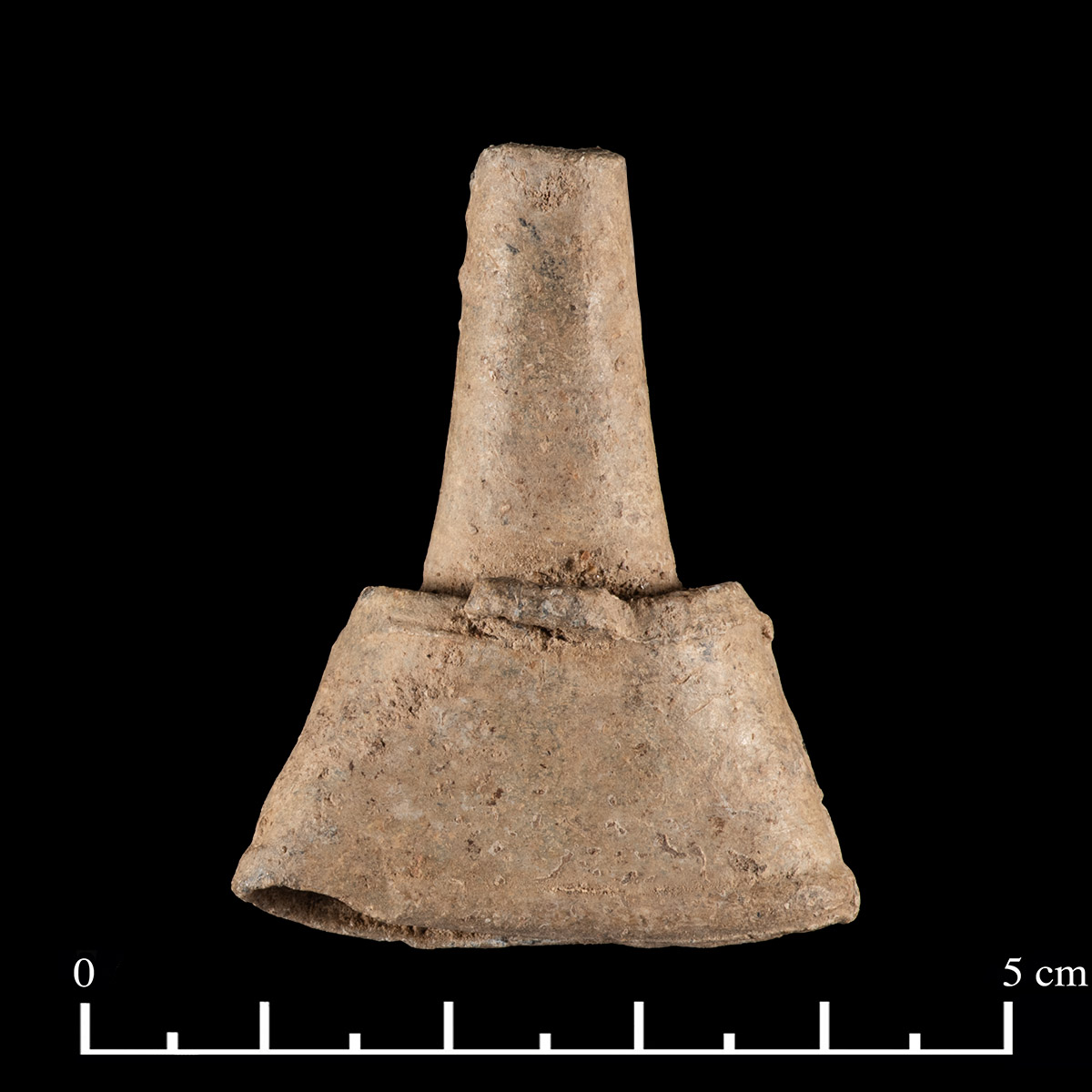
Bandolier bottles and caps
Bandolier Bottles and Caps

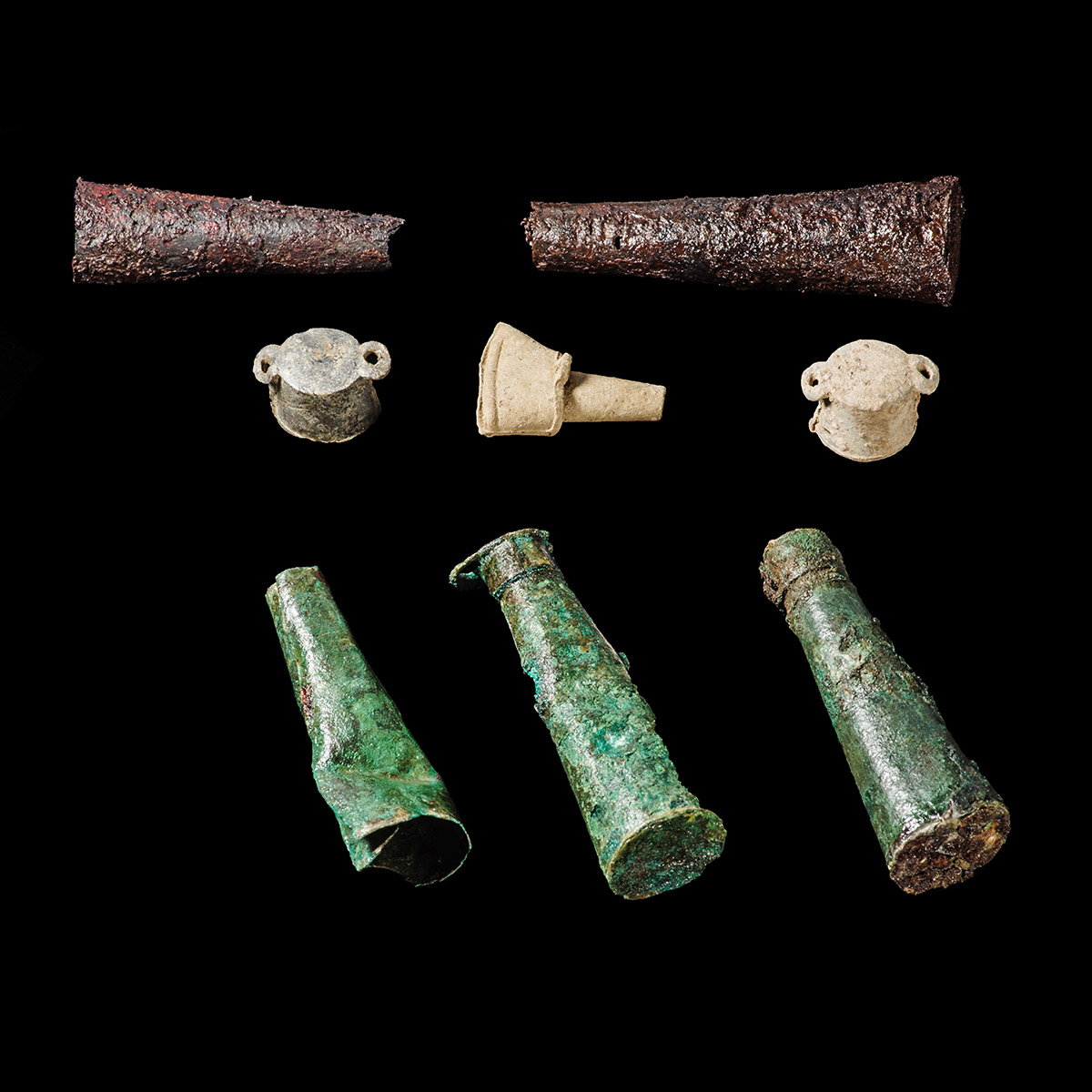
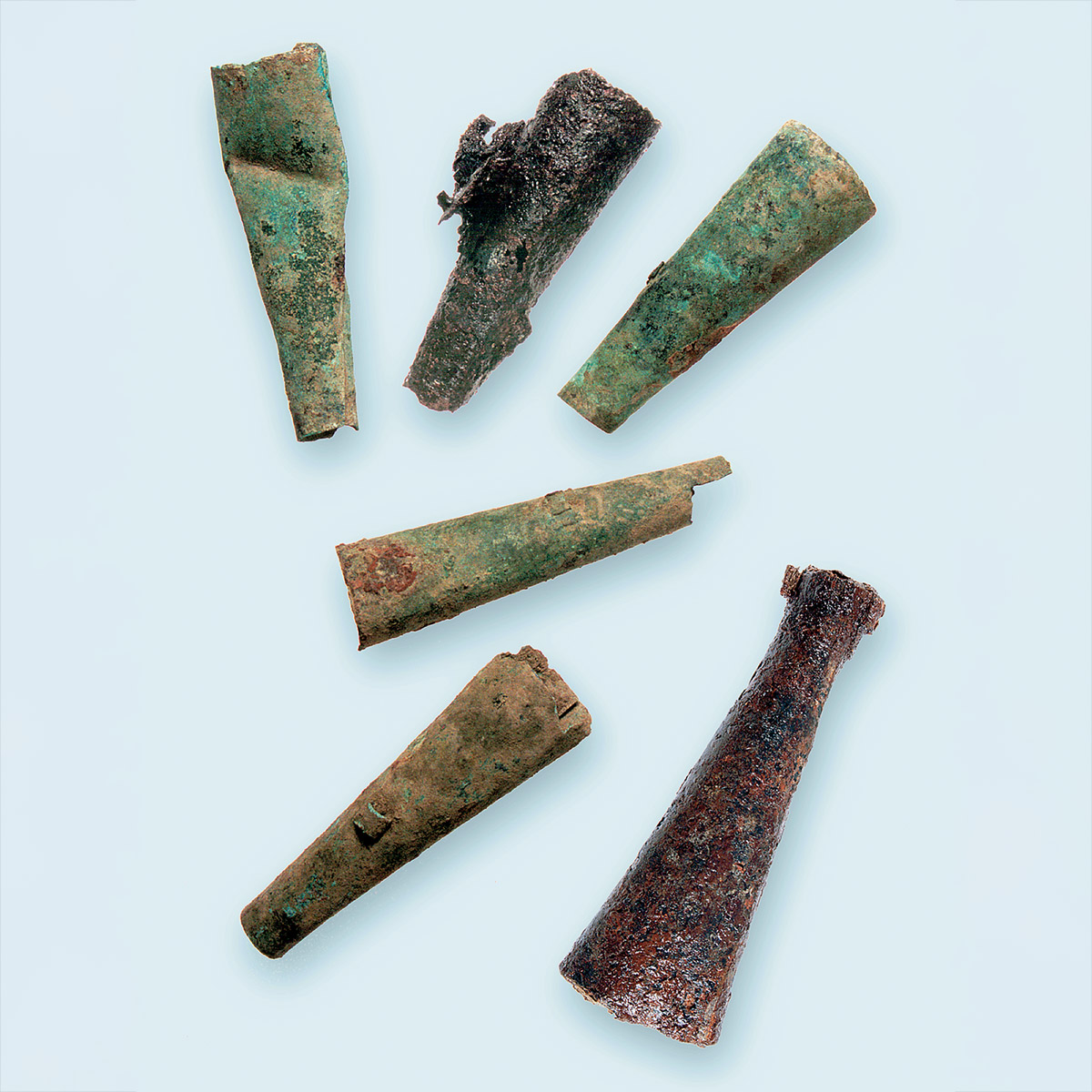
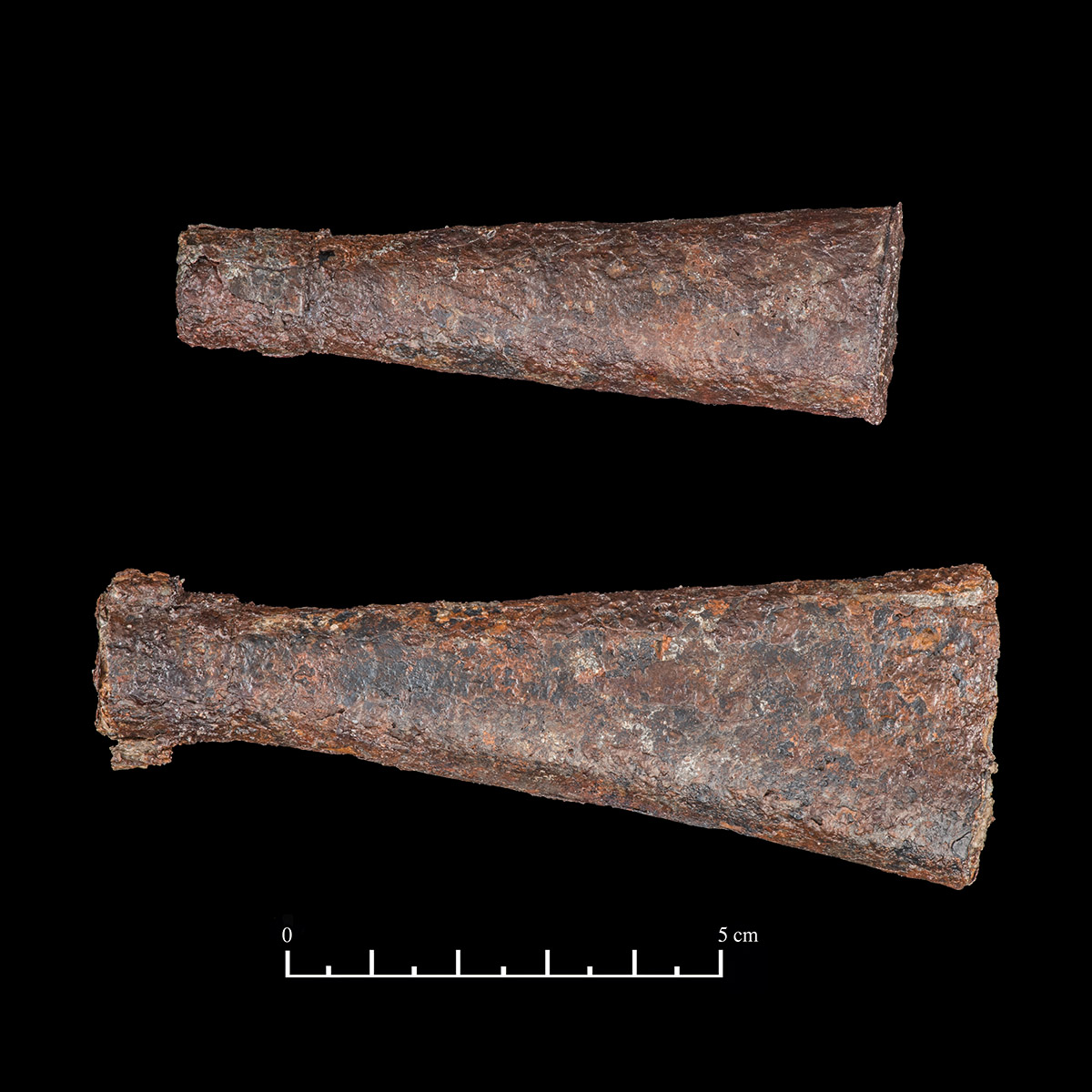
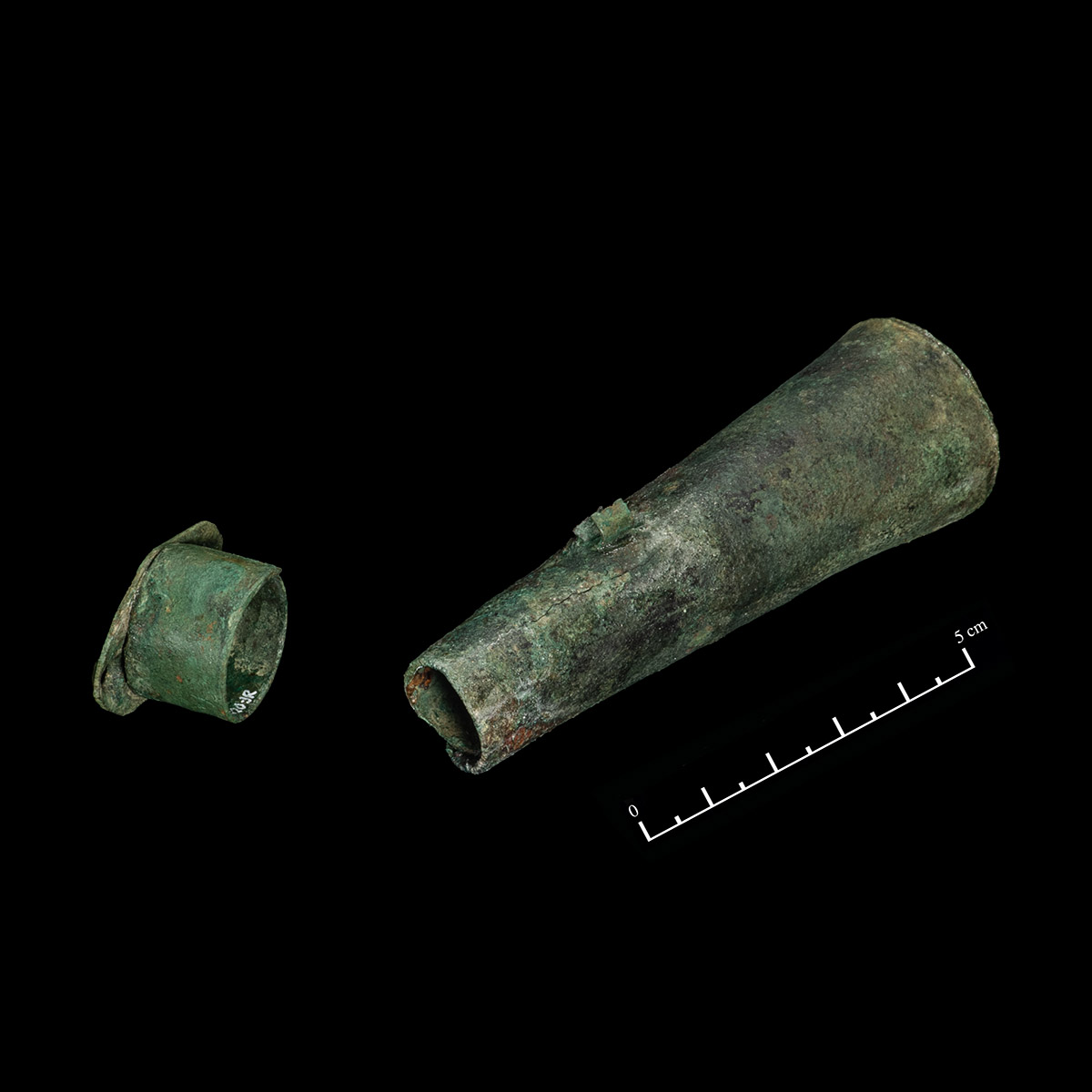
Developed in conjunction with the use of muzzle-loaded firearms, bandoliers were worn throughout Europe in the post-medieval period. These bottles held pre-measured, single charges of gun powder designed to increase the speed and efficiency at which the gun could be loaded and fired. About a dozen bottles, referred to as chargers, would hang from strings attached to a cross-body leather strap to help with the loading process, which is why a set is often called a collar of charges.

In the seventeenth century, the chargers were made from various materials including iron, copper alloy, and wood. At Jamestown, over 2000 of these bottles have been recovered thus far – most of which are comprised of a tinned iron. The iron cylinders were manufactured in multiple sizes, storing different amounts of gun powder for different sized guns and their related munitions. The overwhelming majority of the iron ones found at Jamestown were found in features dated to the early fort period (1607-1610), with over 1000 recovered from the First Well.

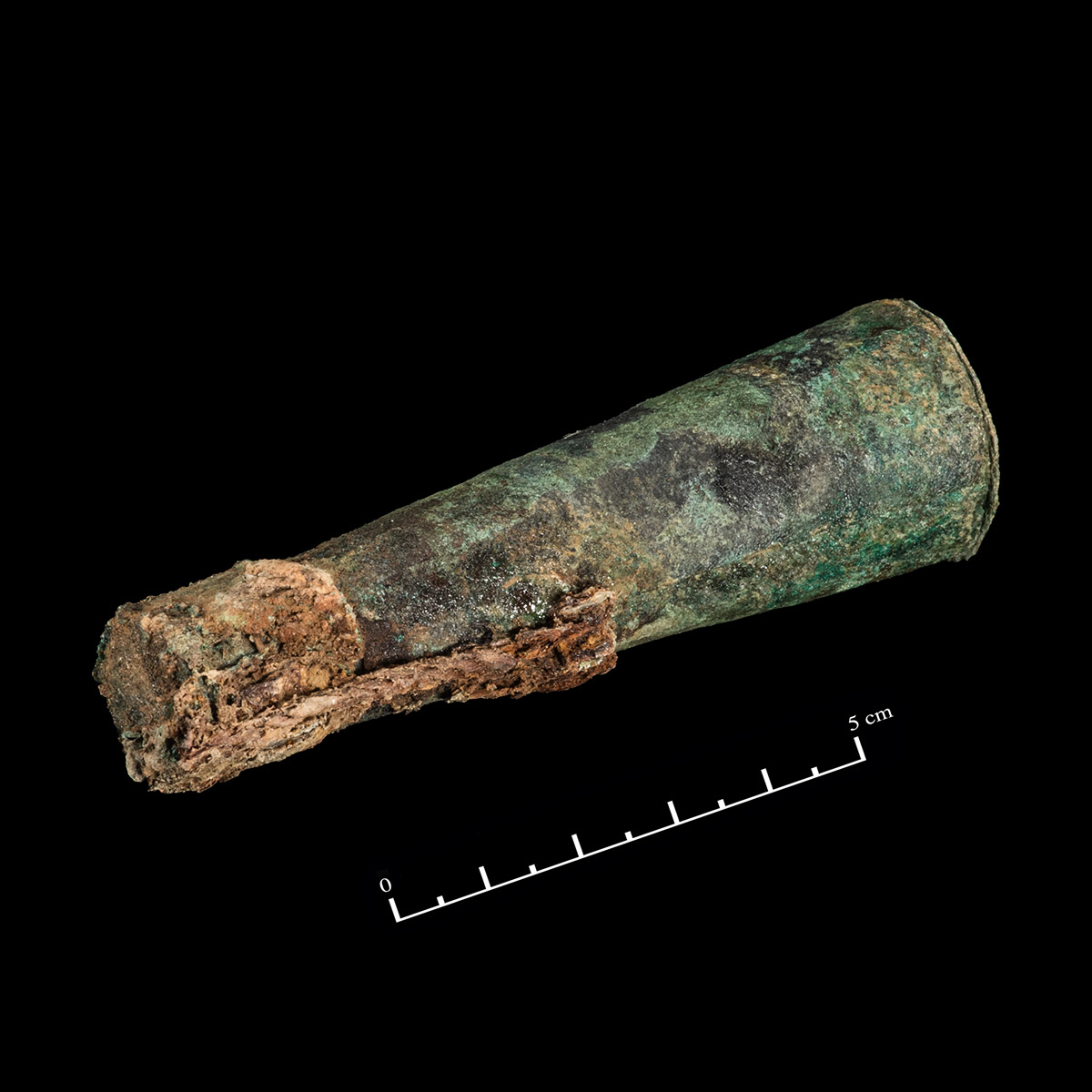
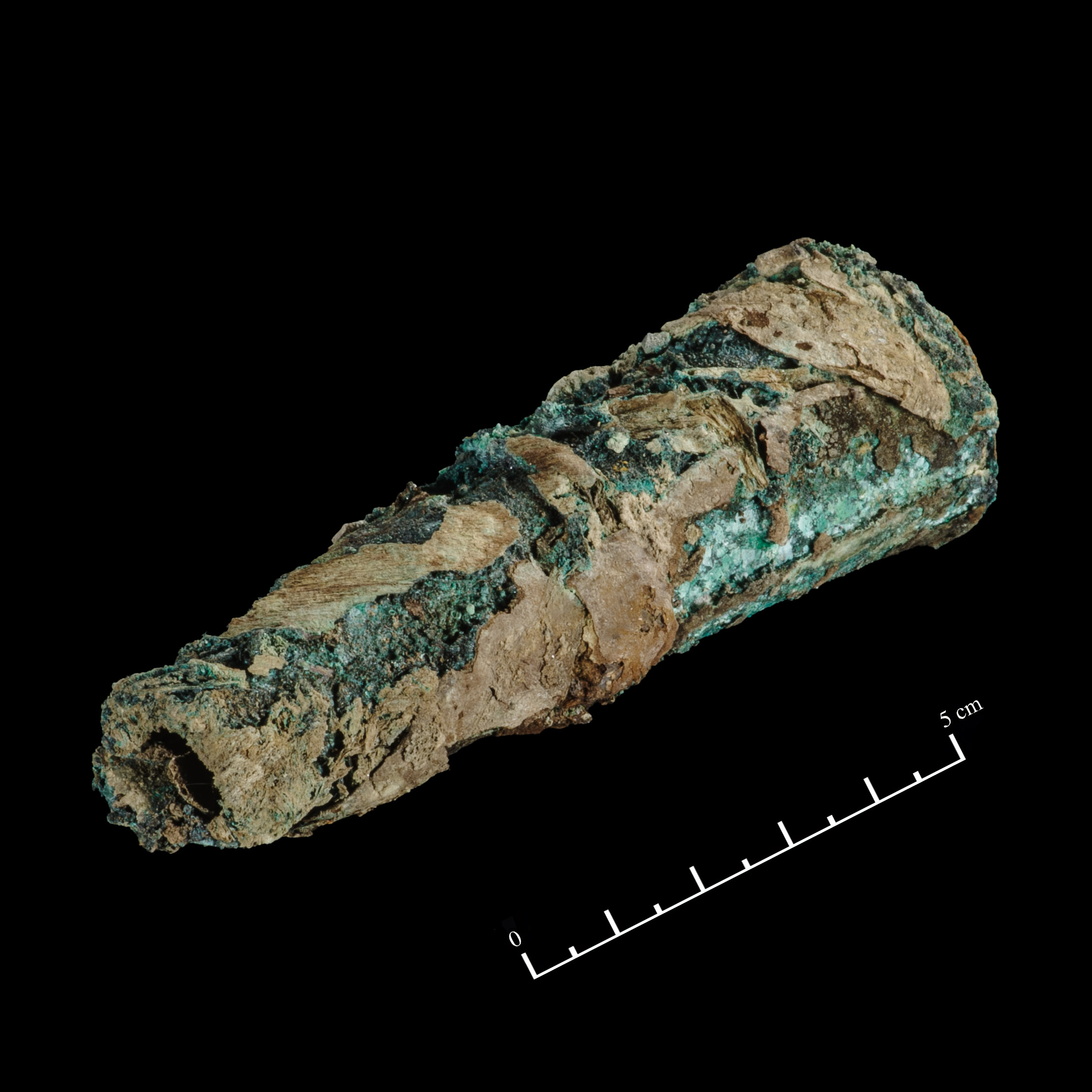
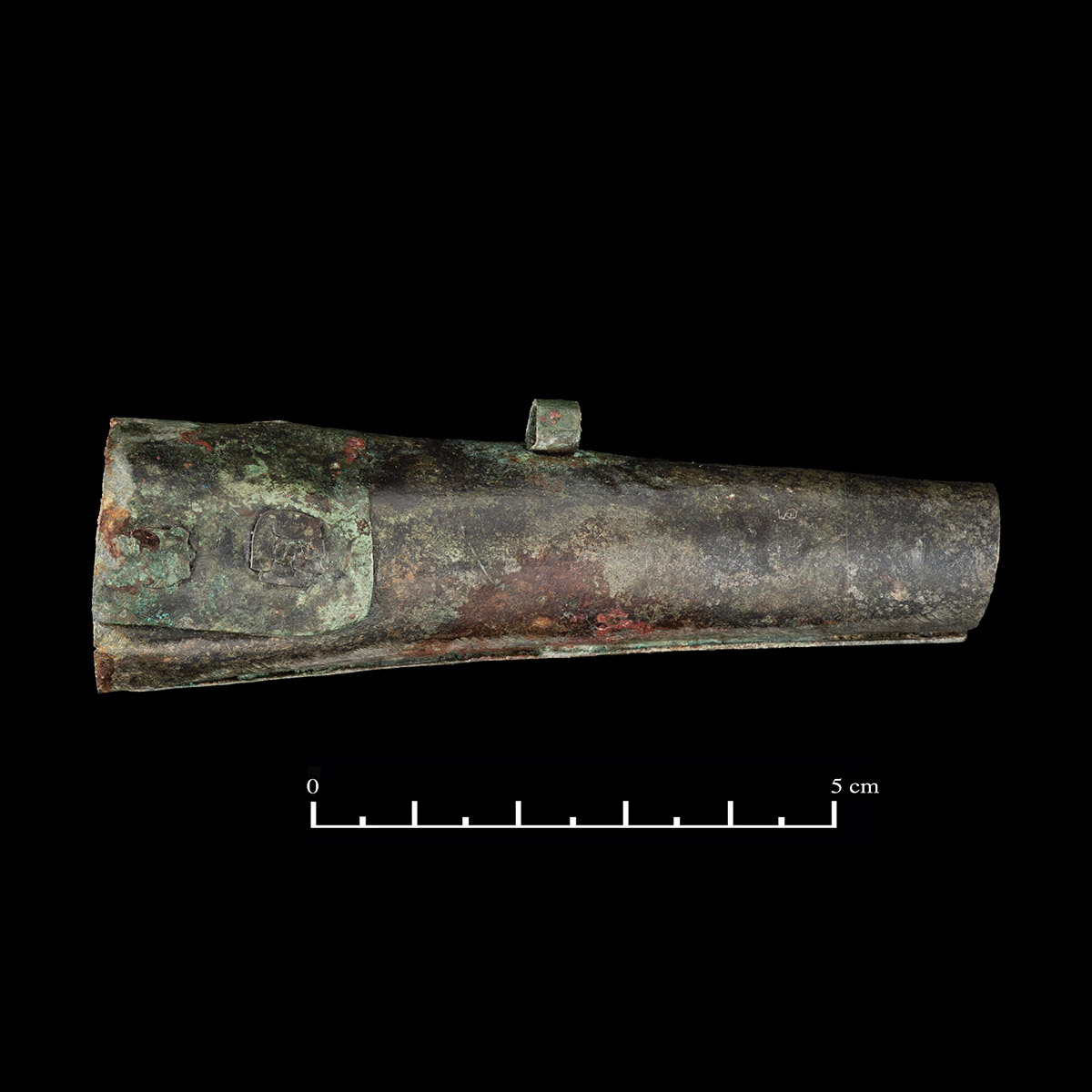
Approximately 75 copper alloy chargers have also been found primarily in early fort period contexts. While about a third of them were recovered from the First Well, the most interesting examples come from Pit 5. This includes a few that still have remnants of the leather that encased the body on their exteriors, some with portions of the attachment string still in place, and one that someone took the time to repair with a tinker’s dam. Identical examples have been recovered from at least two Dutch sites that date to the 1590s, providing an interesting connection to Jamestown’s gentlemen soldiers who fought alongside the Dutch in their war for independence.

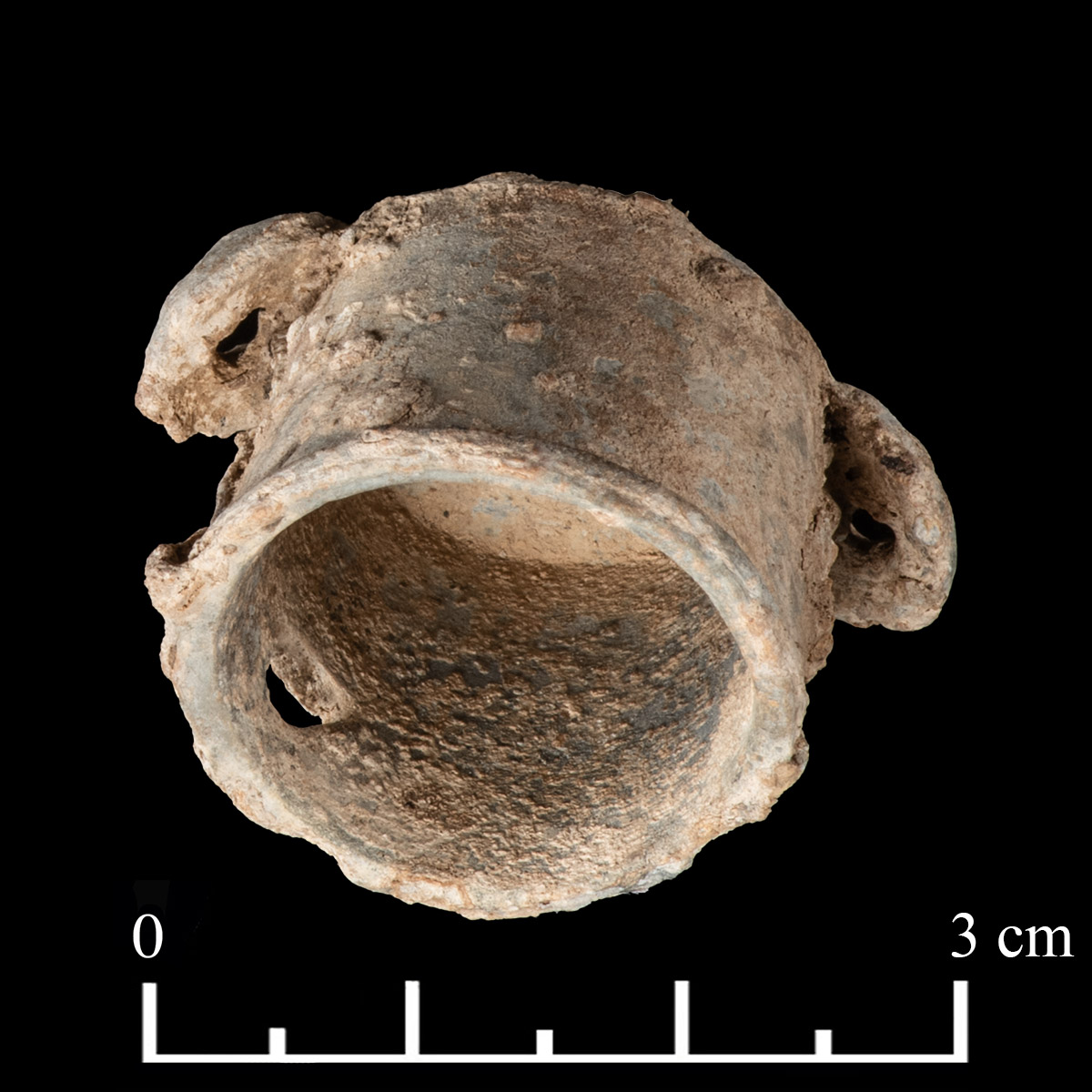
Archaeologists have also found about 30 lead caps and 1 lead priming flask top which would have been used on some wooden chargers. These are typically associated with the English Civil War in the 1640s, but are occasionally found in earlier seventeenth century contexts like Jamestown. Though none were recovered from contexts dating specifically to the early fort period, there do appear to be a few associated with features that may date to the 1620s-1630s.

The large number of these bottles recovered from James Fort highlights the importance of firearms to Virginia’s first English capital. Additionally, while the lower number of lead caps is likely a result of a potential time period bias, the difference in the number of tinned iron versus copper alloy chargers is quite interesting. The far lower number of copper alloy cylinders could be a result of socioeconomics, lack available material on hand to make them, or a few gentlemen soldiers bringing over their own equipment from their time in the Netherlands. We do see personal weapons and equipment in other parts of the arms and armor collection, so this would not be unusual for the fort.