Glass Prunts
Glass Prunts
  • Object Number – Various
  • Material – Glass
  • Place of Origin – Europe
  • Date – ca. 1607-1699
  • Context – Various
  • Location – Collections
  • Category – Foodways

These small glass blobs, called prunts, once decorated German or Dutch-made glass vessels, providing an “anti-slip grip” for the late 16th and 17th-century drinker! A few different types of prunts, or in Dutch, “noppen,” have been found at Jamestown, and they were likely used on different forms of glassware, imported to Jamestown throughout the first half of the 17th century.

The earliest prunts are thorn or pointed prunts, seen decorating glass beakers and drinking vessels called berkemeiers as early as 1400, like this one in the collection of the Getty dated to the first half of the 16th century.

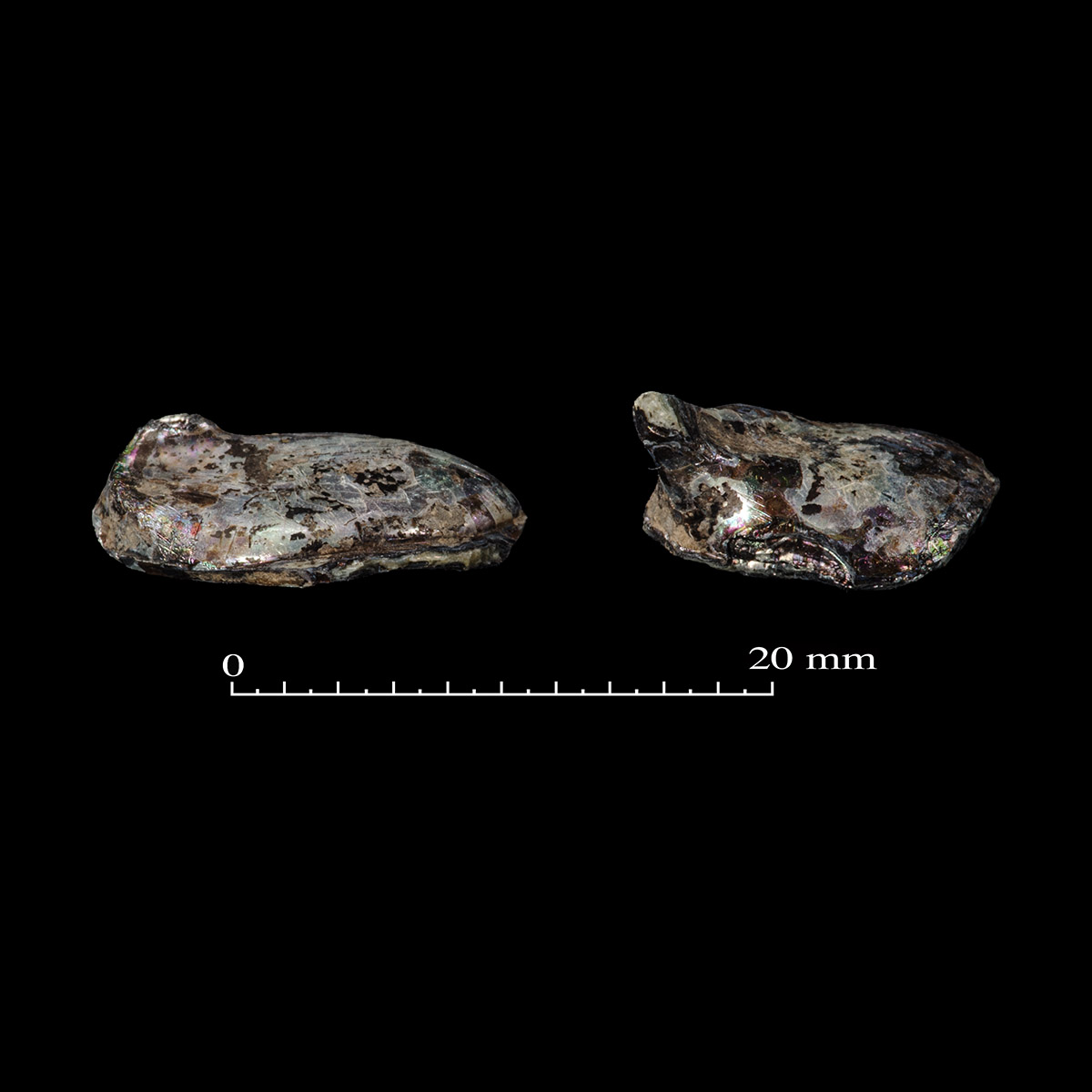
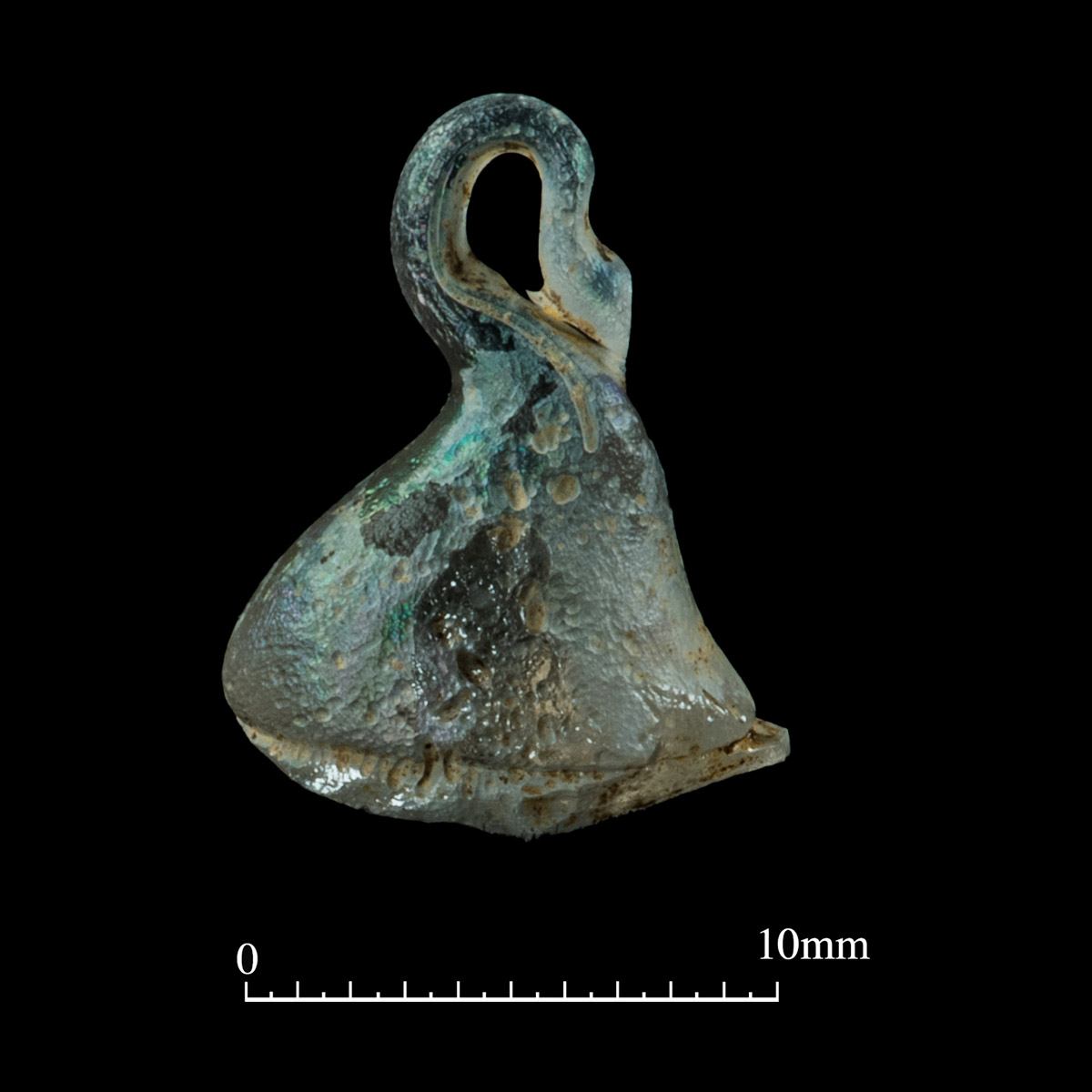
Pointed prunts, seen from the side to highlight their points Glass pointed prunt Glass pointed prunt with loop closure

Thorn prunts decorating the conical berkemeyer and cylindrical or barrel-shaped beaker could be quite elongated.  Some, like one made from colorless glass found at Jamestown (above right), may have used a thin strand of glass to create a closed loop, which could have even contained a decorative dangling element, like the prunts on this beaker in the collection of the Art Institute of Chicago. Including the looped version, the Jamestown collection includes only four thorn/pointed style prunts, likely from vessels brought to Virginia in the first quarter of the 17th century.

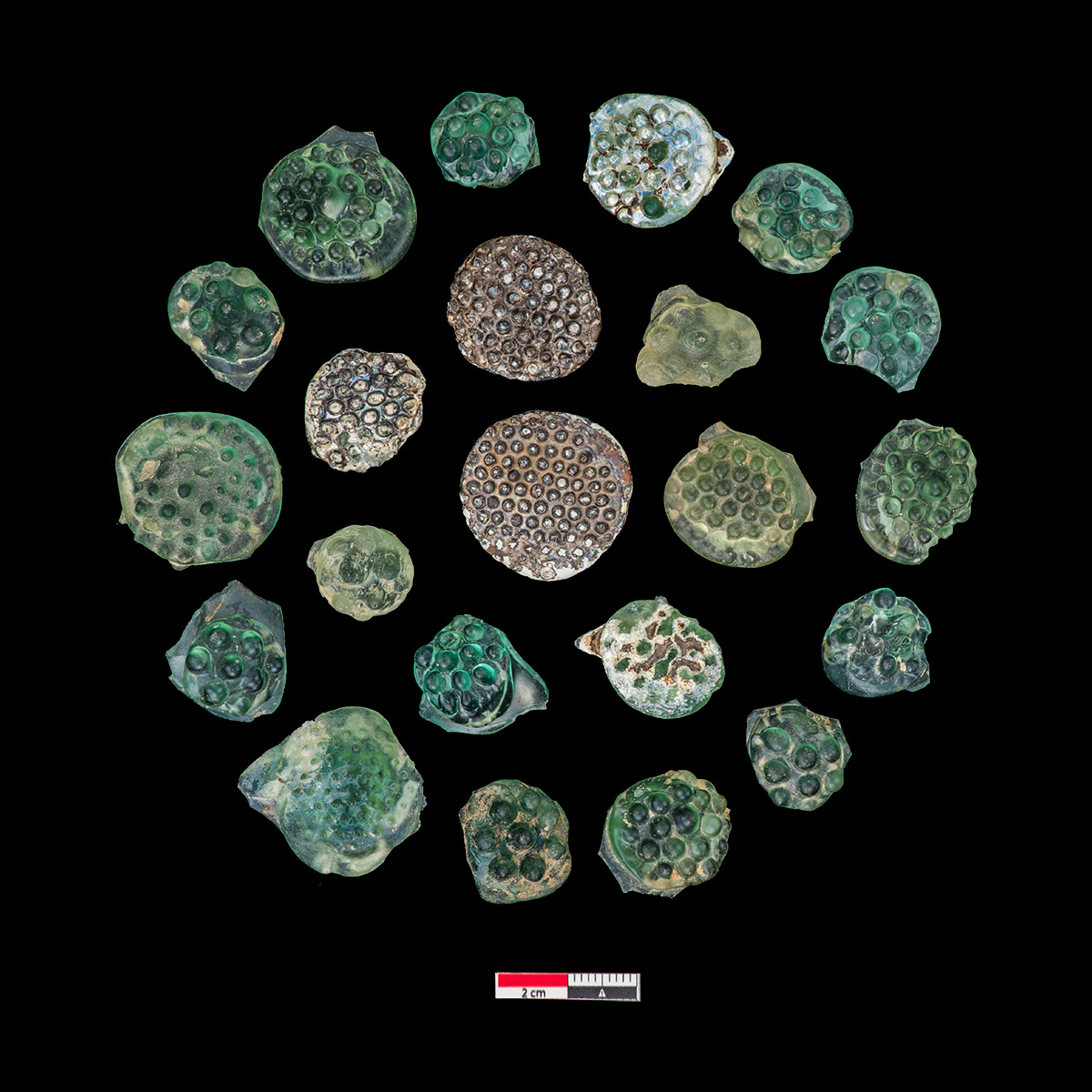
Throughout the early 1600s, beakers and berkemeyers were slowly replaced in popularity by roemers, a glass vessel form with an elongated hollow cylindrical stem and a convex bowl. The earliest roemers still displayed thorn or pointed prunts, like this one, dated ca 1615 in the Chrysler Museum of Art, or this one in the collection of the Corning Museum of Glass.  However, throughout the 17th century, the use of applied raspberry style prunts (also called strawberry or blackberry prunts) became more commonly used.  Roemers appear in several 17th-century Dutch still-life paintings, including examples with both thorn and raspberry prunts in works by the artists Pieter Claesz (1597-1660) and Georg Flegel (1566-1638), respectively.  Over 30 roemer raspberry prunts have been recovered in archaeological excavations at Jamestown. The roemers that these prunts adorned likely came to Jamestown in the second quarter of the 17th century.

Group of raspberry prunts. The different colors of the prunts is due to the various compositions of the glass as well as the interaction between the glass and the soil it was buried in for 400 years.

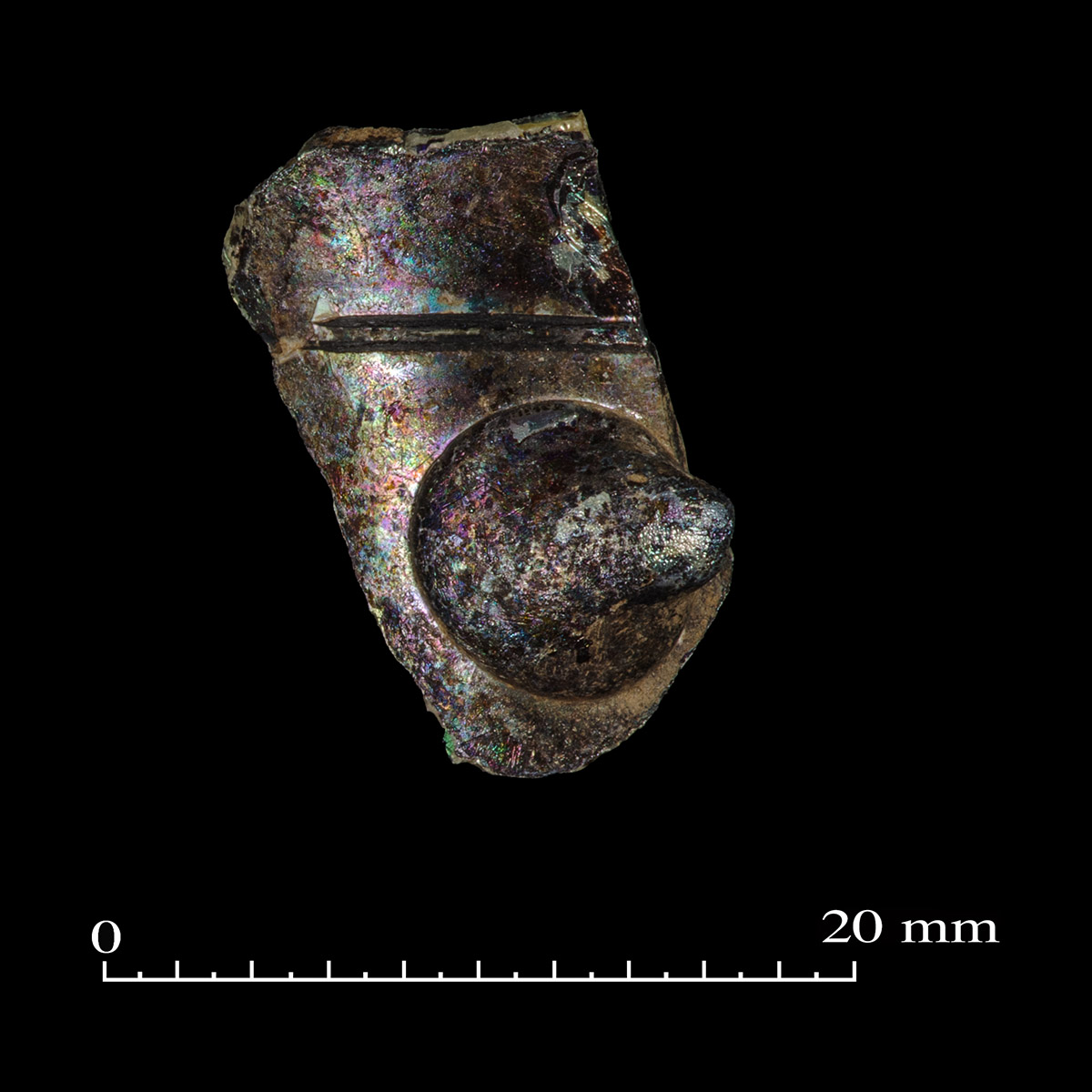
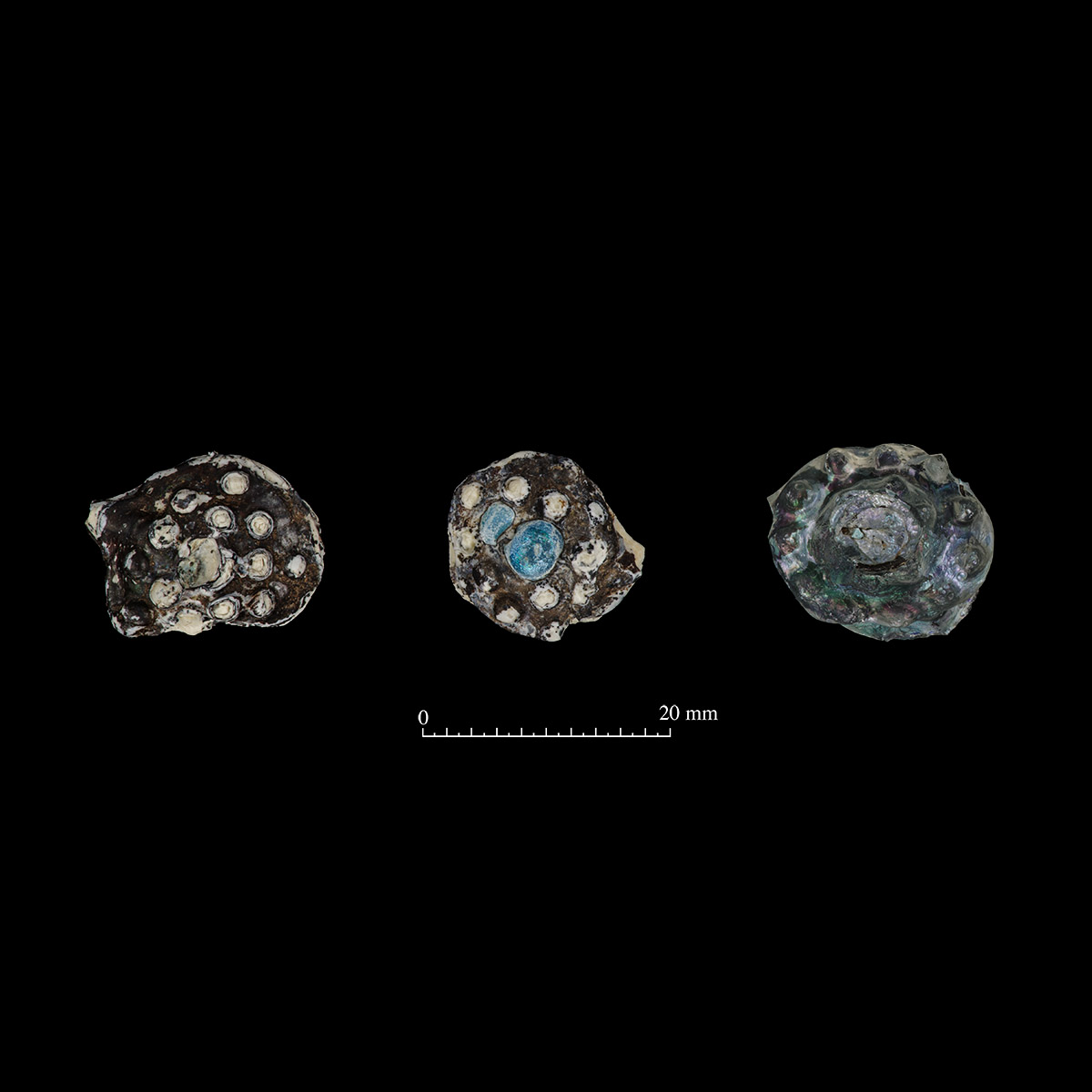
In addition to roemer prunts, a few unique raspberry-style prunts have been found at Jamestown. Three are likely part of vessels dating to the fort-period (ca. 1607-1624). Only one of these still retains its central turquoise blue sphere, although an additional two prunts appear to have also once contained a central element, likely of the same turquoise blue. Like the raspberry prunts, the two prunts which appear darker may only appear this way now because of degradation of the glass over time. One of these elaborate prunts was found in a mixed context, but two others come from dated fort period features — the Governor’s House/Row Houses, and the Second Well, both constructed just after the Starving Time winter. Although it remains unclear what kind of vessel these decorated, glass objects dating from 1550-1600 are known to have prunts in this style with turquoise blue centers, like this tazza in the collection of the Corning Museum of Glass. The glass objects themselves were extremely expensive.

Three raspberry prunts with turquoise glass in center

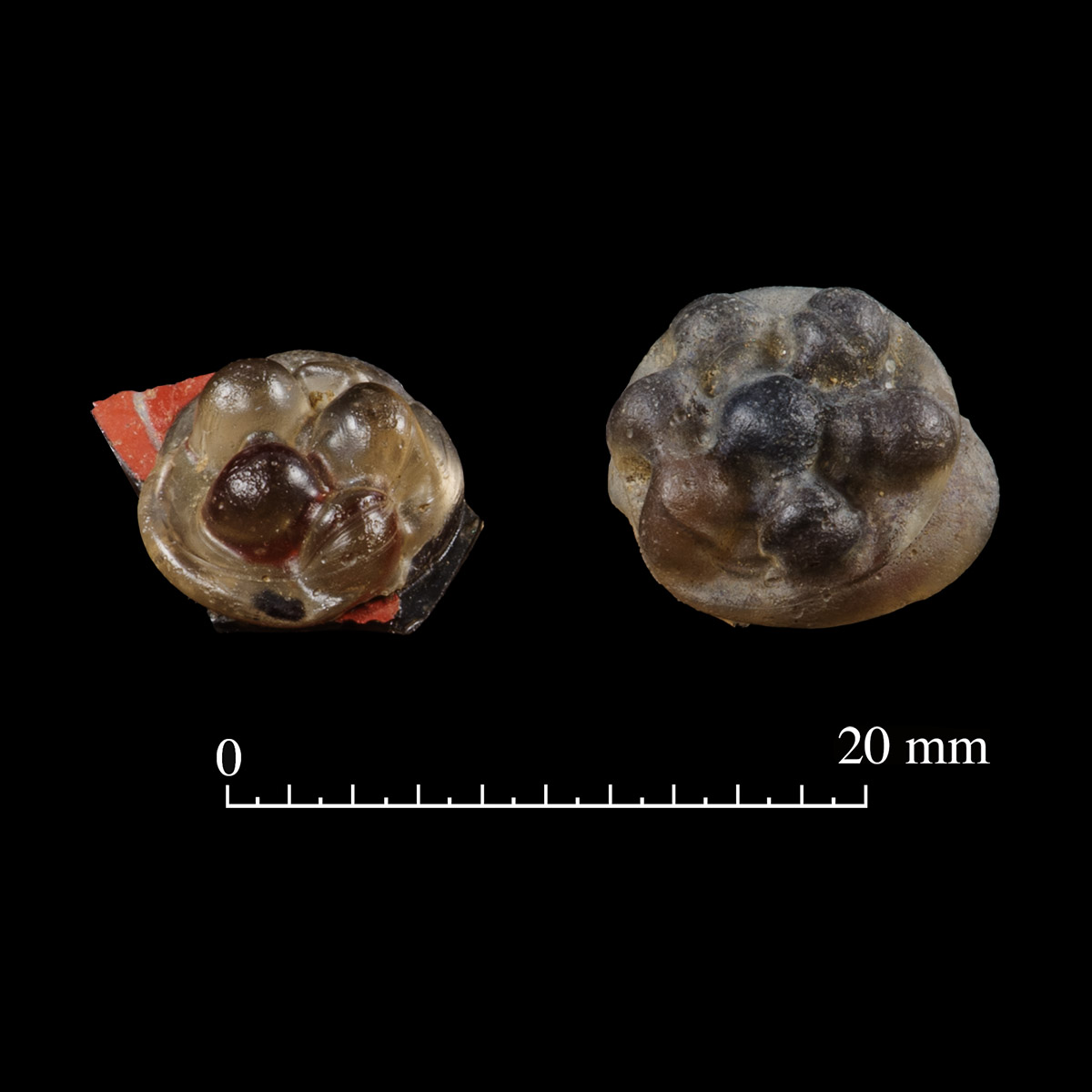
Finally, two small raspberry prunts were part of vessels of flecked enameled glass. Other glass shards with this decoration suggest that at least two vessels of this kind came to Jamestown, both colorless glass speckled red, blue, and white. While the overall form is still unclear, the vessels both had notched footrings and perhaps one prunt each. While one of these prunts is from a mixed context, the other was found in fill of the Wine Cellar, the storage area for a late 17th century structure.

Two raspberry prunts with red flecked enamel