the project

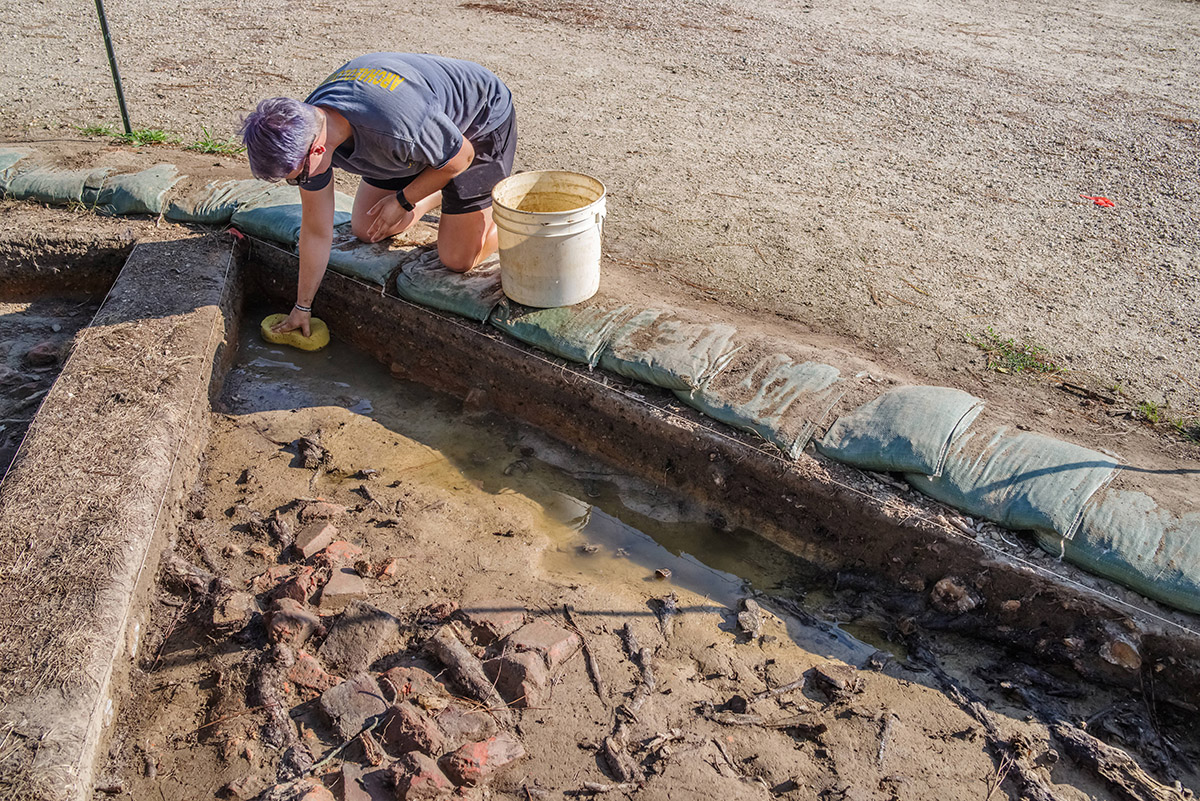
Beginning in 2022, the Jamestown Rediscovery team investigated the field north of James Fort. While following a 17th-century trench to the north corner of the 1861 Fort Pocahontas, a Civil War battery built by Confederates using free and enslaved labor, archaeologists found a heavy concentration of brick rubble that appeared related to 19th-century activity. A reexamination of Civil War records revealed barracks for Confederate soldiers manning Fort Pocahontas located directly behind the battery. When the rebel army abandoned the island during the Peninsula Campaign in May 1862, they left these buildings standing. Days later, the Union Navy arrived to destroy the abandoned ordnances and military structures. However, they spared the barracks at the rear of the fort because were occupied by “contrabands,” formerly enslaved Black men, women, and children who sought freedom behind Union lines. The number of freedom seekers continued to increase, reaching 100 individuals in the next weeks, as multitudes of people swam across the James River, hoping to begin their journey to freedom at Jamestown.

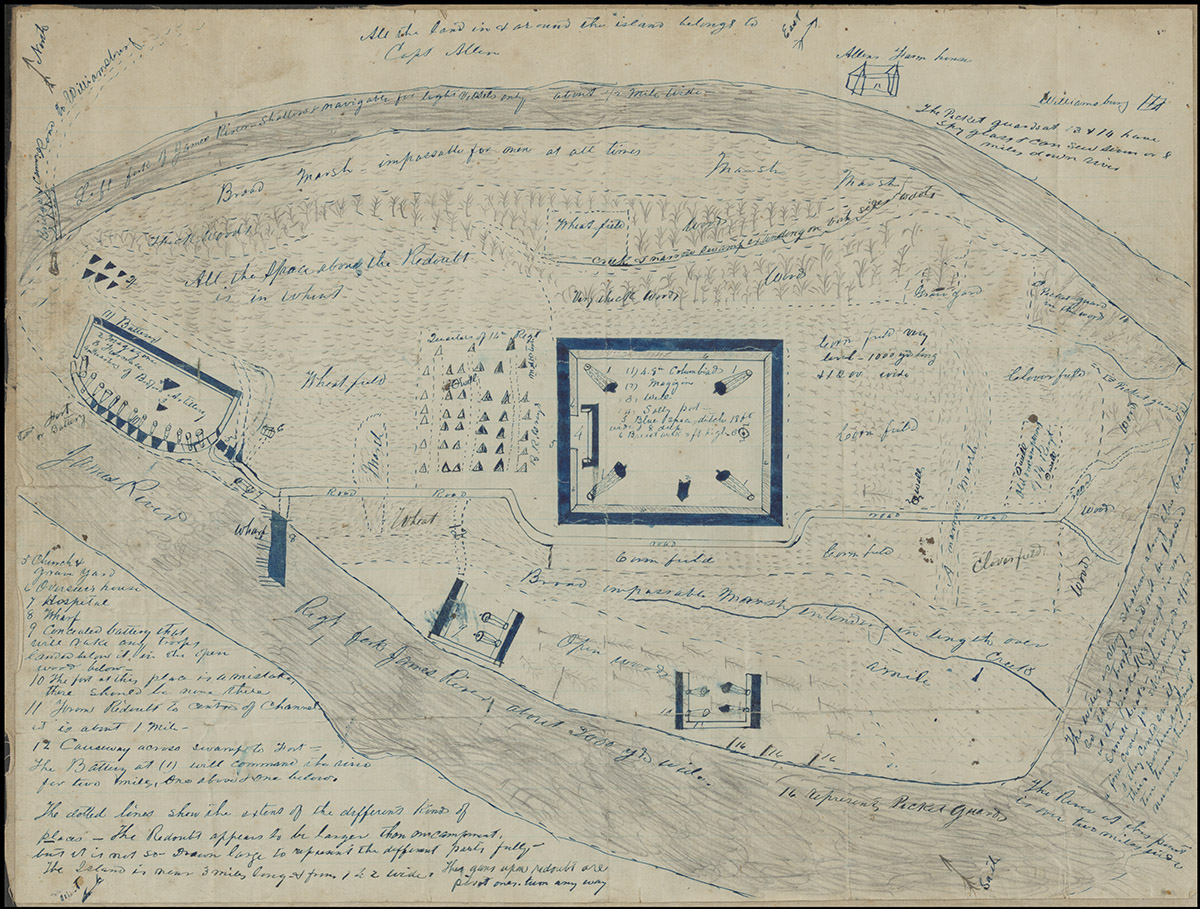
A Civil War-era map of Jamestown Island showing military structures. Special Collections Research Center, William & Mary Libraries.

Soon after the discovery of the brick rubble, two Jamestown Rediscovery colleagues connected to William & Mary shared some promising news with the archaeology team: the W&M Earl Gregg Swem Library had recently acquired a Civil War-era map that detailed Jamestown Island’s defenses when occupied by the Confederate army. Among the many interesting features associated with Fort Pocahontas are two rows of three triangles behind its north corner labelled “Quarters of the Bedford Artillery.” The location of the quarters lined up with the Union Naval records describing the structures occupied by Black refugees gathering on Jamestown Island. Excavations to find these structures has already begun.

what are we looking for?

Overall, we want to tell a more complete story of Black history at Jamestown, from the inception of slavery to freedom-seekers taking refuge in U.S. Navy barracks.

Staff Archaeologist Caitlin Delmas soaks up rainwater prior to continuing excavations of a 19th-century brick rubble feature north of Fort Pocahontas.

Jamestown was central to the creation of America’s political and legal frameworks for race-based slavery. In the decades after 1619 — the year Virginia saw the forced arrival of “20 and odd” captured Angolans — the colony oversaw the gradual, then systemic development of codified chattel slavery in America even as its General Assembly championed personal freedom for white settlers. Over two centuries later, during the American Civil War, Jamestown was again at the center of conflicts over slavery, liberty, and resistance. By 1862, Jamestown Island was occupied by Union forces, and many enslaved individuals from surrounding plantations made their way to Jamestown to reach freedom with the Union army. This push for self-emancipation represented the largest-scale resistance to slavery at Jamestown since the late 17th-century, when armed coalitions of Africans, Native Americans, and poor whites rebelled against the conditions of their forced labor. Thus, these events bookend those that unfolded in 1619. Other researchers have touched on these events, but the details about individual lives have been left unexplored. The goal for historical research with this project is to uncover the names and lives of the African American men and women who lived, worked, or freed themselves on Jamestown Island in the years surrounding the Civil War.

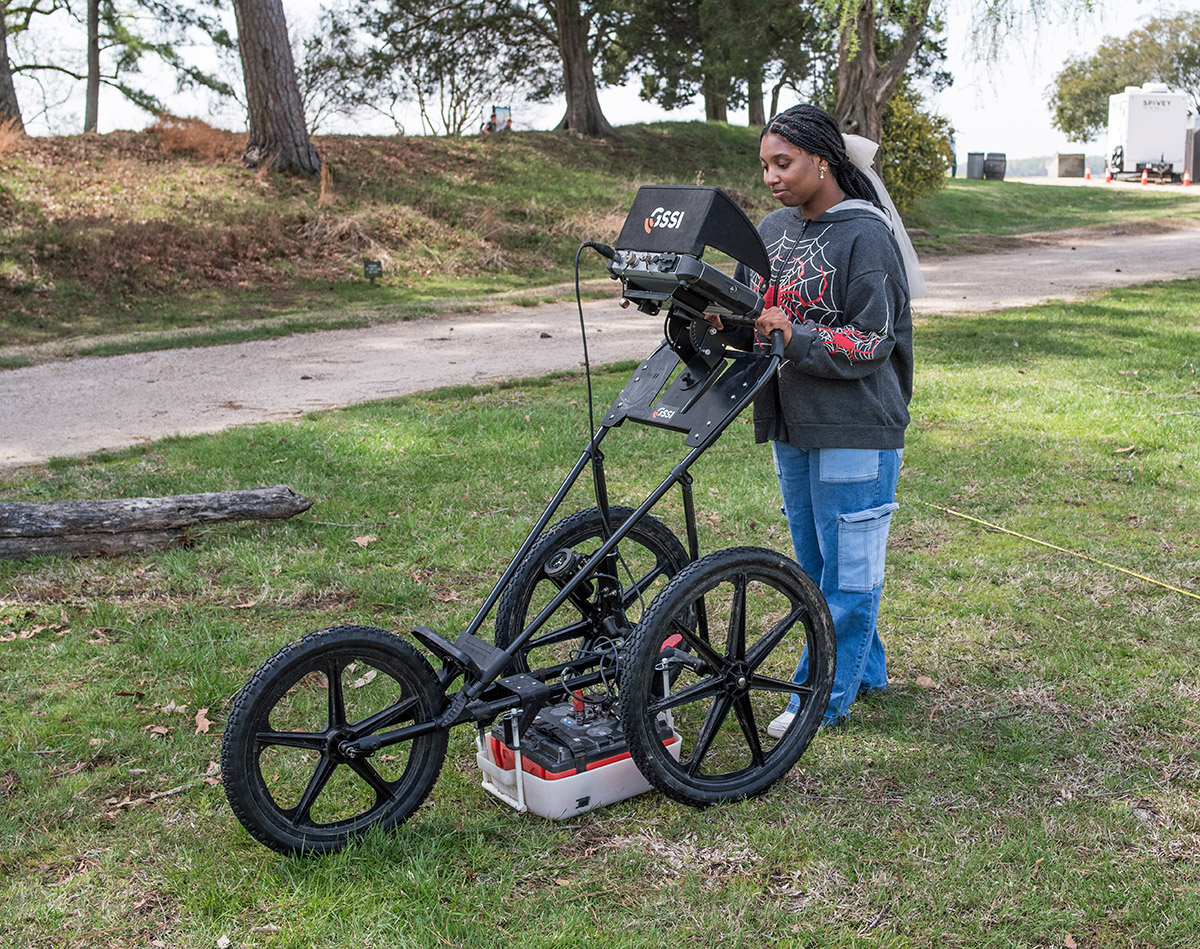
A Surry County High School student conducts a ground-penetrating radar (GPR) survey of an area north of Fort Pocahontas.
Surry County High School student Zariah Harrell conducts a ground-penetrating radar (GPR) survey of an area north of Fort Pocahontas.

Archaeologically, the goal is to find the location of the barracks occupied by Black refugees on Jamestown Island. This may be a challenge, as the barracks would have left behind few physical traces. In addition, the buildings were on the landscape for only a short time, and were likely demolished after the Civil War when Jamestown Island reverted to its antebellum owners. However, artifacts and other features may highlight the barracks’ locations even when direct traces are not present.

If we can identify enough physical evidence, we can place the epicenter of a “monumental exodus from slavery” back on the landscape. With help from descendant community groups, we will reimagine the landscape of this time period, using the barracks site to anchor the stories of the Black refugees, and broader African American history on Jamestown Island.

The discoveries from this project should be shared at least with descendant groups and collaborating researchers, but with the wider public as well if possible. A final goal will be to work alongside community groups to determine the best methods to share discoveries. New website pages, video content, lectures, or other dissemination efforts should emerge from these discussions