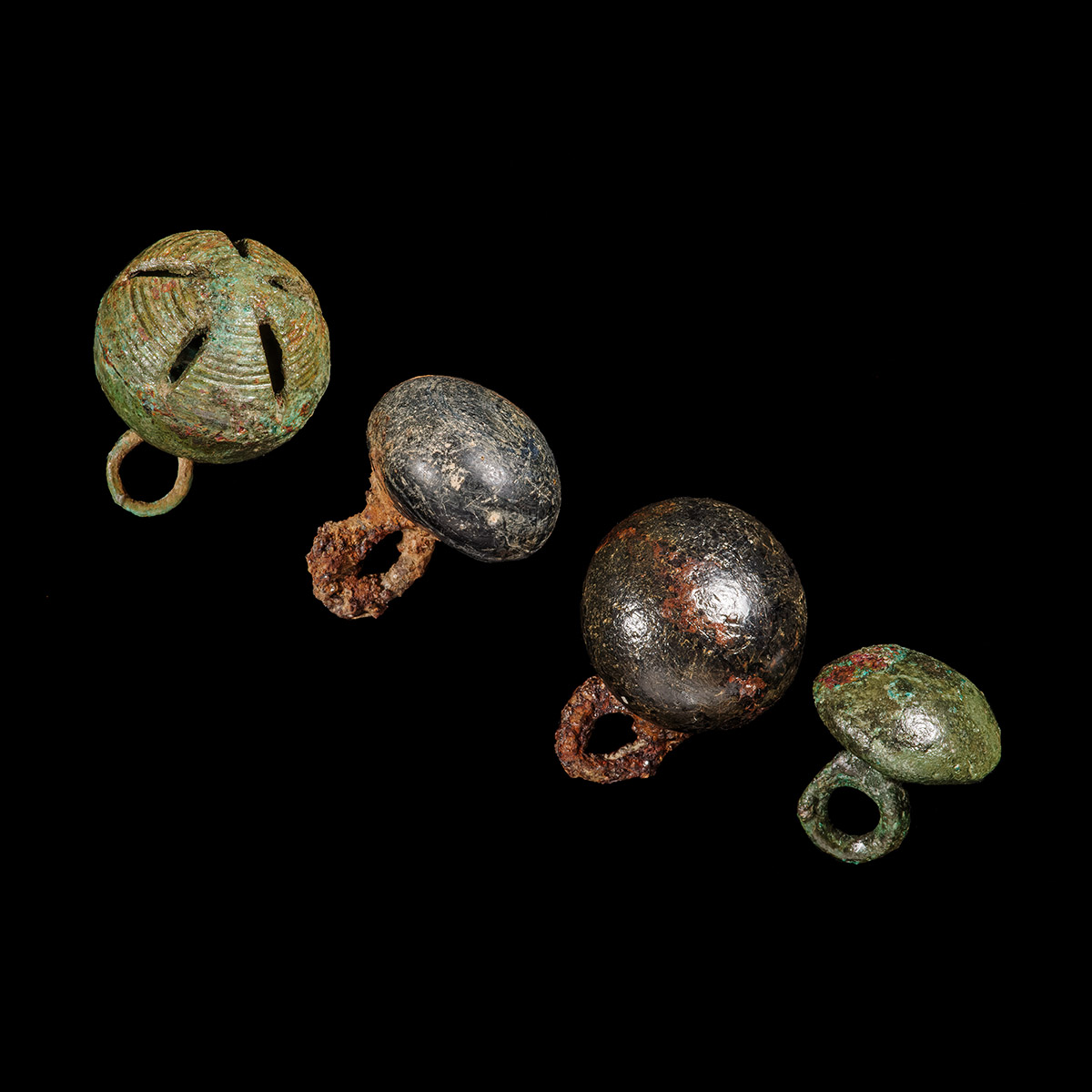
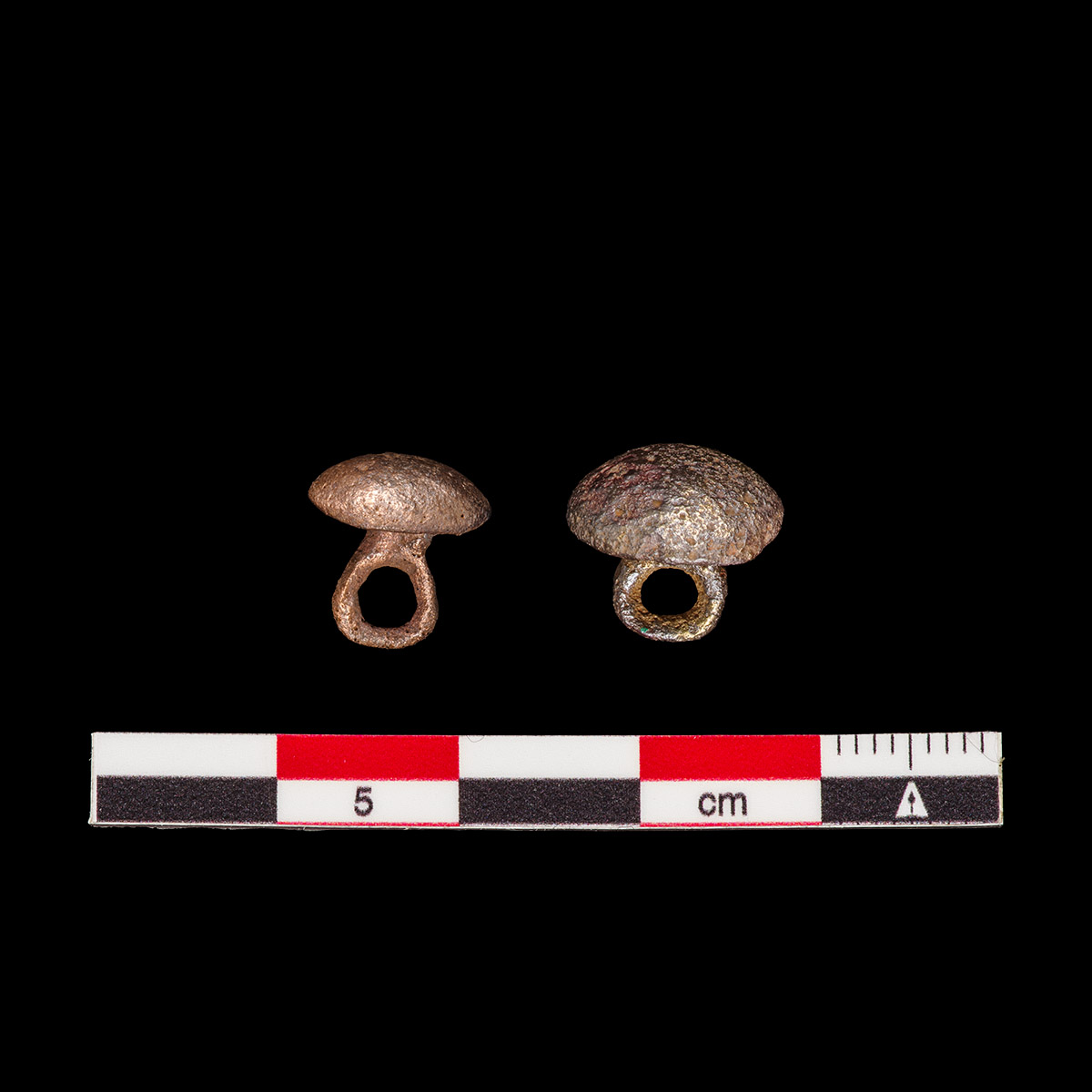
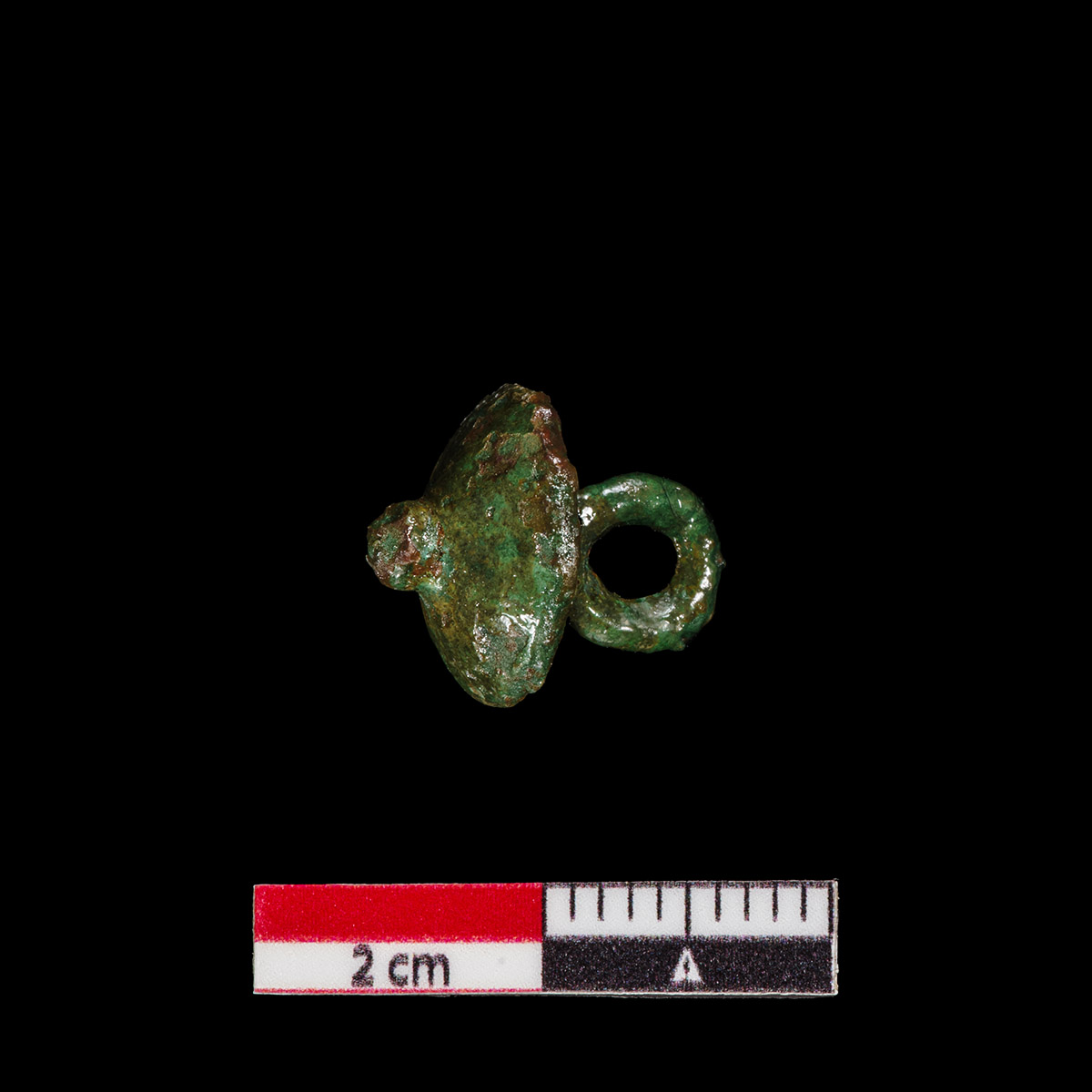
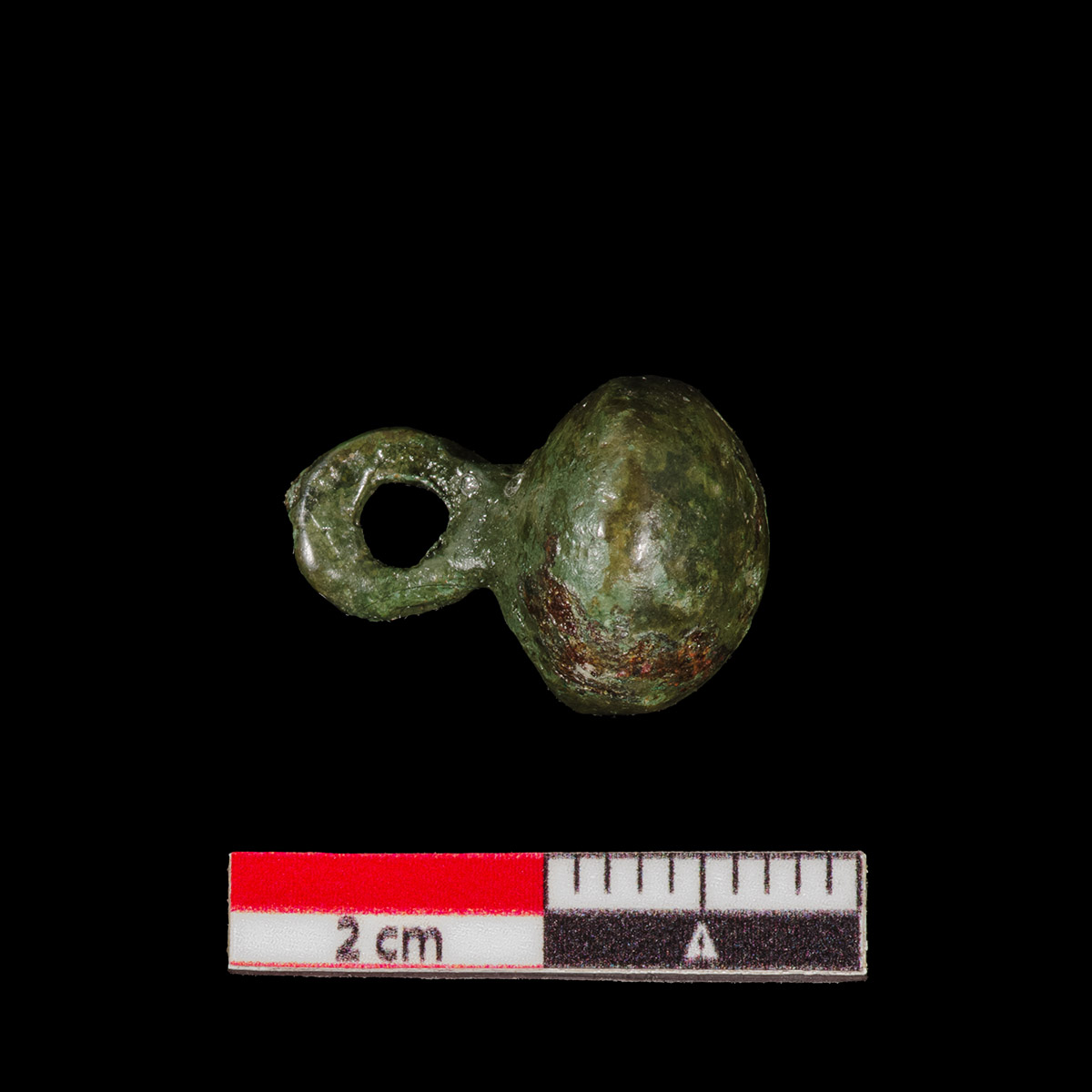
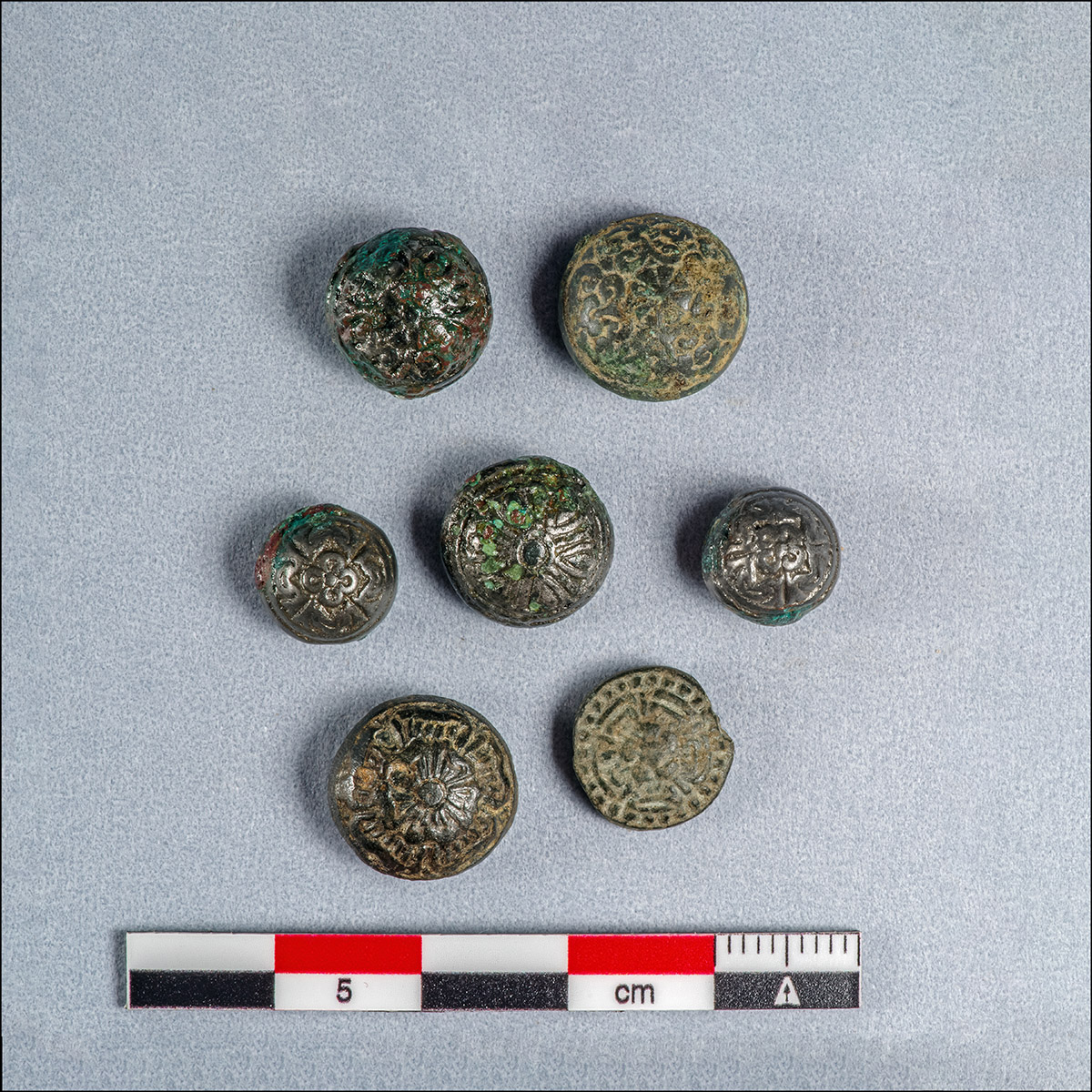
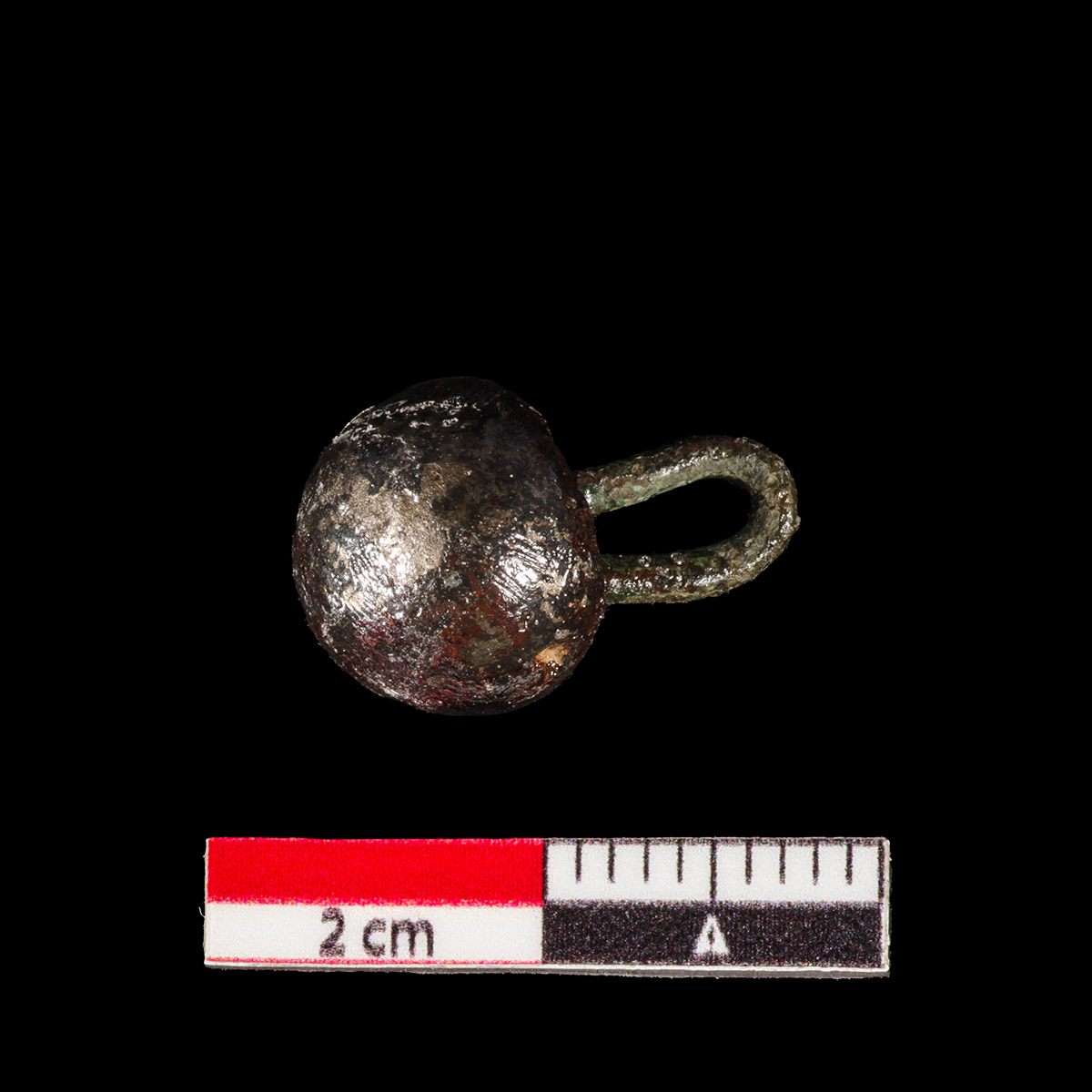
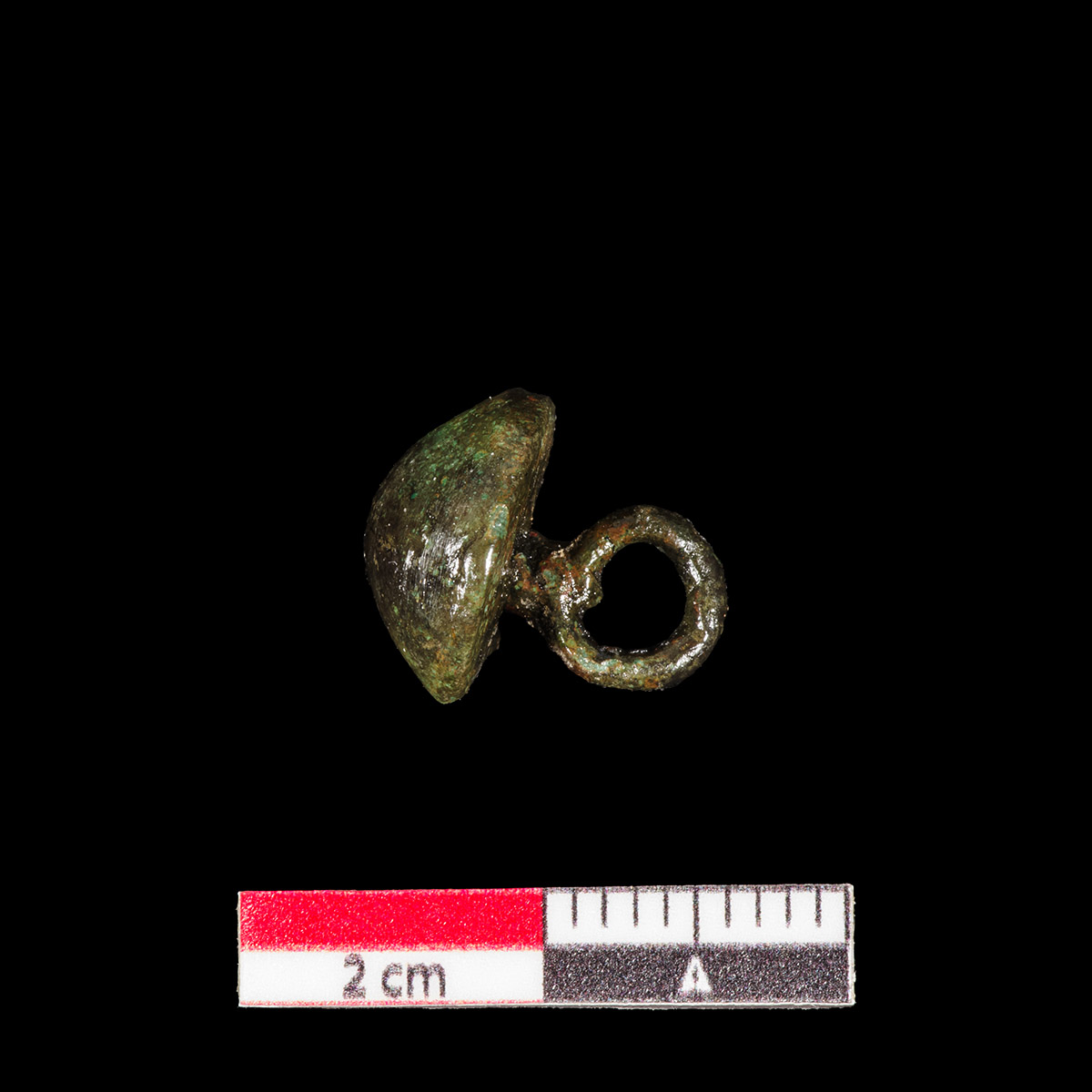
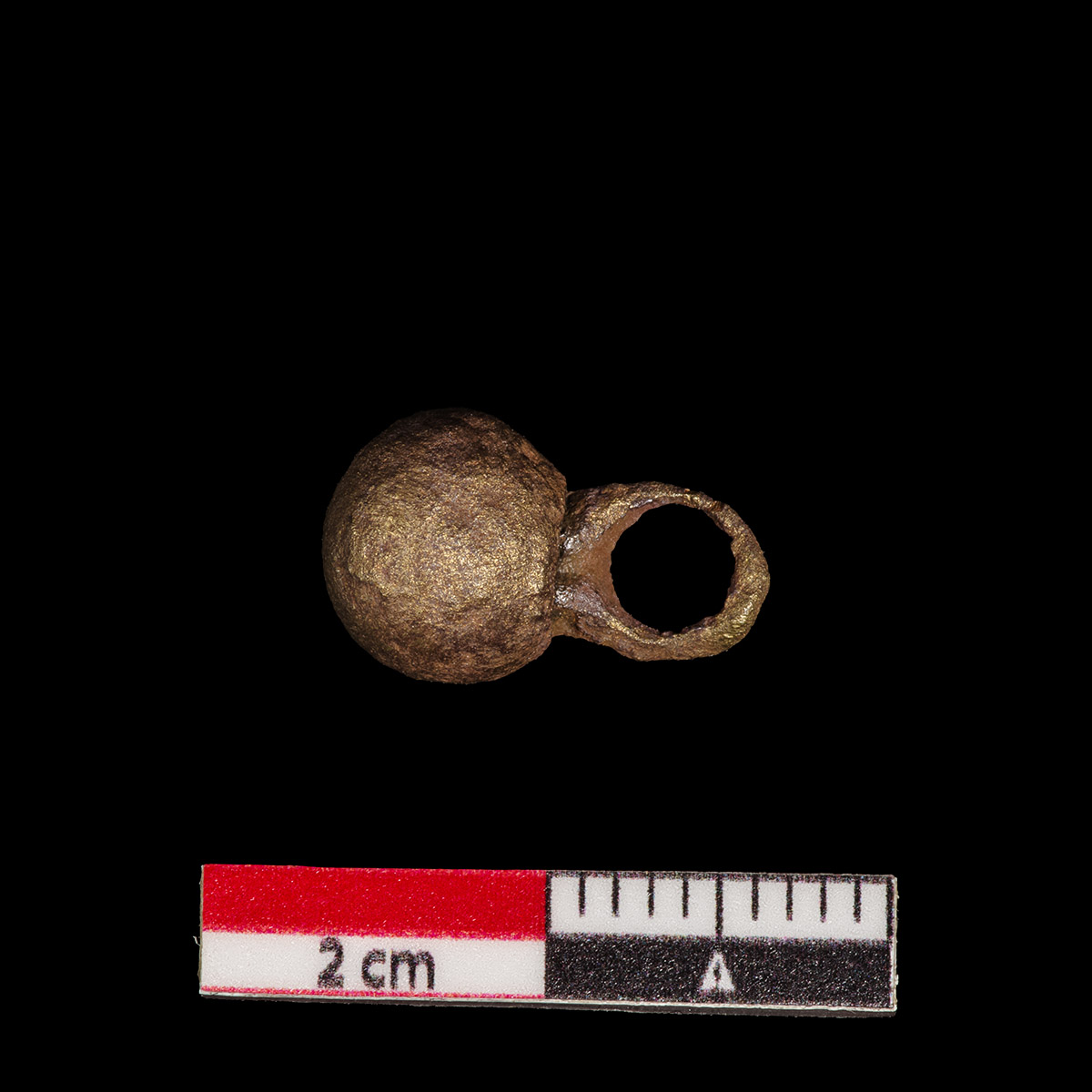
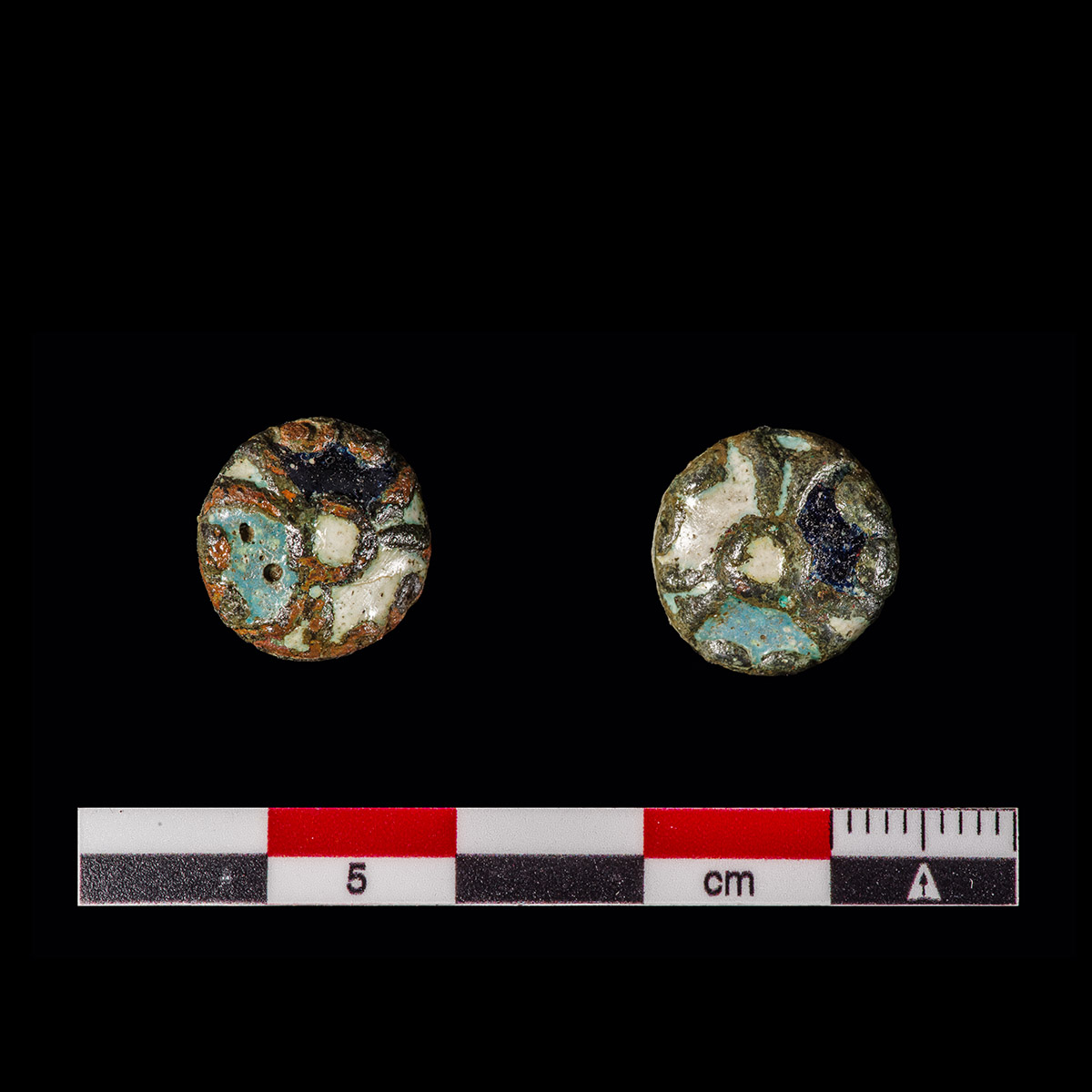
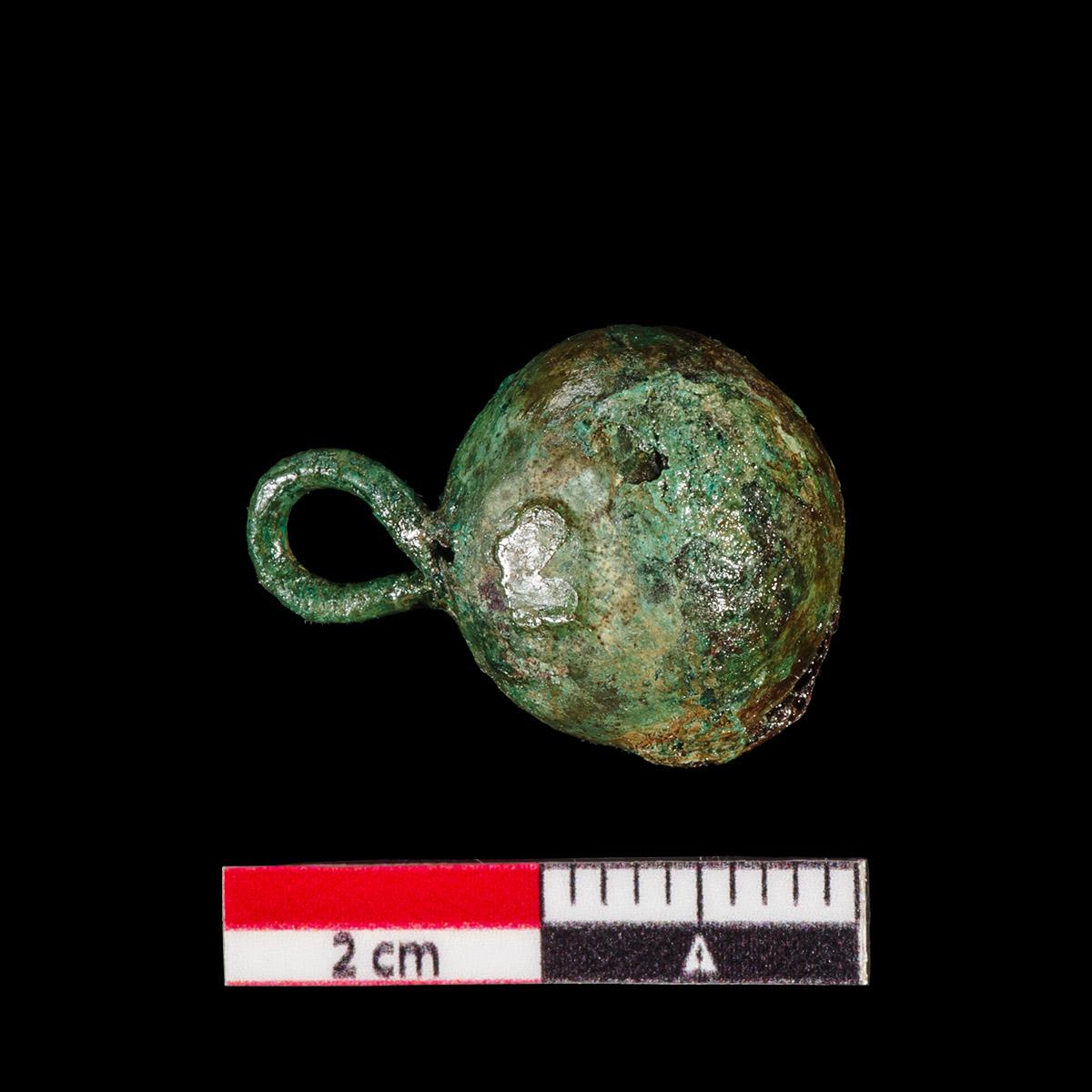
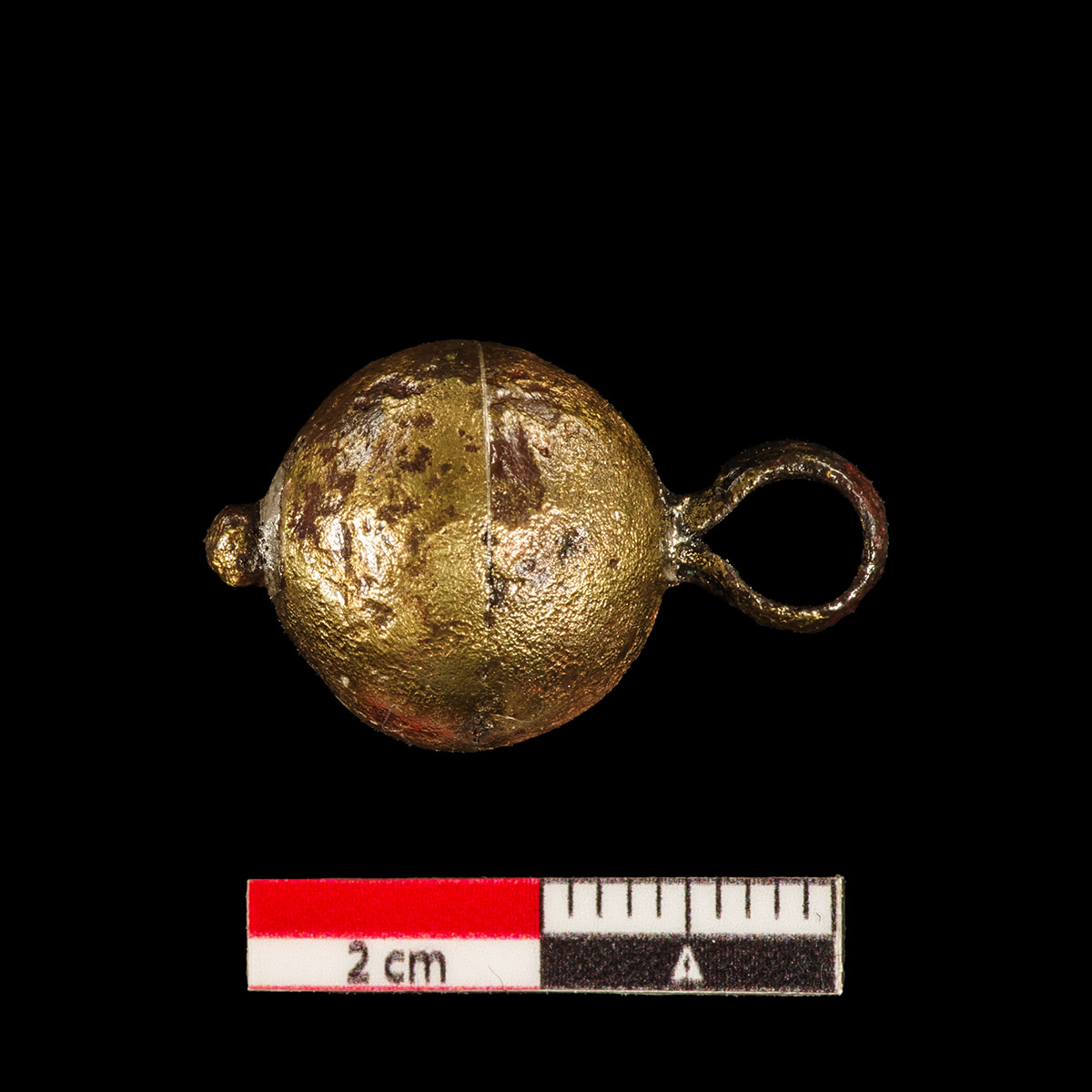
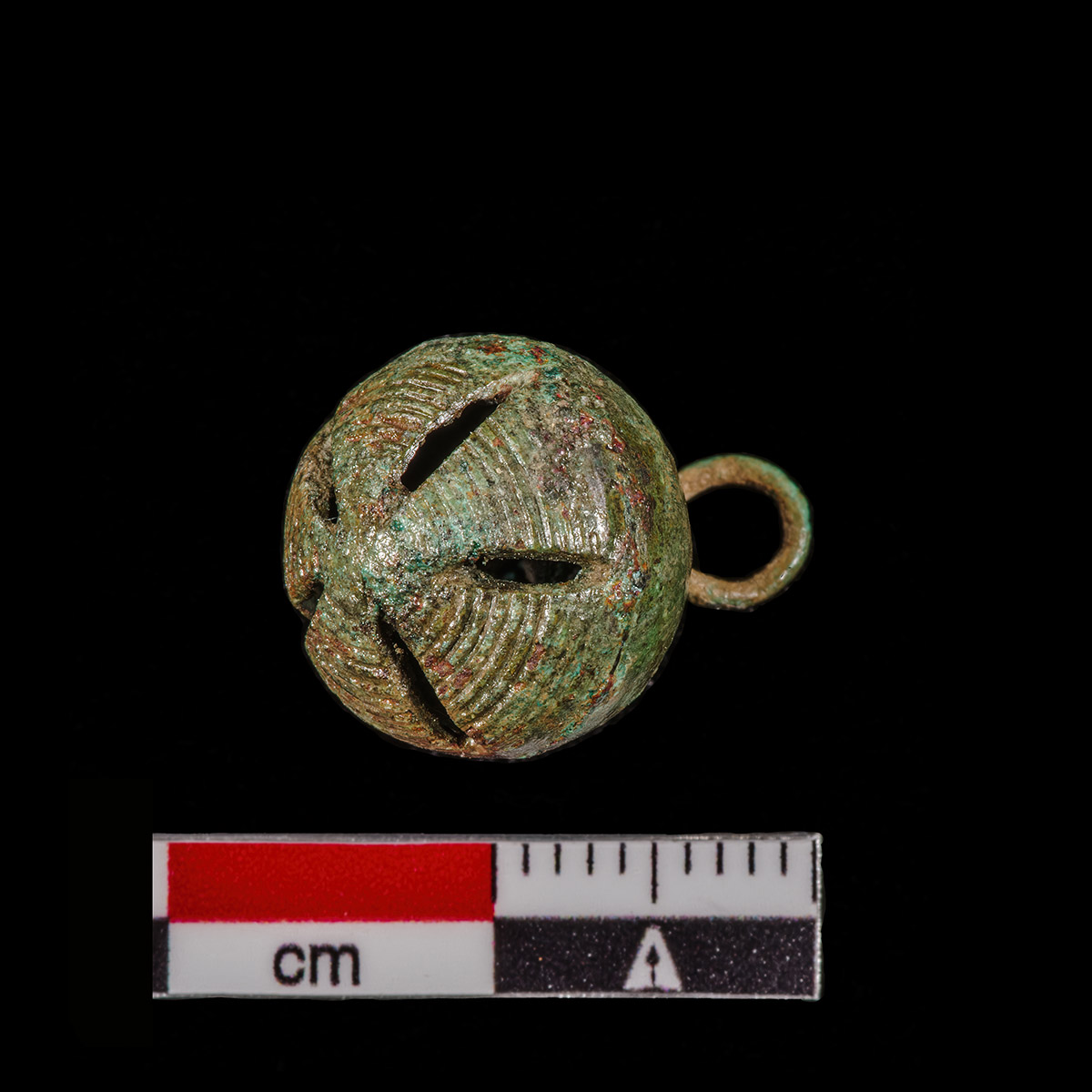
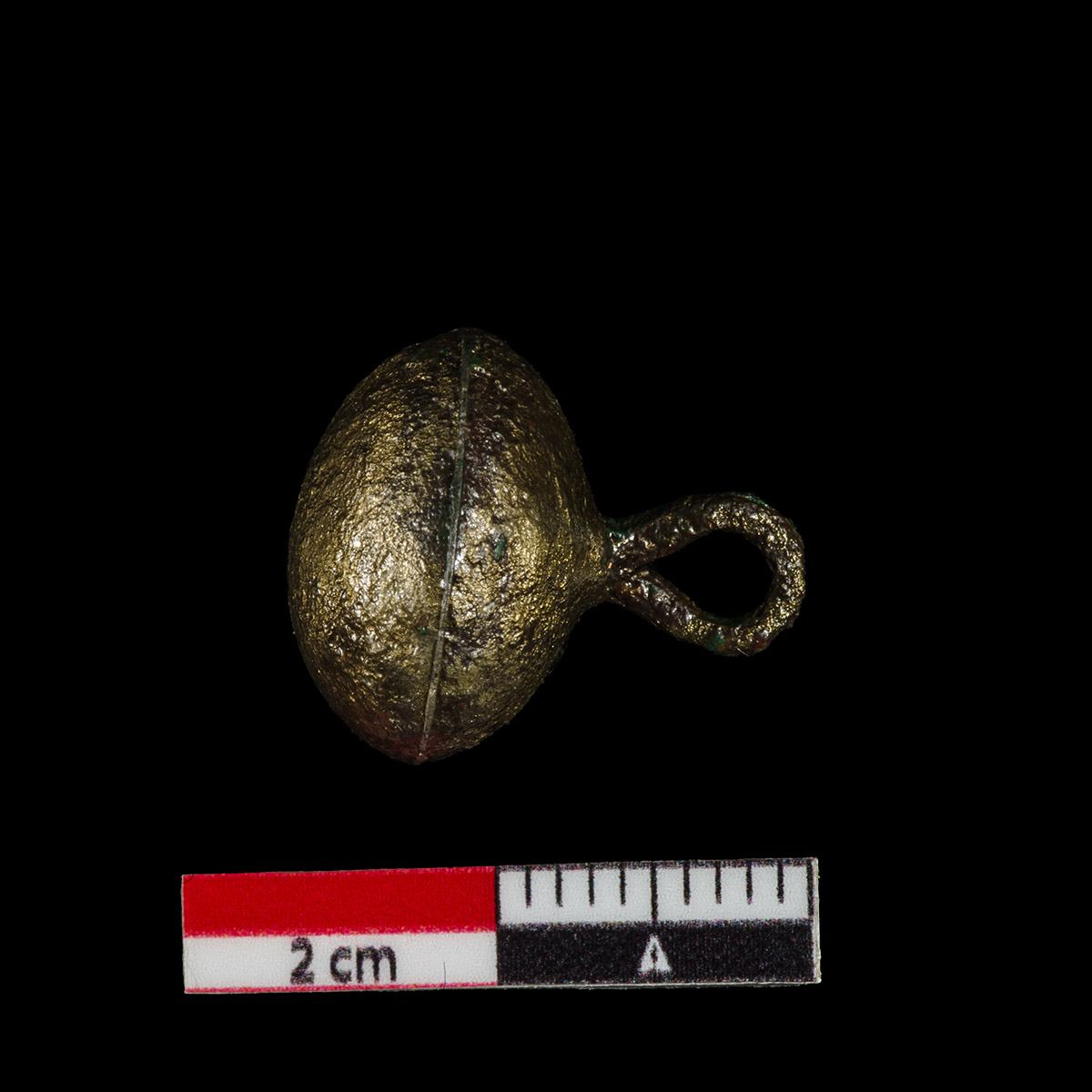
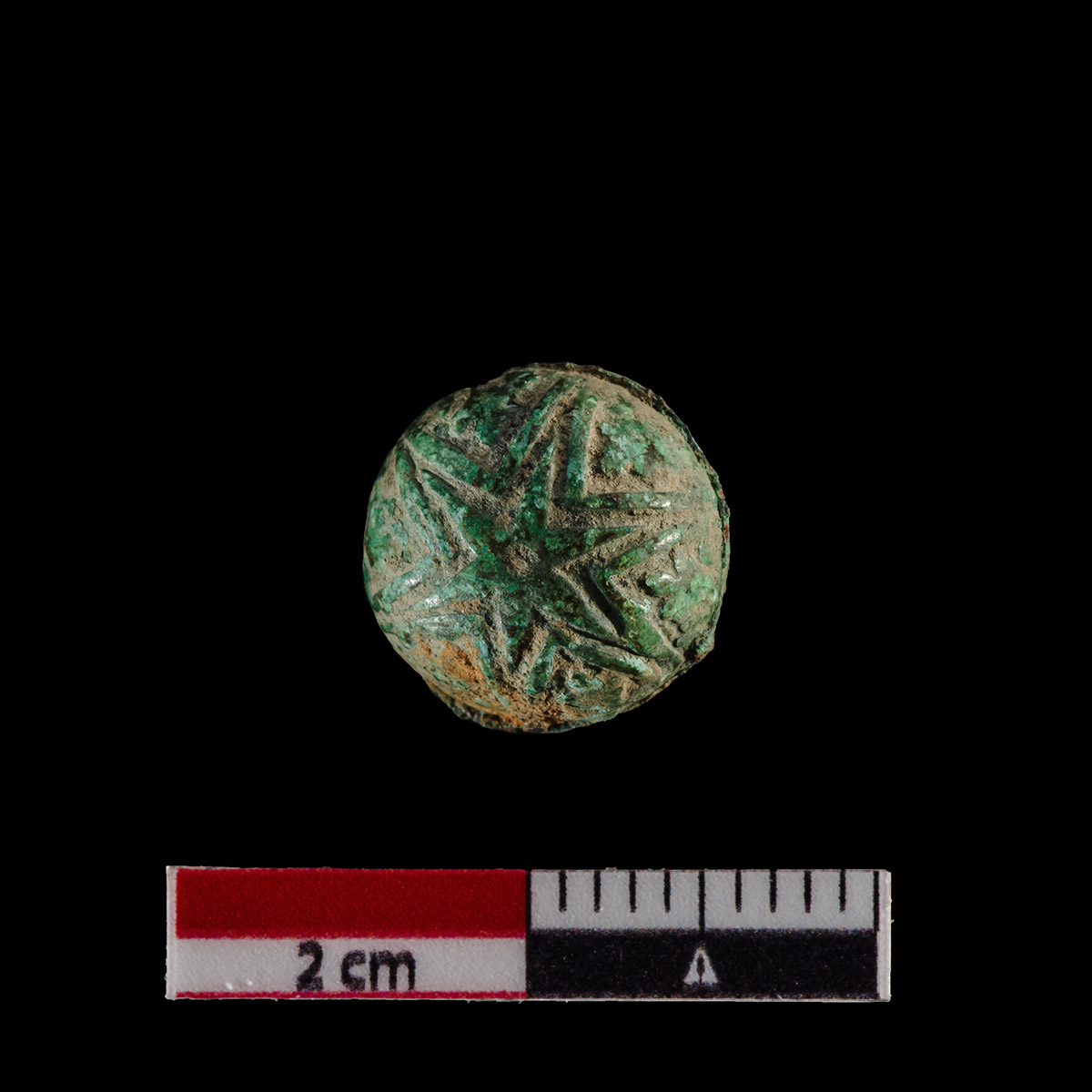
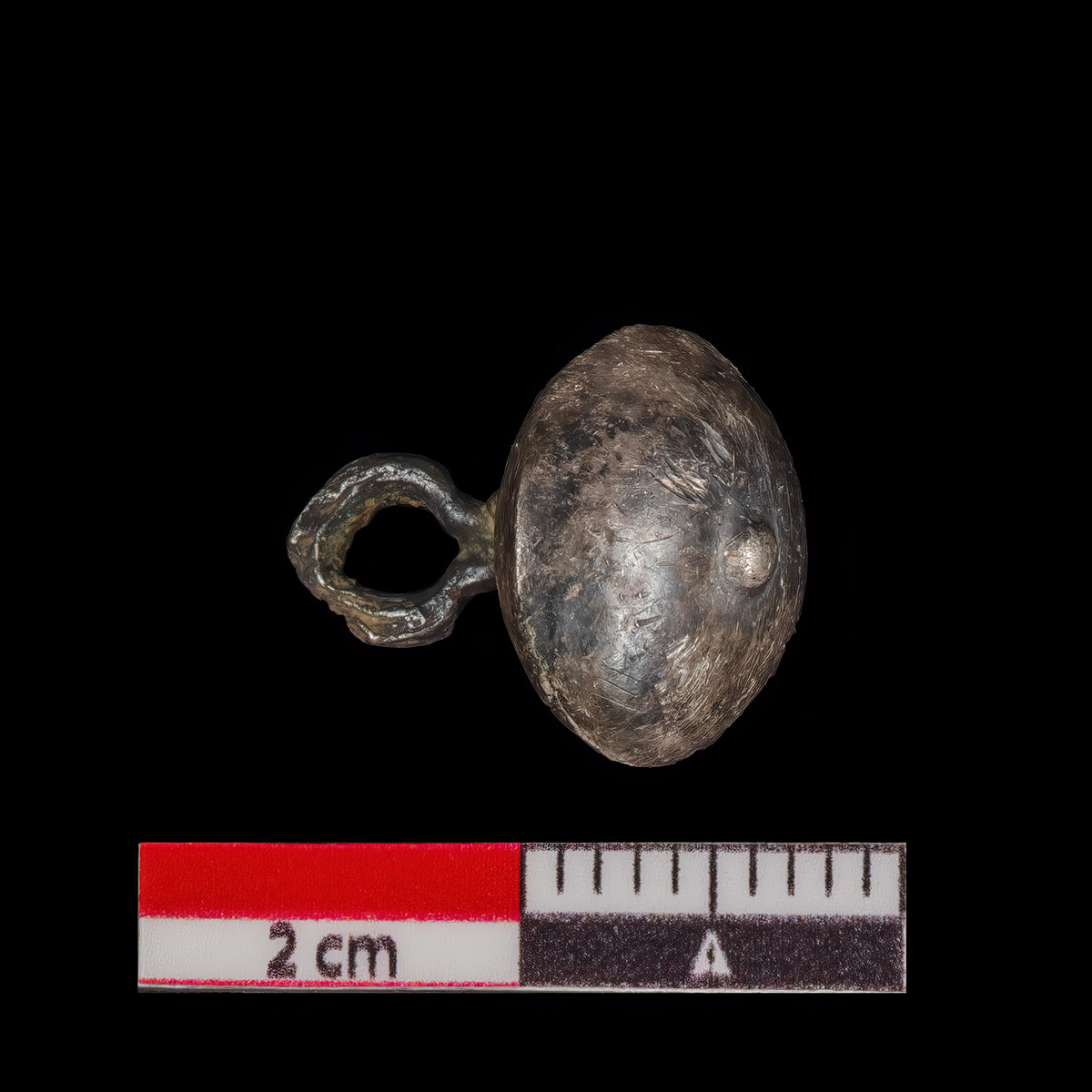
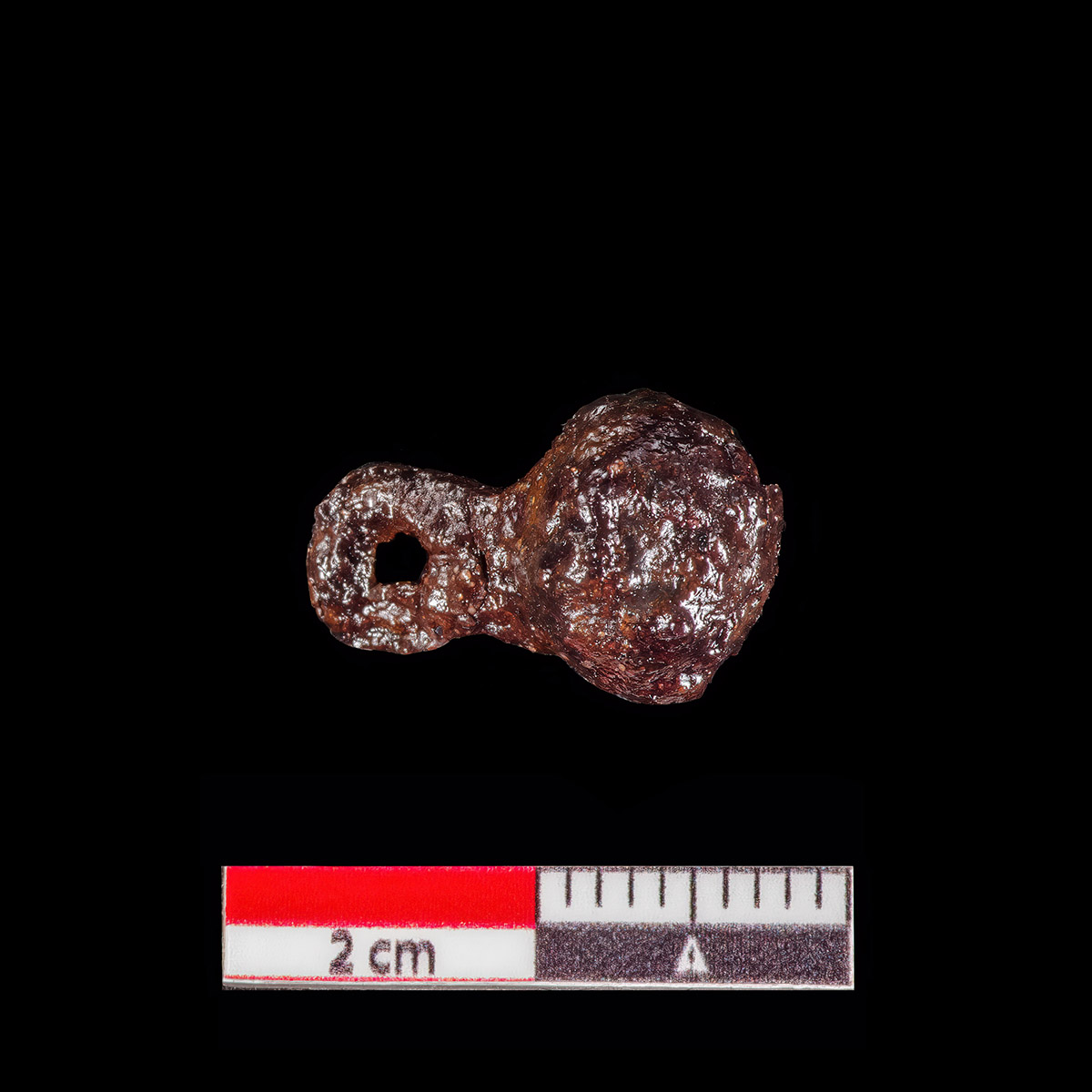
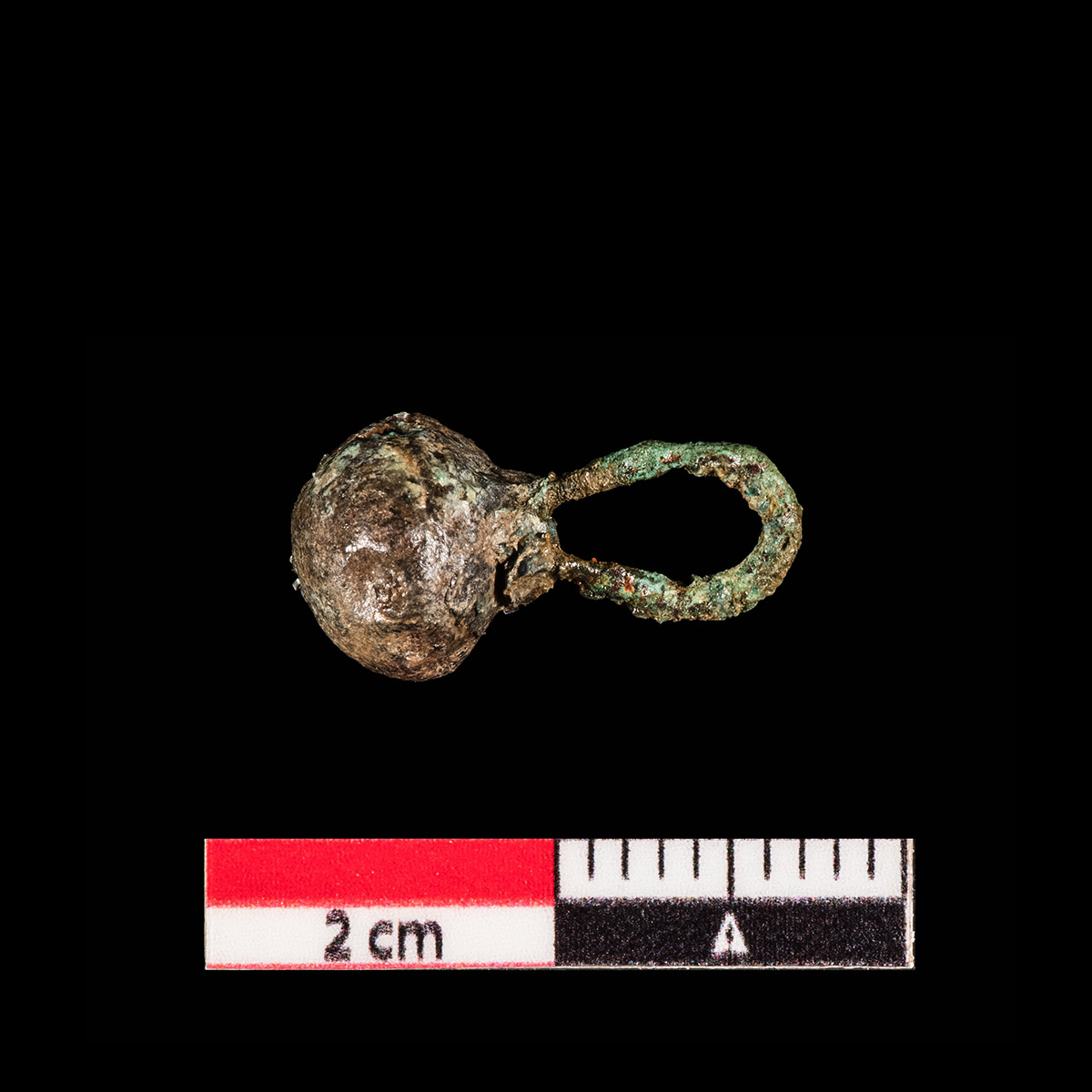
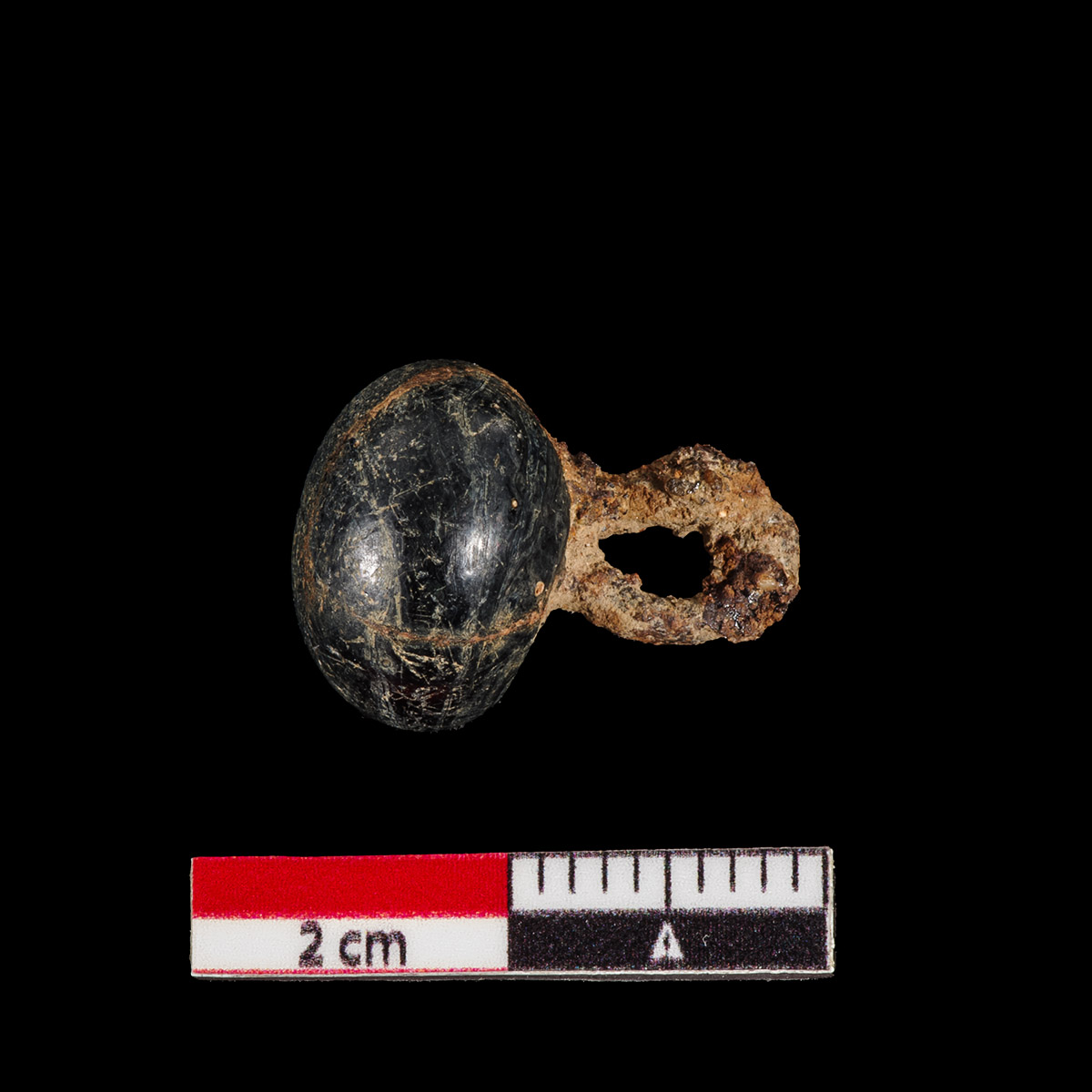
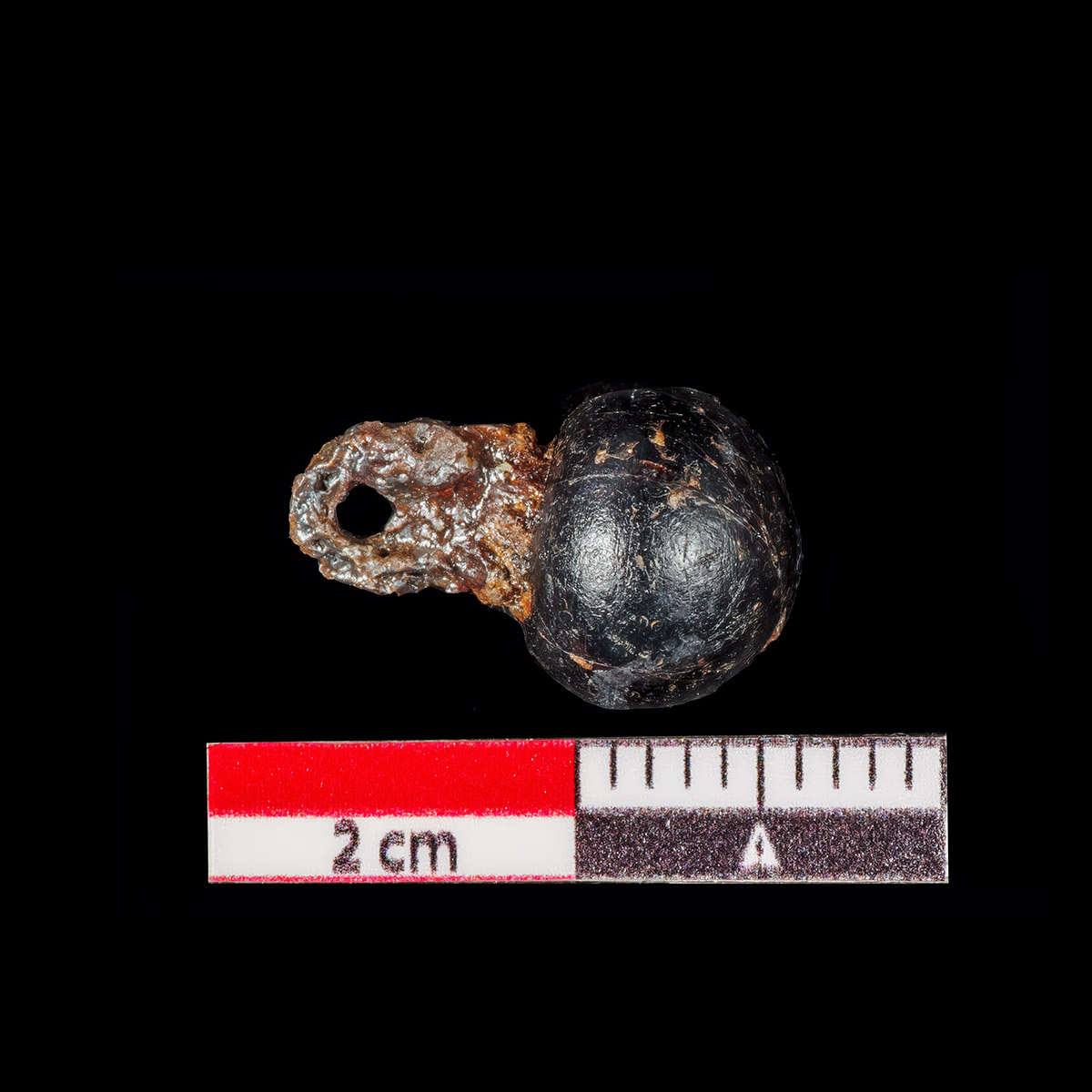
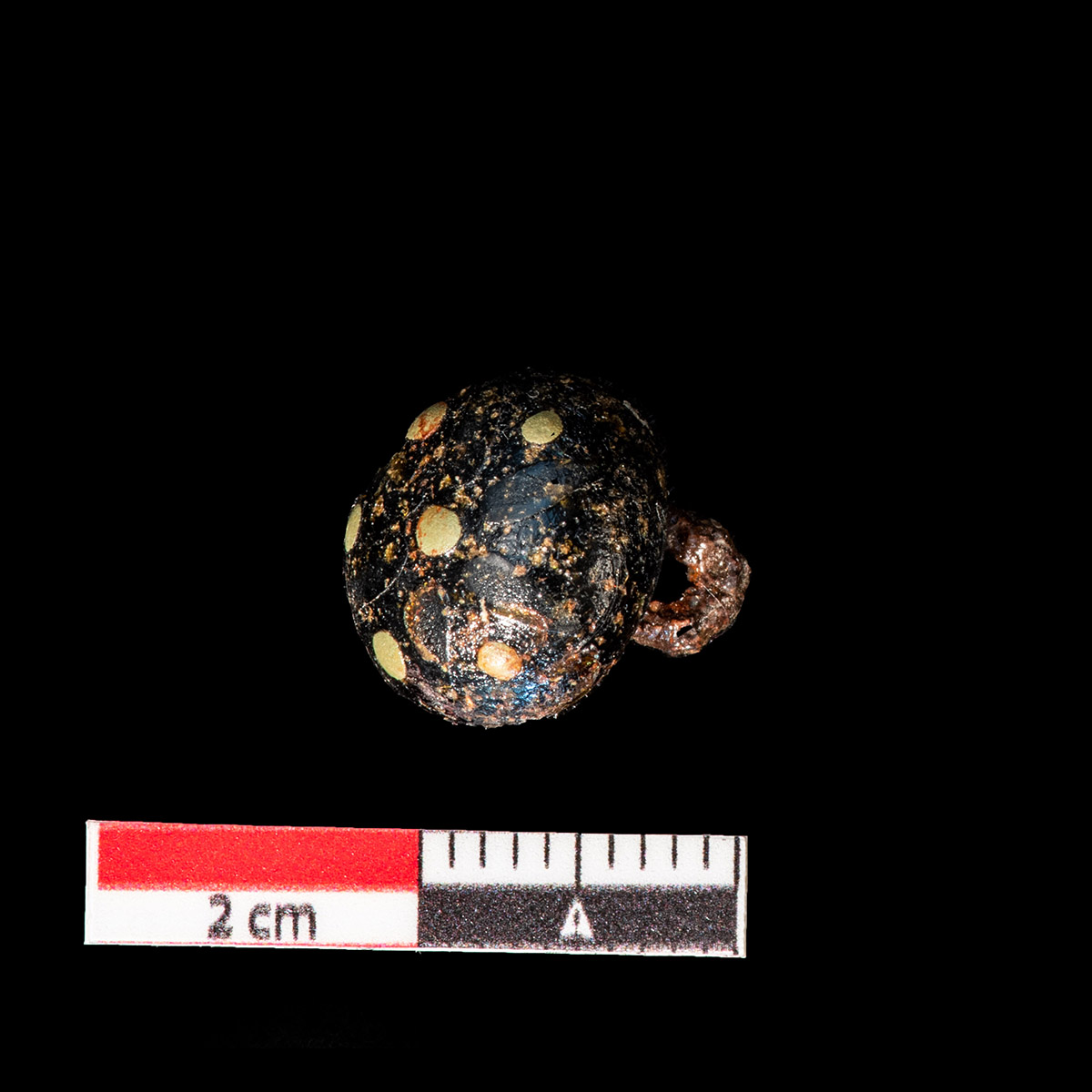
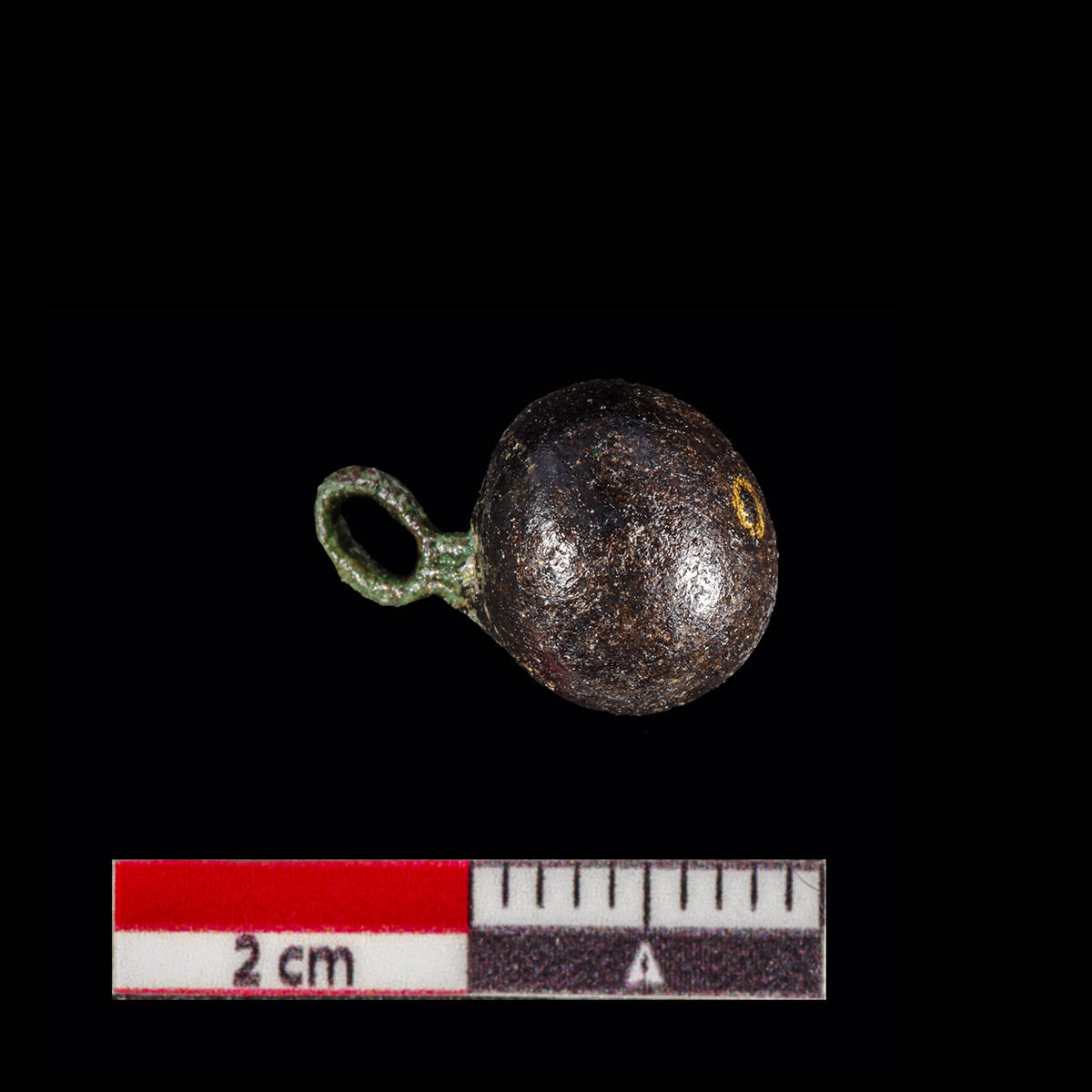
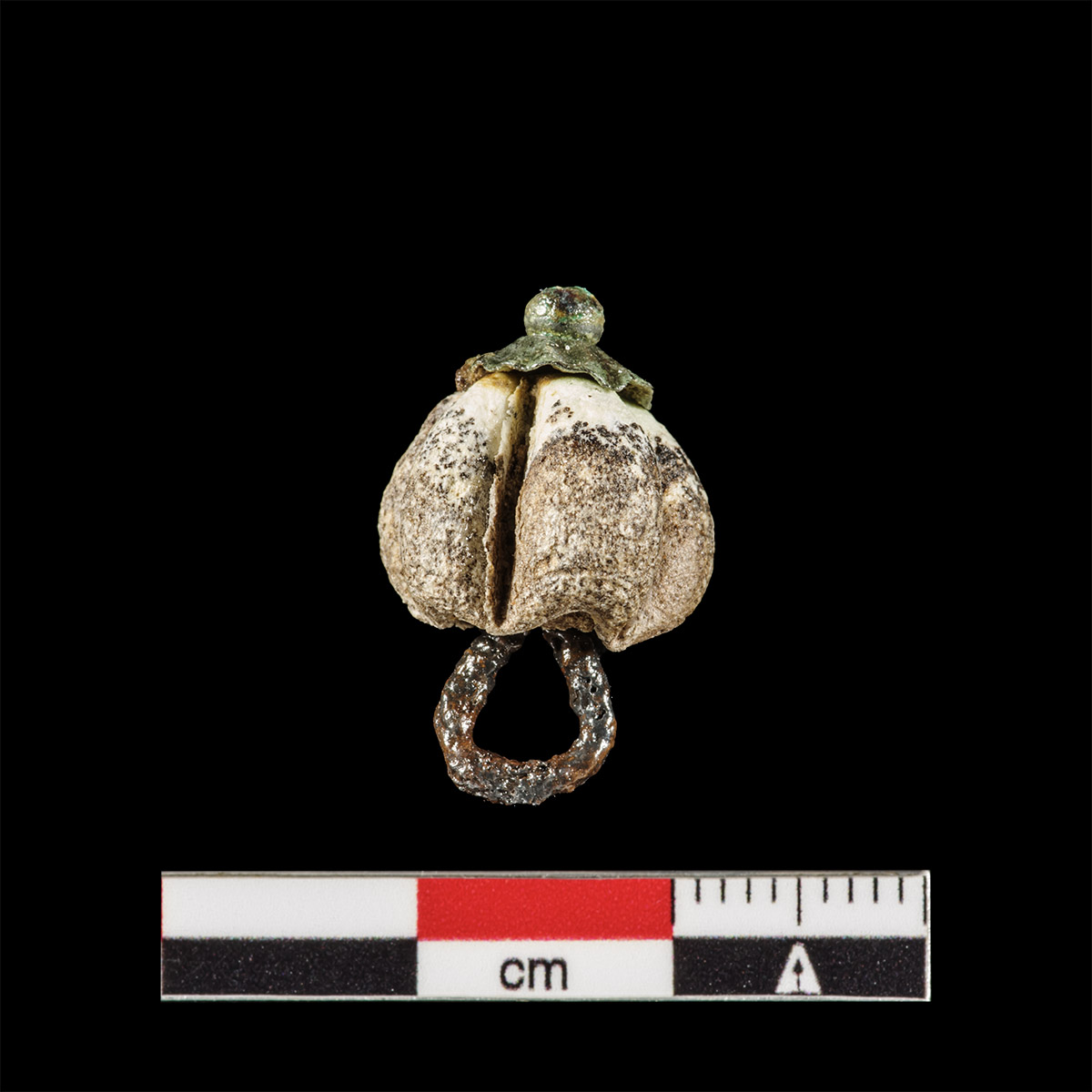
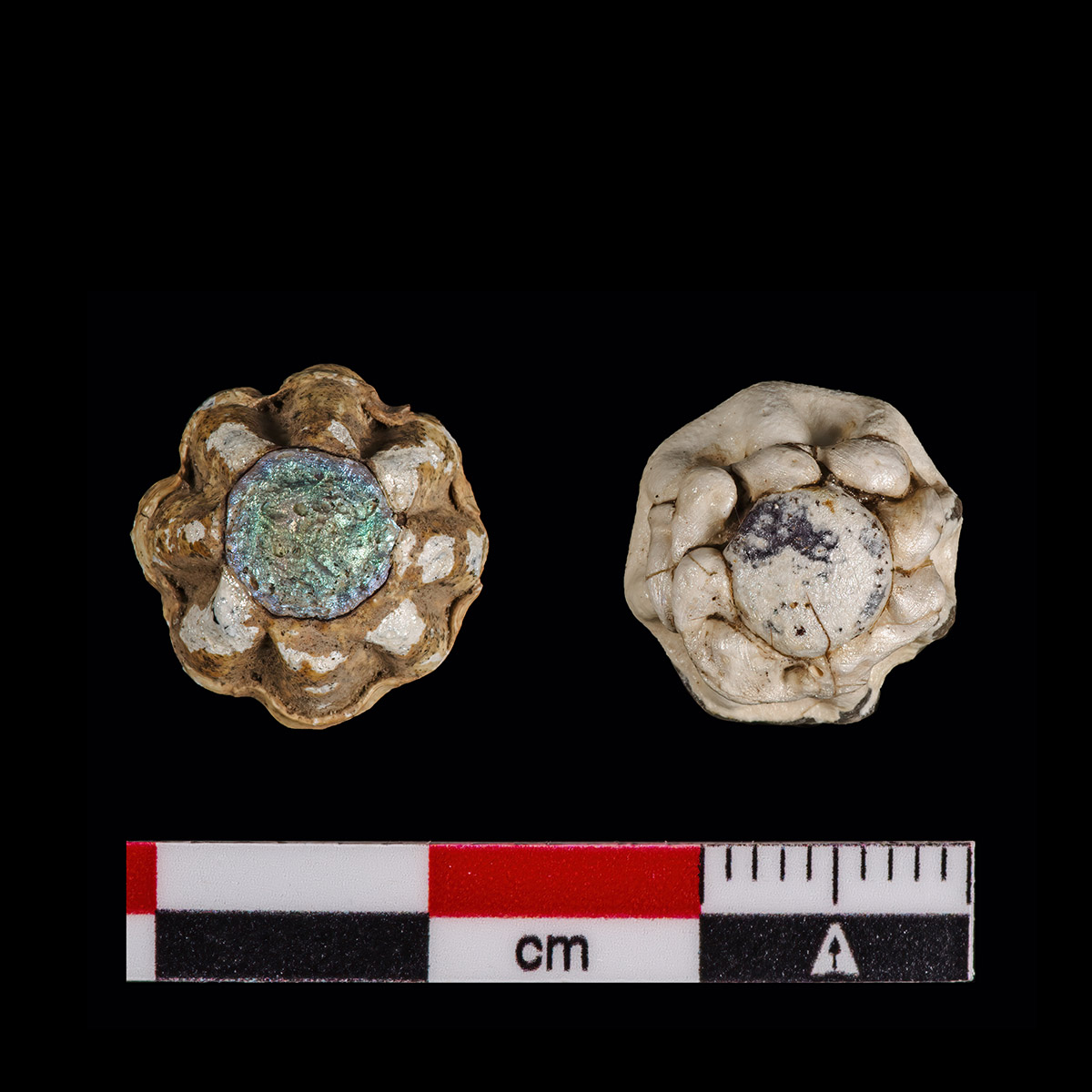
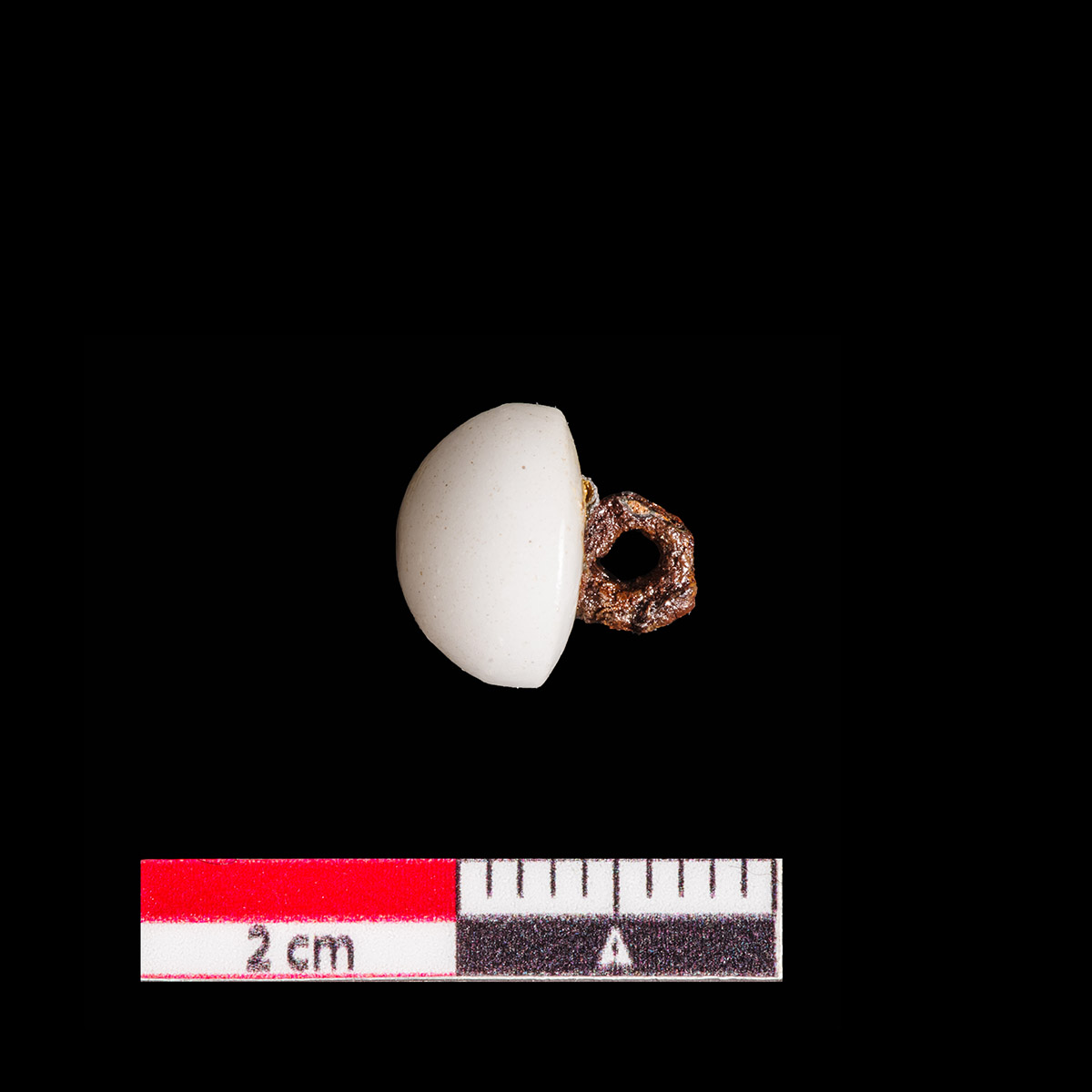
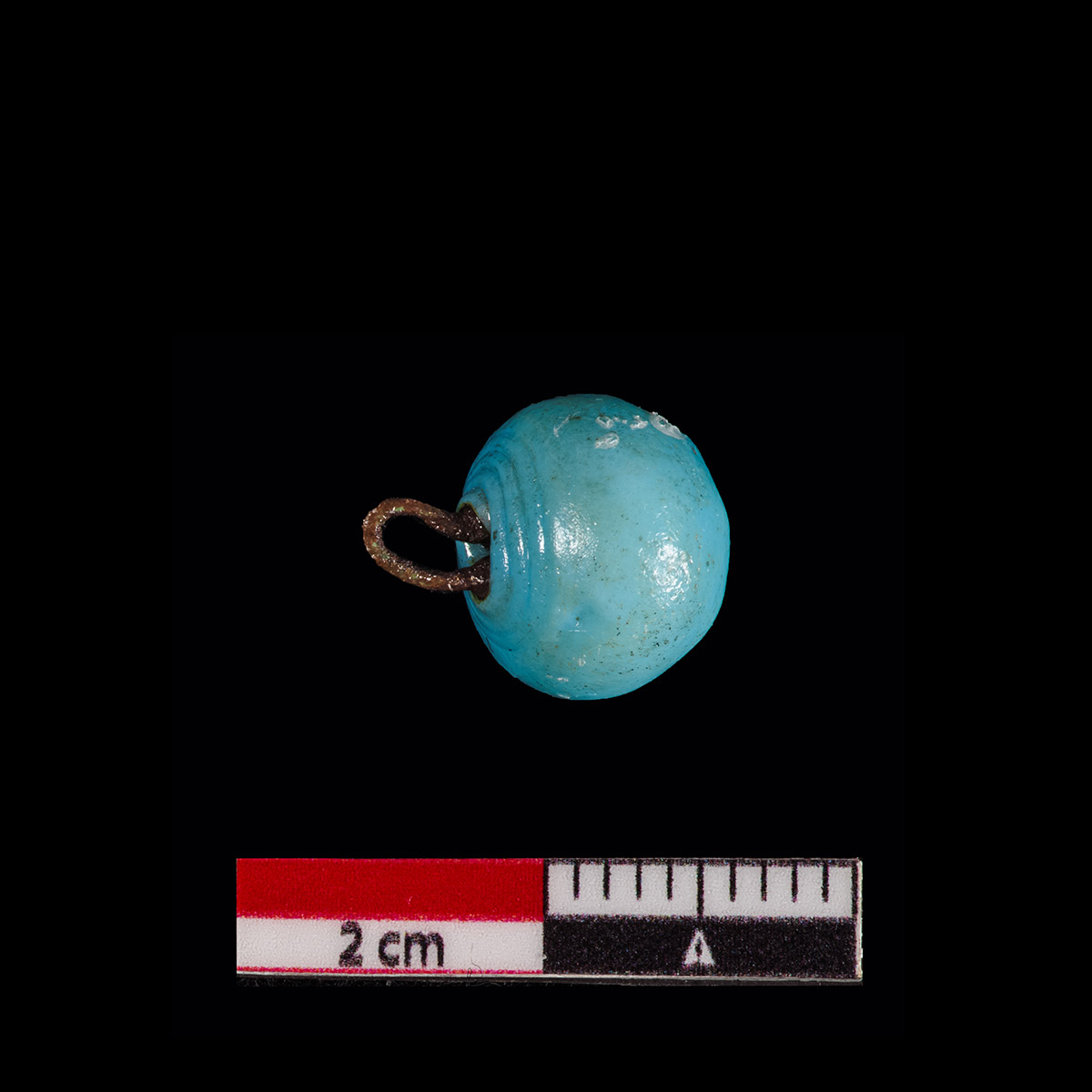
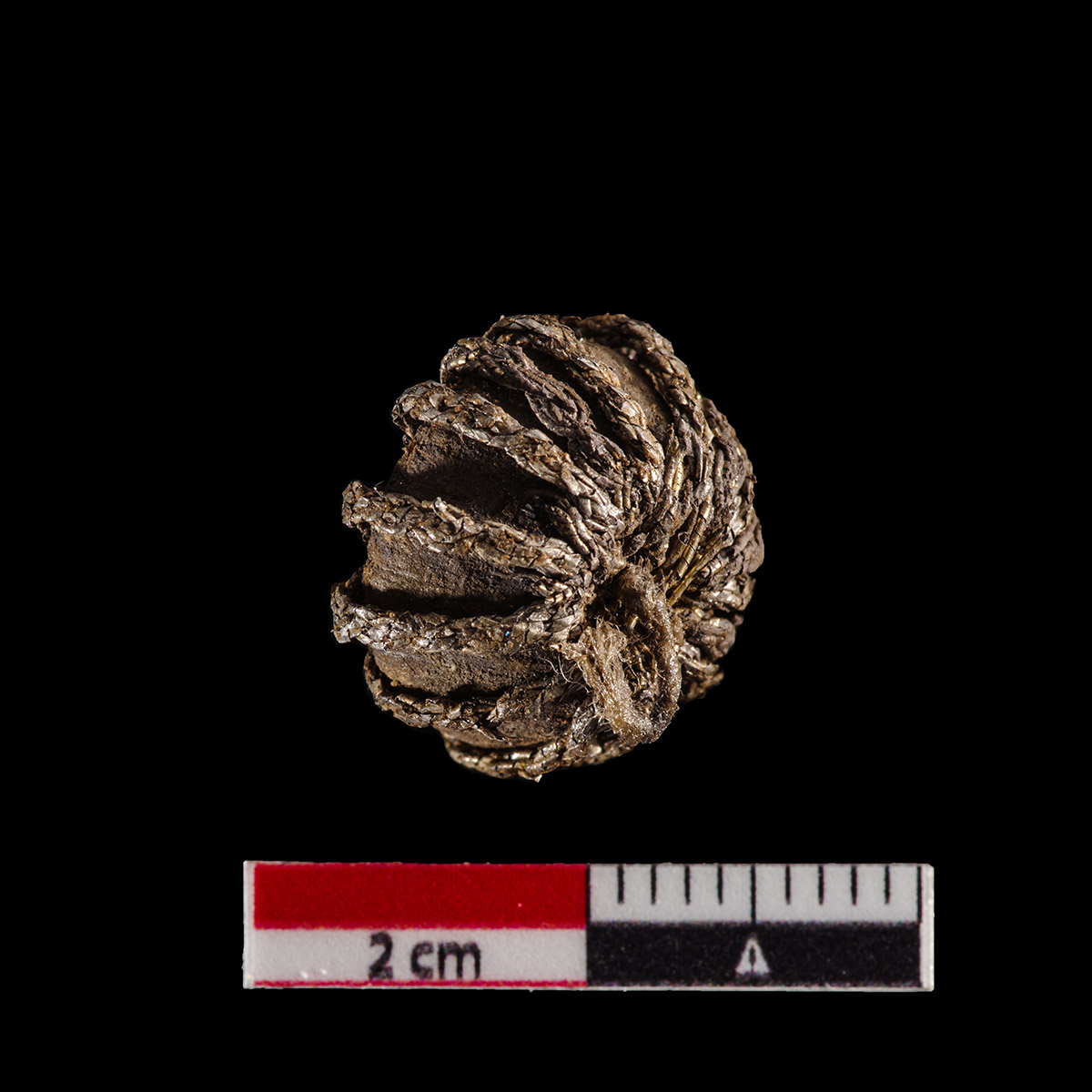
Of a total of more than 850 buttons recovered from Jamestown Rediscovery’s excavations, approximately two-thirds are classified as “doublet” buttons. Commonly found on 17th-century sites, doublet buttons were made of glass, copper alloy, silver, pewter, iron, thread, wood, or a combination of these materials. See the variety recovered from Jamestown in the chart below.
Doublets were worn by men from the 14th through the late 17th century. By the founding of Jamestown in 1607, doublets were typically short, tight-fitting jackets or vests worn by all ranks of society. While originally designed to be worn underneath other layers of clothing, doublets were frequently worn as outerwear by the early 17th century. Among the elite, doublets worn as outerwear were a highly visible opportunity to convey one’s status. This was accomplished through the quality of the fabric and weave, the presence of gold or silver lace, and the relative expense of the buttons. It was quite common for a doublet to have 20 or more bulbous buttons for securing the front of the jacket. While many of the buttons in the Jamestown collection are quite plain, there are several that likely belonged to elaborate garments.
Though we call this style of button “doublet,” here at Jamestown, they were used to secure a variety of garment types, including jerkins and breeches. A similar button in the Victoria and Albert Museum’s collection is found on a woman’s jacket! Because many of the colonists would have worn doublets or jerkins, it is likely that most buttons in Rediscovery’s collections are from these garments.
A startling number of doublet buttons in good condition were recovered from some of the fort’s earliest features including the First Well, Pit 1, and the Factory. Archaeologists believe that these early features were filled in after the Starving Time during the cleansing of the fort. At this time, many items that may have typically been recycled or salvaged were thrown into spoiled wells, cellars, and pits. Over 130 doublet buttons were found in the First Well alone — suggesting that this cleansing included a number of garments.
doublet buttons in the jamestown collection
Photo
Material
Description (Manufacture, shape, decoration)
Notes
Copper Alloy
Cast, domed, some have evidence of tinning -- size varies
By far the most common button type in the collection
Copper Alloy
Cast, domed with knop
Copper Alloy
Cast, biconvex
Copper or Nickel Alloy
Cast, domed, relief decorated -- Many of the copper alloy examples are tinned
We have approximately 15 of these in the collection, representing several motifs. Click here to learn more!
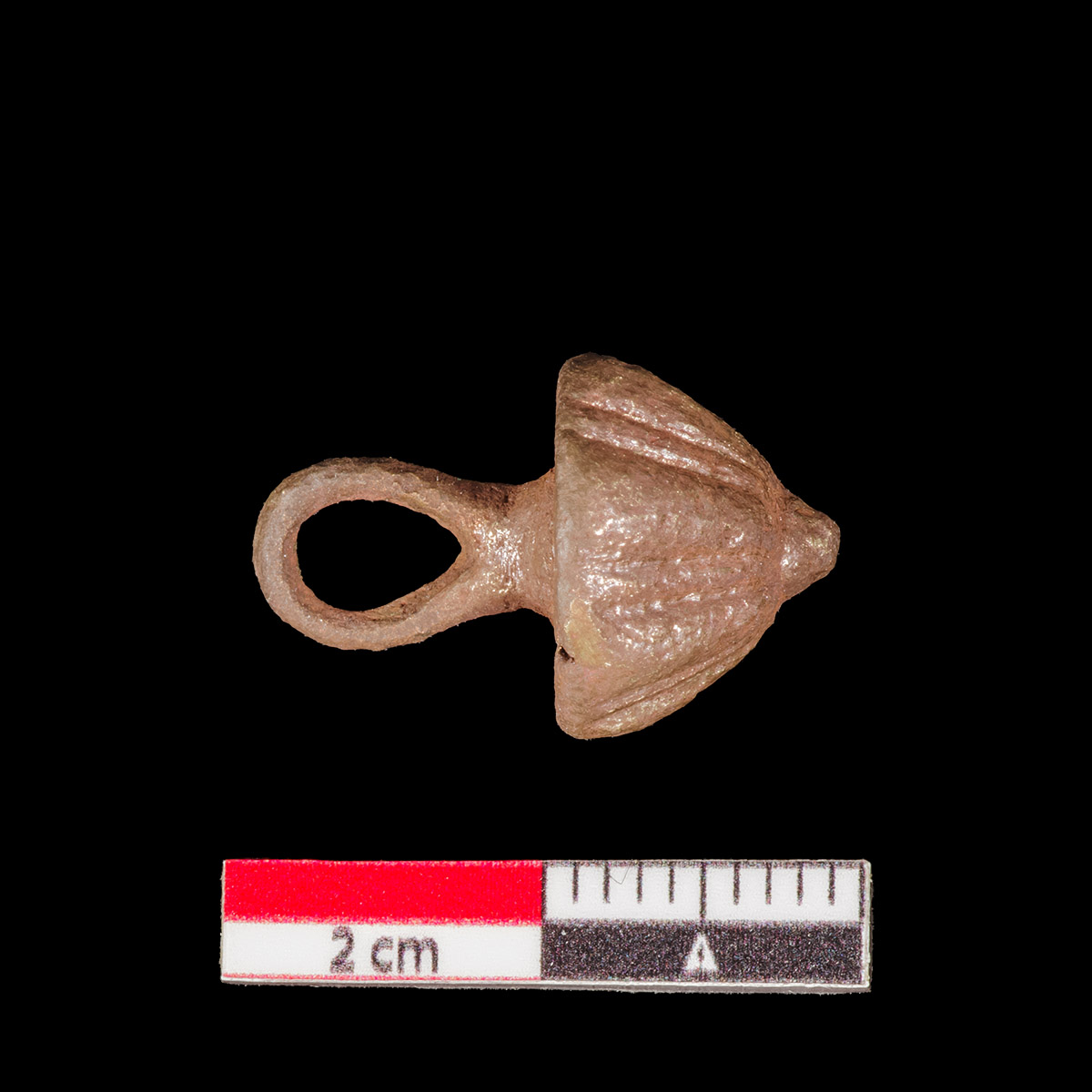
Copper Alloy
Cast, domed, gadrooned
Only one in the collection!
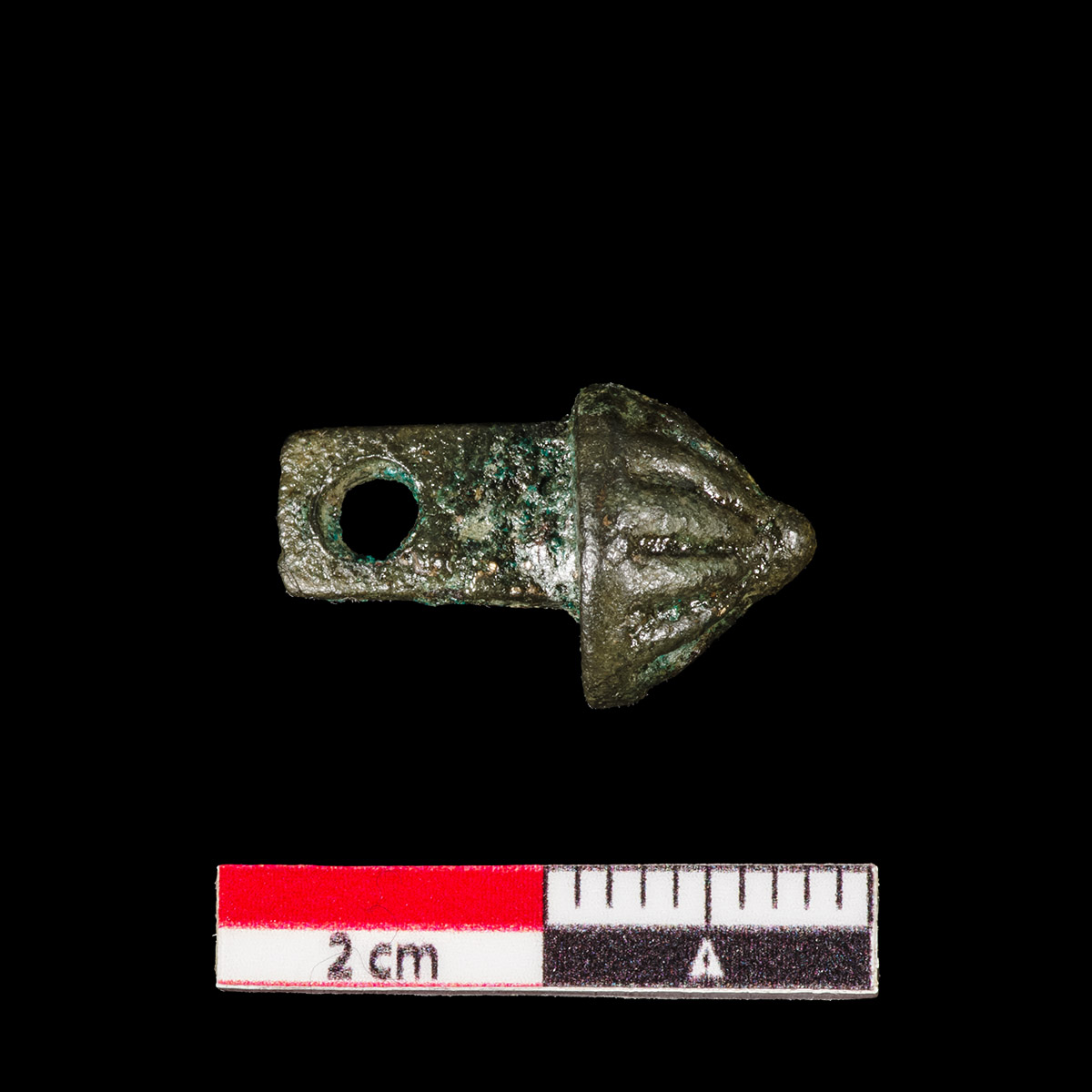
Copper Alloy
Cast, domed, gadrooned with flat rectangular shank
Only three in the collection!
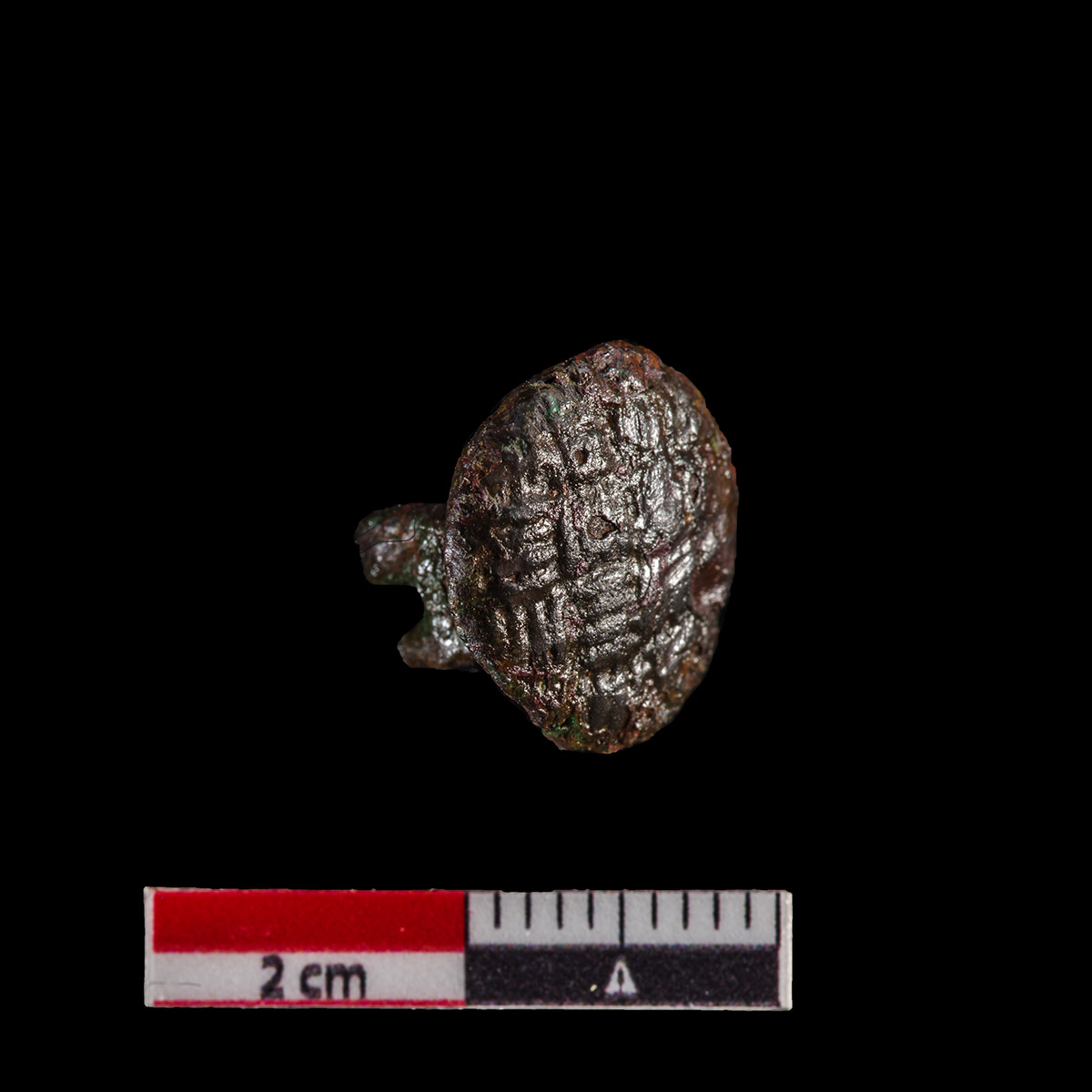
Copper Alloy
Cast, flat head and flat rectangular shank with basketweave pattern
Four in the collection -- all from the First Well and likely part of the same garment.
Copper Alloy
Cast, domed with loopless shank
Only two in the collection!
Copper Alloy
Cast, domed with extra vertical bar in shank before loop
Only three in the collection!
Copper Alloy
Mostly cast round head, with shank inserted into slight hollow portion at bottom of head
Only two in the collection!
Copper Alloy
Cast, domed, enamel painted
Only two in the collection and they're identical!
Copper Alloy
Stamped, round
Copper Alloy
Stamped, round with knop
Only three in the collection!
Copper Alloy
Stamped, round face is decorated with a series of concentric circles and five perforated lines which gives a floral appearance.
Copper Alloy
Stamped, biconvex
Copper Alloy
Stamped, biconvex with star motif
Only one in the collection!
Silver
Stamped, biconvex with knop
Just four in the collection and only one is complete
Iron
Round
Only one in the collection!
Tin/Copper Alloy
Small, round tin head with copper alloy shank
Only 2 complete ones in the collection, but about 11 in total
No photo available at this time
Tinned copper alloy, pewter, or lead
Domed head
This variety comes in all three material types, but they were grouped together for the purposes of this website page as there are so few of them.
Glass/Iron
Wound, black glass biconvex head with iron shank
Testing has shown that these were likely produced at a glass manufacturing center in Bavaria. It is the second most common button type in the collection.
Glass/Iron
Wound, black glass round head with iron shank
Much smaller than the similar biconvex buttons above
Glass/Iron
Wound, black glass biconvex head with iron shank. Decorated with pale green dots
Similar buttons found on 17th century sites in Maryland have an additional outer dot and painted petals expanding from the central dot out to the edge, between the outer dots.
Glass/Copper Alloy
Wound, black glass round head with copper alloy shank and a small gilt circle on top
Only one in the collection!
Glass/Copper Alloy/Iron
Cinquefoil lobed, enamel painted glass body with decorative copper alloy top and iron shank