Leather ornament
Leather ornament

As the name suggests, leather ornaments are small metal items typically used as a decorative feature on leather. Leather ornaments have two or more tines on that back that pierce through leather and are then clenched down (unlike tacks, which have only one tine). While leather ornaments could be from non-equestrian items, many of the artifacts in Jamestown’s collection are consistent with those used on various pieces of tack both in size and form.

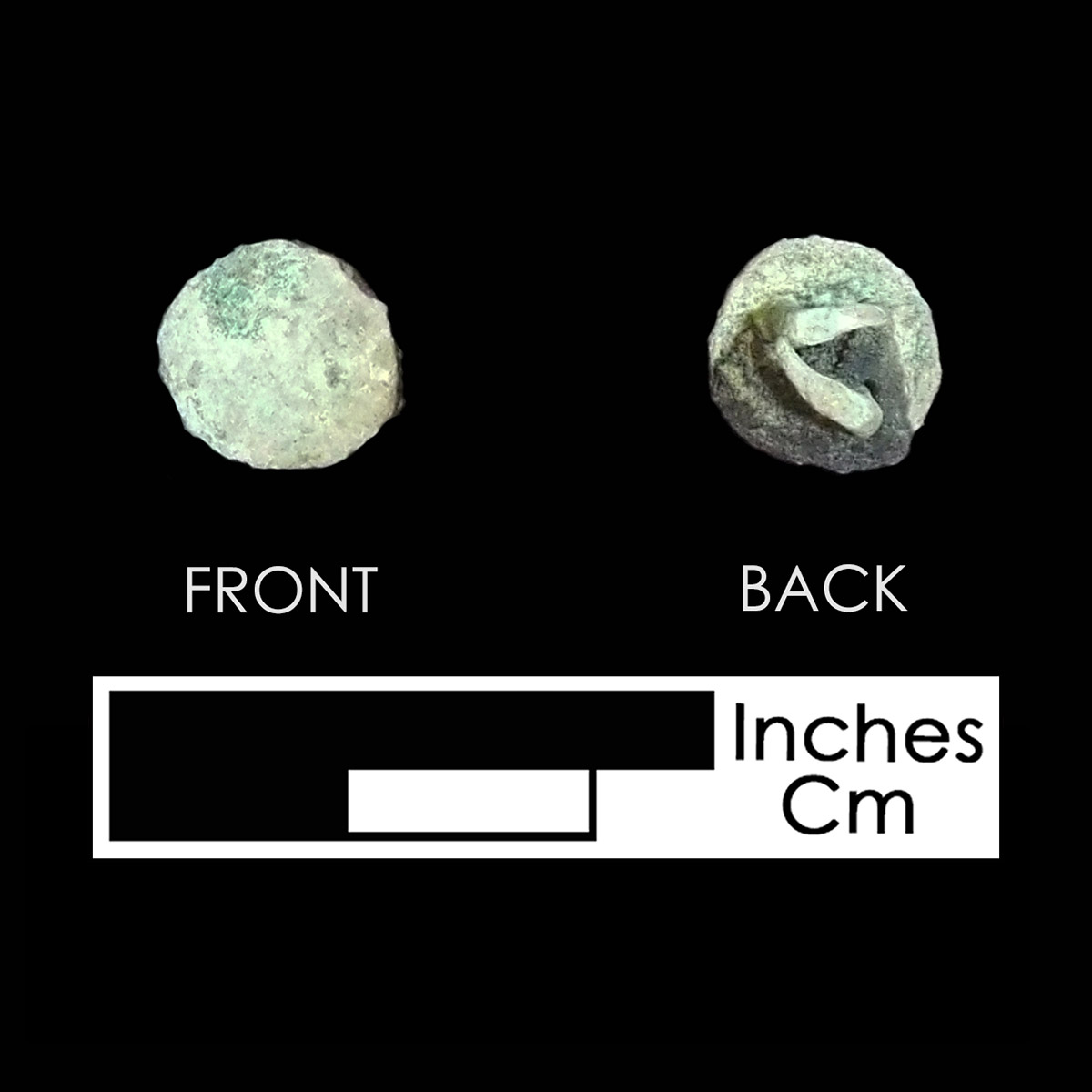
Over 80 leather ornaments have been recovered from the site, approximately a quarter of which are a basic form — plain, circular copper alloy with two tines to secure the item to the leather. Of this type, six were found with leather still attached!

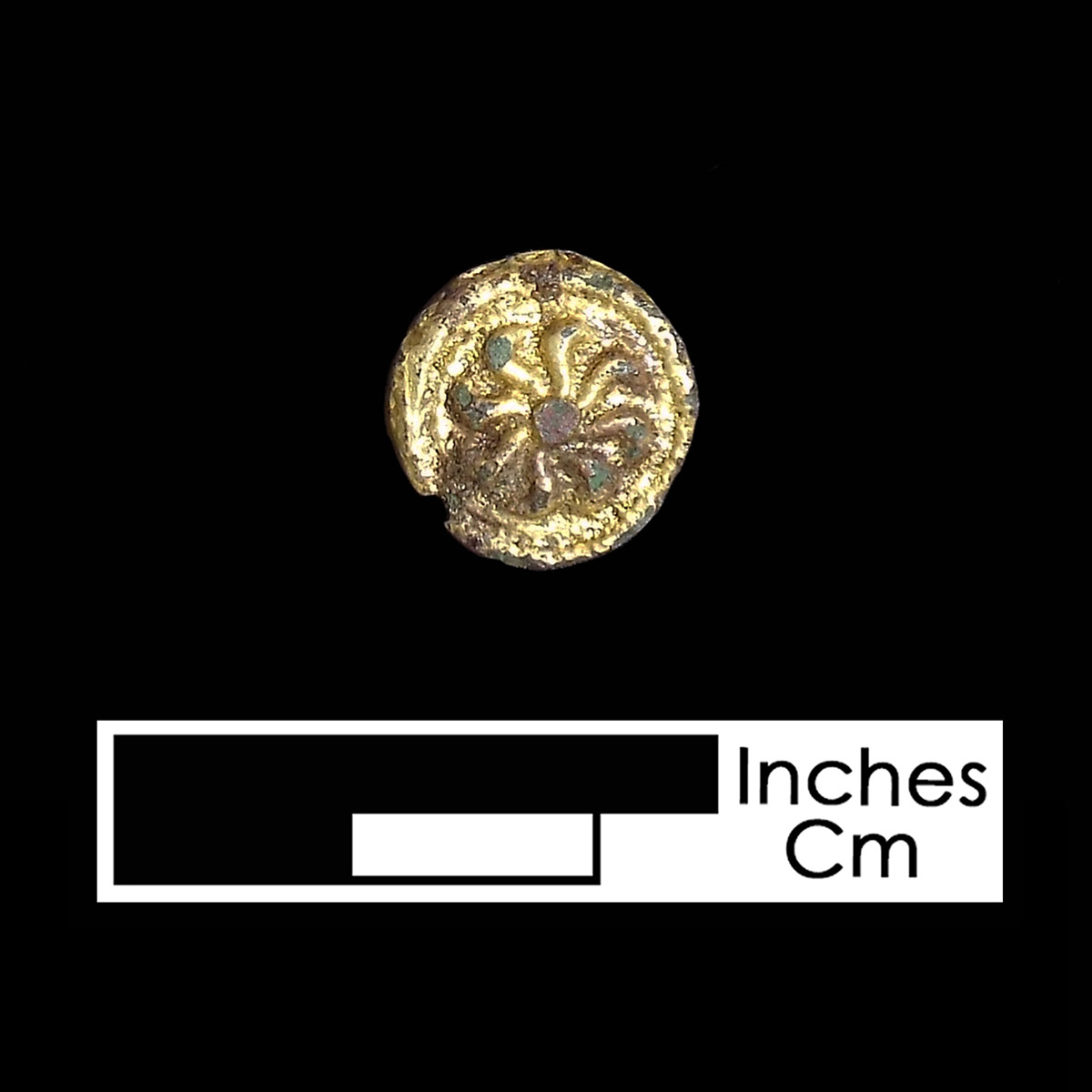
A number of embellished leather ornaments ranging in complexity of decoration have been recovered from Jamestown as well. At least six of the leather ornaments were decorated by plating the copper alloy with an additional material to give it a silver or gold appearance. While it’s possible that more of the leather ornaments initially were coated, only four artifacts visibly still appear to be tinned and two show evidence of gilding. Seven leather ornaments were stamped with a decoration. The two gilt artifacts are stamped with a pinwheel design, while five other leather ornaments were stamped with a Tudor Rose.

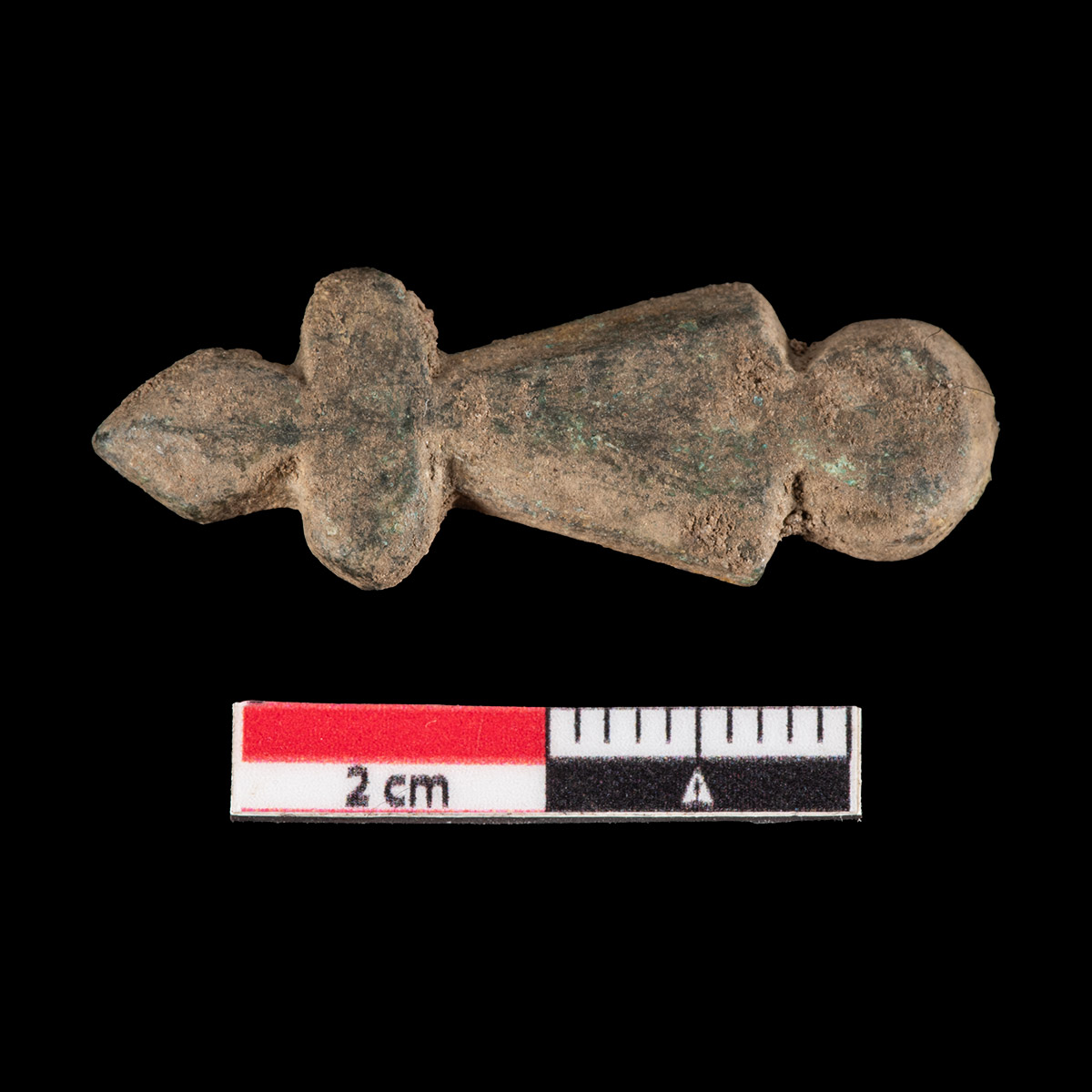
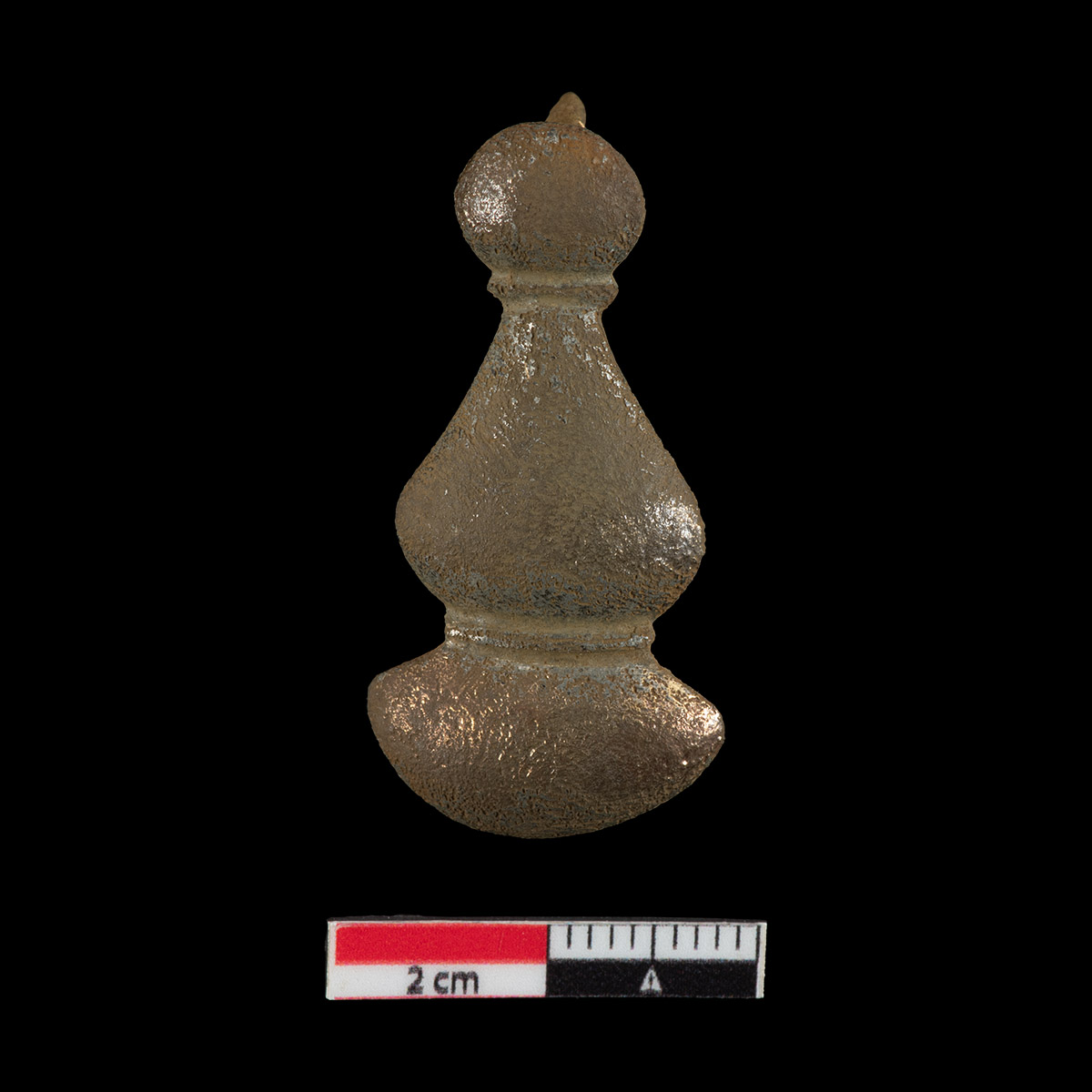
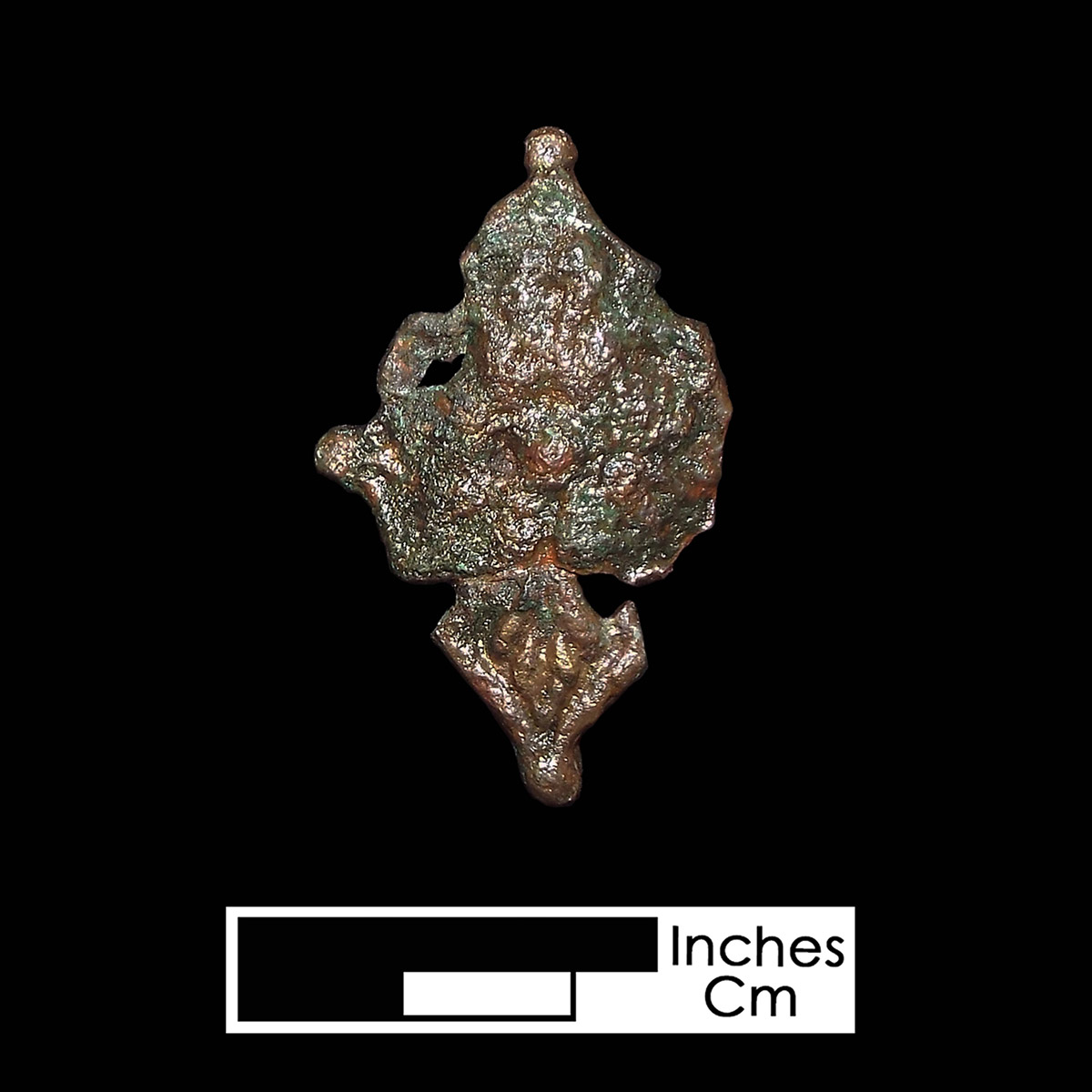
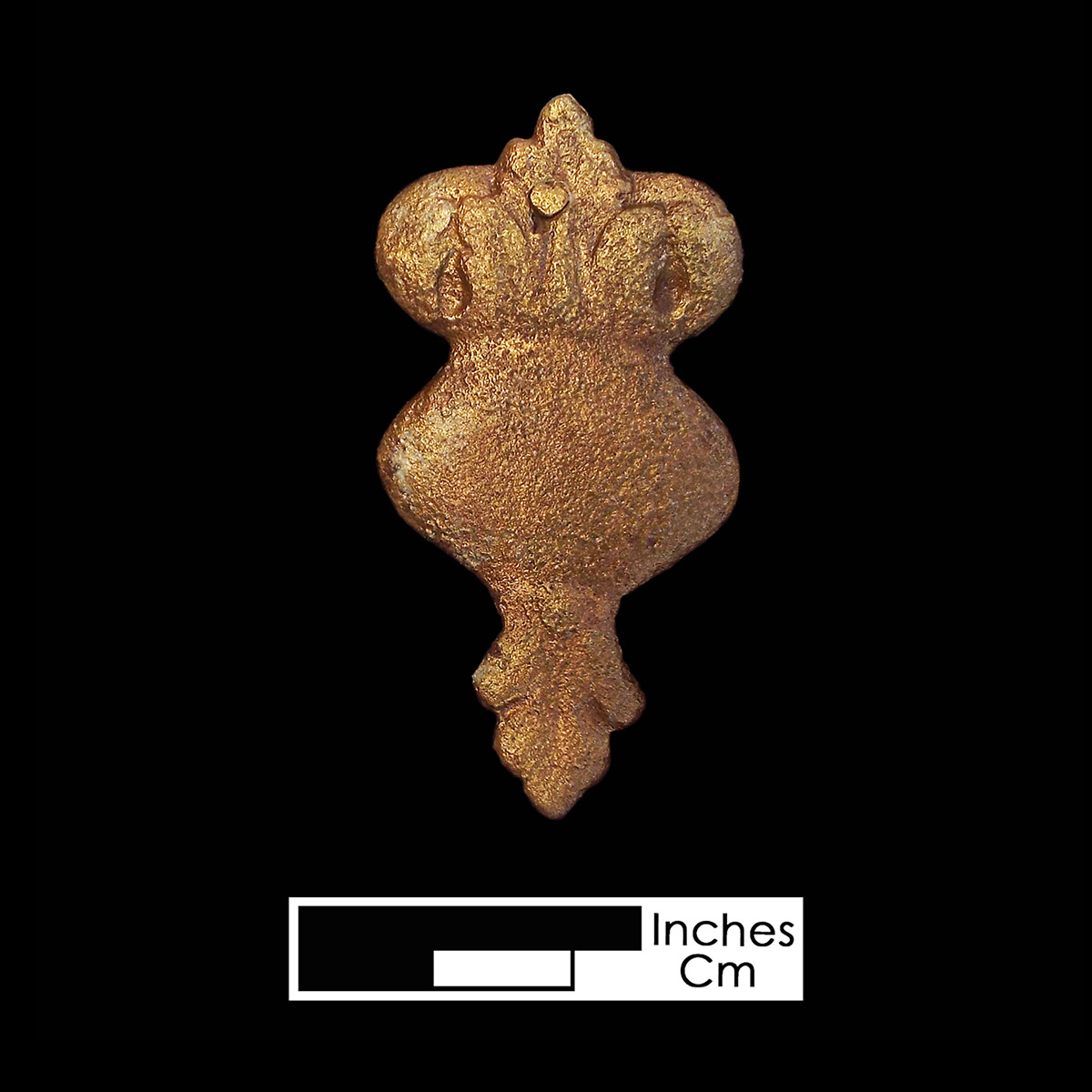
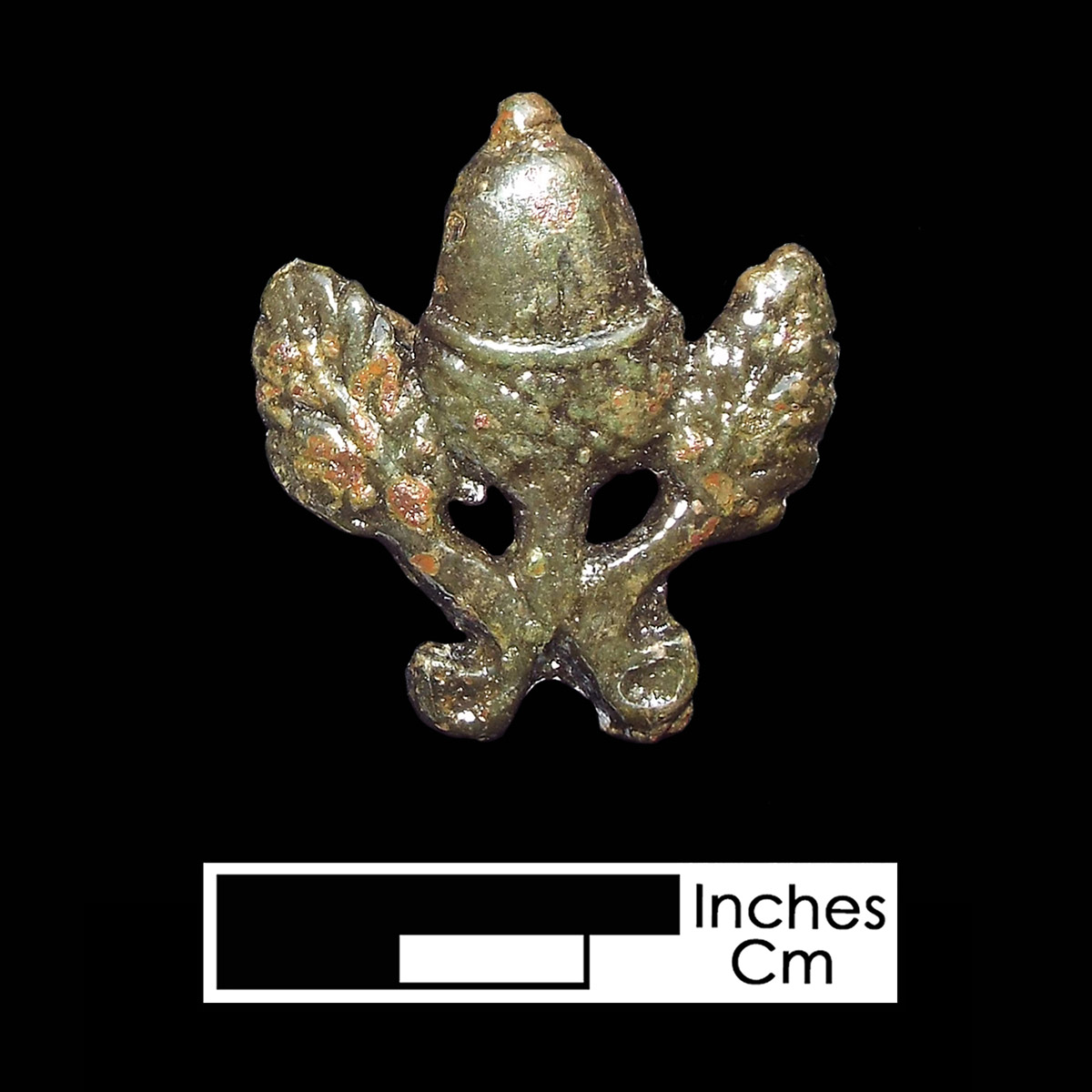
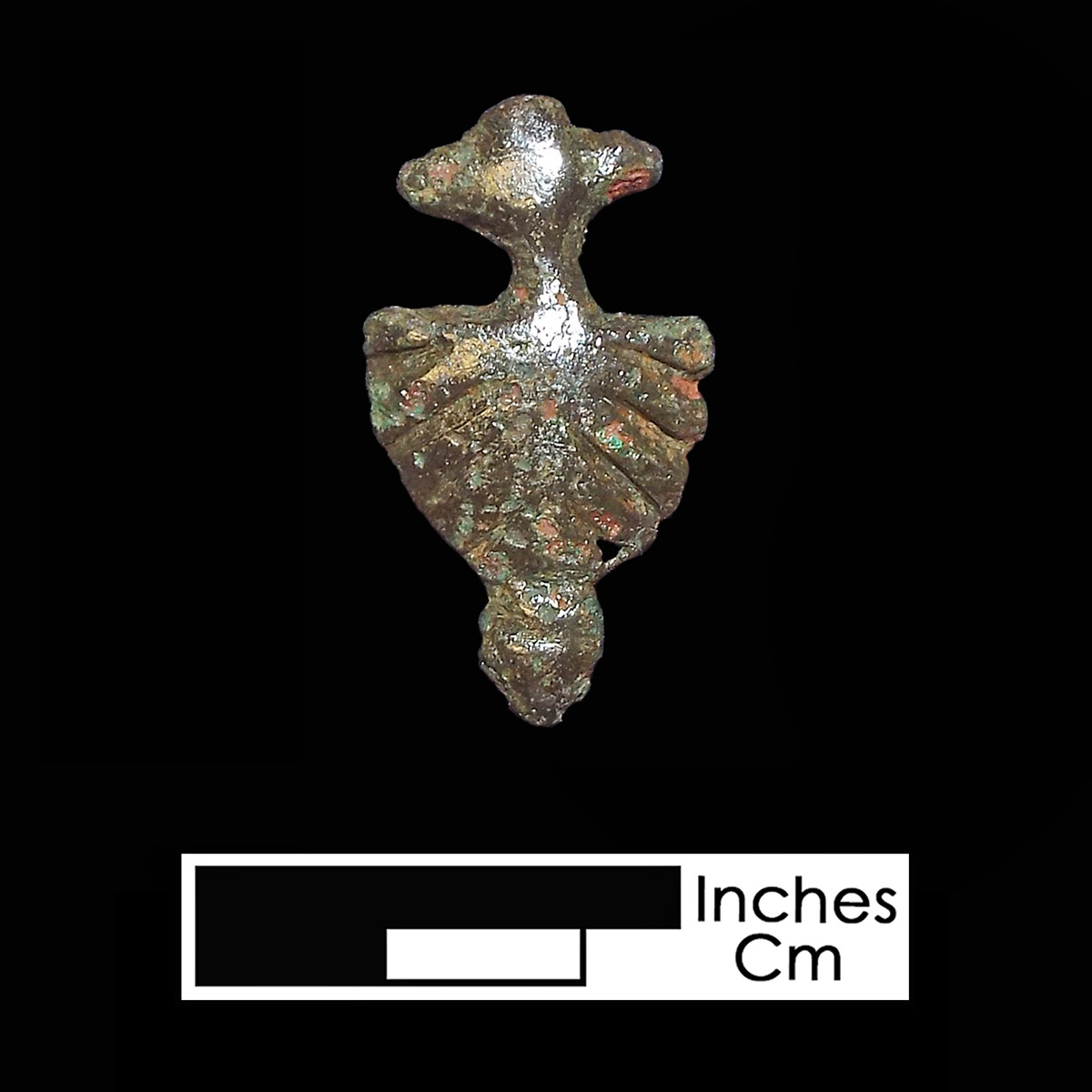
The most commonly used decorative technique for the leather ornaments found at Jamestown was accomplished by casting the copper alloy into various shapes including acorns, arrows, or floral motifs. Many of these shapes are used in armorial imagery in various heraldic crests.

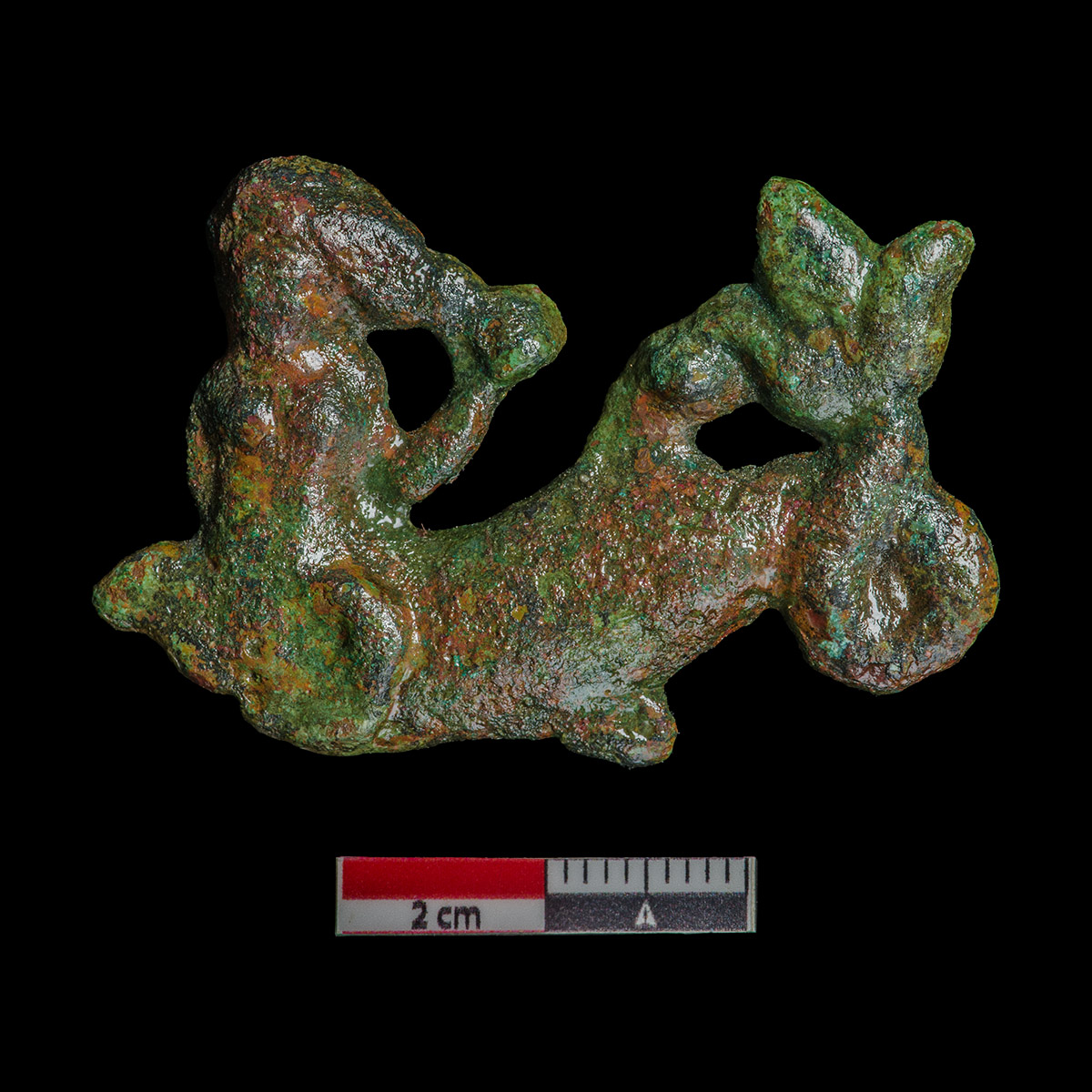
One of the most elaborate cast leather ornaments depicts a mermaid, one of the few figurative examples found to date.  She is portrayed brushing her hair with her left arm, and the end of her tail curls over on itself and terminates in a trefoil. With four clenched attachment tangs on the reverse, this ornament was most likely used as a decorative element rather than a strictly functional one. In the 17th century, depictions of the mythical mermaid were popular in many cultures including England. To a superstitious seafarer, seeing a mermaid or hearing a mermaid’s song could have been a good or bad omen for the journey. To some, mermaids signified beauty and benevolence, and they had the ability to quiet a storm, often why figureheads of ships were mermaids. Others thought a mermaid sighting predicted bad weather ahead or doom for the voyage. Like the sirens’ song heard by Odysseus, mermaids were symbols of humanity’s vanity or temptation, and it was believed that a mermaid’s song would entrance lonely sailors and lead them to drown in the ocean or cause the ship to be steered off course and shipwrecked. The first English translation of The Odyssey was completed and published in London in 1616, perhaps contributing to this 17th century superstition.

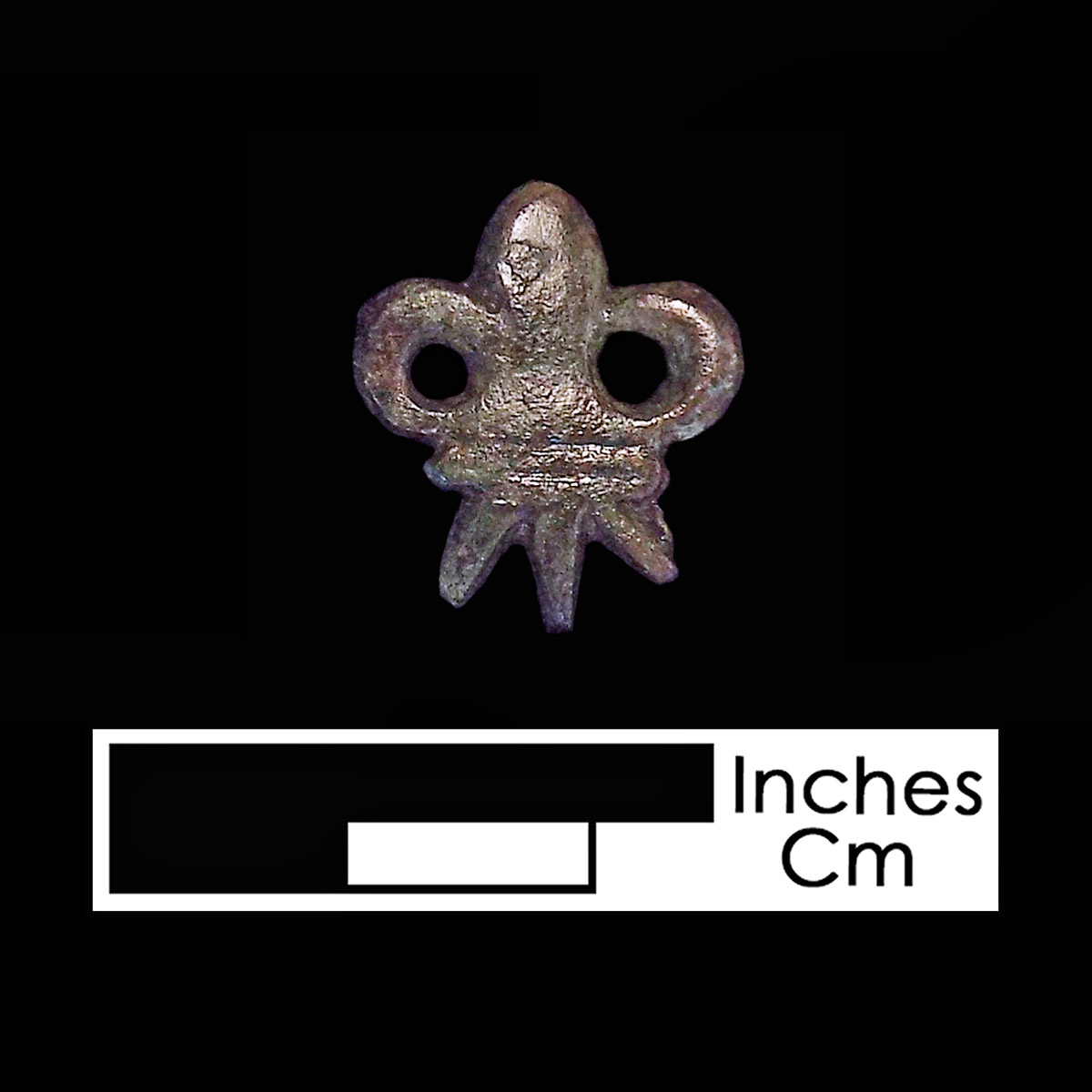
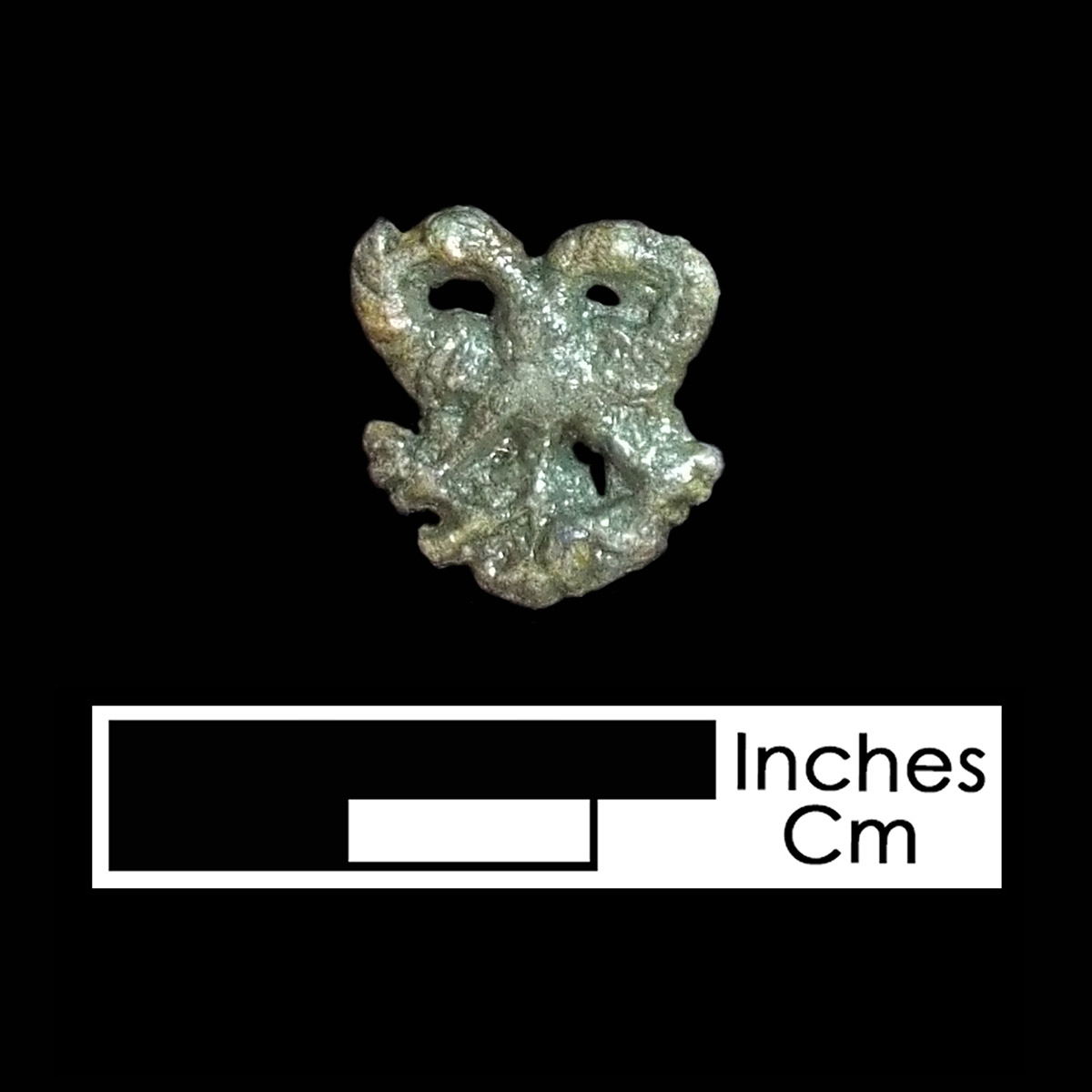
Other leather ornaments exhibit elaborate openwork casting. While a couple of the openwork ornaments were made in basic shapes such as the arrow or lozenges, the most common of these decorations is a fleur de lis motif. Like the others, fleur de lis are common armorial symbols used throughout Europe, including on the coat of arms of England. The most complex of these openwork casted examples is a double-headed eagle, a motif that can signal power, depicted on a number of other artifacts in Jamestown’s collection including tokens, medallions on Bartmann Jugs, and even a locally made pipe found in April 2022 suspected to have been stamped with a signet ring.

related images