

July was Kids Camp month! Jamestown Rediscovery hosted two sessions of twelve kids eager to learn about archaeology last month. Guided by Jamestown’s archaeologists, the kids dug at a site north of the Memorial Church. The squares there turned out to be chock-full of artifacts, giving our collections staff plenty of work conserving and curating their finds. Before beginning their excavations, the campers attended Archaeology 101 lectures given by our archaeologists and collections staff. Once out in the field our team worked side-by-side with the campers, guiding their trowels and helping them screen excavated soil for artifacts.

There’s more to archaeology than just playing in the dirt. Ground-penetrating radar (GPR) is used at Jamestown extensively, both as a way to find features and inform their excavations and also as a time saver by showing where there aren’t archaeological resources. The archaeology team explained the physics behind the technology and then let them take the wheel of one of the GPR machines, guiding them as they got a real-time look at soil beneath them as revealed by radio waves.
In the Rediscovery Center the campers participated in a mending exercise, piecing together sherds from reproduction ceramics. In the same way our conservators mend ceramics found by our archaeologists, the campers used painter’s tape to stabilize sherds once they found connecting pieces. Another exercise the kids participated in drove a point home . . . archaeologists often study trash from the past in order to learn about people from the past. Archaeologists brought some of their (cleaned) trash in and the kids examined it, learning what they could about the person who discarded it. Finally, the campers tried to match the trash to the person who brought it in.

In the Archaearium museum, the kids were given a tour and then participated in a scavenger hunt, searching for artifacts on exhibit using clues provided by staff. In the Vault, our curators prepared a selection of artifacts for the campers to examine, based on requests from the kids themselves. Included in the artifacts brought out by the curatorial staff were coins, jewelry, weapons, beads, ceramics, and bone artifacts. Speaking of bones, Assistant Curator Magen Hodapp, our resident zooarchaeology specialist, gave the campers a lecture on faunal remains at Jamestown and what they can tell us about the colony.

The campers also visited the Ed Shed, trying their hands at the activities there, including picking through tiny objects excavated from James Fort’s first well, searching for artifacts. They also visited the blacksmith shop inside James Fort, built on the spot where it was found archaeologically, with one of our blacksmiths giving them a demonstration of his work.
Three new archaeologists were on hand this year to help guide the kids during their excavations. Elizabeth Tarulis, Site Supervisor, joins us from the University of Tennessee where she was a graduate fellow at the Denbo Center for Humanities & the Arts. She has successfully defended her doctoral dissertation and is now crossing her “t’s” and dotting her “i’s” before it’s published. She attended two field schools during her undergrad years, one at James Madison’s Montpelier, and one at Robert H. Treman State Park in New York. As a graduate student, she attended a field school at Burial Hill, in Plymouth Massachusetts. One of her fondest archaeological experiences was finding a quartz crystal — placed there to protect the building — in a posthole for a building in Montpelier’s South Yard. When not digging, Elizabeth enjoys baking and hiking.

Archaeological Field Technician Gabriela Bombino also dug at Montpelier, interning there in 2023/2024. She helped excavate an overseer’s house site while there, and found artifacts including a hand painted polychrome pearlware tea cup, and a piece of slate bearing writing. Her work was part of an effort to compare the lifestyles of the overseers with those enslaved at Montpelier and the Madison family. Gaby also attended two field schools, the first at Jupiter Inlet Lighthouse and Outstanding Natural Area in Florida, where she investigated climate change impacts to the area and helped excavate a cistern built for the lighthouse keeper. Her second field school was at Montpelier. She received her bachelor’s degree from Florida International University in Sociology/Anthropology and Geography. Gaby also enjoys working with her hands in her free time, doing a variety of crafts.
The third new archaeologist, Amelia Fahl, is an alumna of Jamestown’s field school, joining us last summer and then staying on for an internship afterwards. While at Jamestown, she dug just south of the Archaearium and then in the area just west of James Fort, at the William Leal site. She received her bachelor’s degree from Indiana University in anthropology with a focus on archaeology. Amelia is a movie buff and she makes a point of visiting the theater once a week, popcorn and Icee in hand.

In the Rediscovery Center, our collections team is happy to be joined by several college-age volunteers interested in pursuing a career in an archaeology-related field. In June and July the volunteers contributed over 300 hours of work, including picking through artifacts from layer “N” of James Fort’s first well, a context filled with ash, oyster shells and thousands of other artifacts. Completing the curation of this artifact-rich layer has been a long process and the staff are happy to put this one to bed.

Some of the volunteers joined Assistant Curator Lindsay Bliss on the Seawall for the flotation of soil samples. Thanks to Lindsay’s and the volunteers’ efforts, almost 250 sandbags containing soil samples have been completed, with another 25 to 30 to go. The volunteers are also spending time labeling ceramics with their Jamestown Rediscovery context, ensuring that the location from which the artifact was excavated on the site is preserved with the artifact. Maintaining an artifact’s context is critical. Without context, the artifact would lose its meaning, and our understanding of the site would be incomplete. The labeler applies a thin layer of Paraloid B-72 to the artifact to serve as a base adhesive, and then a small paper label bearing the context number is pressed on to the artifact. A final layer of B-72 is then applied to cover the label. Because B-72 can be removed with acetone, the entire process is reversible. Applying these tiny labels is a job for young eyes and so the volunteers are well suited to the task.
In the 17th century bullets (called “lead shot“) were round, with conical ammunition not being widely adopted until the mid 19th-century. This month Janene Johnston produced the reference collection for bullet molds, the tools that created these round bullets. There are a few styles of bullet molds, but the only type found by our archaeologists are shaped like pliers. The business end of the mold (the “head”) is shaped like a hollow ball with a small hole present through which molten lead was poured. Once the lead was sufficiently cooled, the mold can be opened and the shot can be retrieved. The resulting “sprue” at the top of the mold would then usually be snipped off, though was also sometimes left on.

There are about one hundred bullet molds in the Jamestown collection, all of them made of iron. The size of the shot created was determined by measuring the diameter of the mold’s interior, and they range from about 40 to 68 caliber, though there do appear to be several that are not measurable that would be outside of that range. Almost all of the bullet molds (95%) come from contexts dating to the Virginia Company period (1607-1624), with 70% dating specifically from 1607-1610. Janene is choosing representative examples of each, based on caliber, completeness, and head shape. There are two different head shapes in the collection. Though both are ball-shaped on the interior and most are ball-shaped on the exterior, we have a few examples that are flat on the outside.

Biological Anthropologist Dr. Ashley McKeown and Curator/Osteoarchaeologist Emma Derry have completed their analysis of the three colonists who were excavated from the 1607 Burial Ground last year. Ashley is a professor at Texas State University who has provided her expertise to the Jamestown Rediscovery project for over 25 years.
Biological Anthropologist Dr. Ashley McKeown and Curator/Osteoarchaeologist Emma Derry have completed their laboratory analysis of the three colonists who were excavated from the 1607 Burial Ground last year. Ashley is a professor at Texas State University who has provided her expertise to the Jamestown Rediscovery project for over 25 years
The first individual, JR1454B, was likely male as was everyone buried in the 1607 burial ground; English women didn’t arrive in the colony until October 1608. The size and robustness of the skeleton, especially the heads of the femurs, helped Ashley and Emma arrive at that conclusion. Based on tooth wear and complete epiphyseal fusion (the process by which a cartilaginous growth plate at the ends of bones solidify into bone as a person finishes growing, typically completed around the age of 20), they estimate the age of the colonist to be between 24 and 40. Several aglets were found near the waist; this is possibly evidence of a clothed burial, which was unusual at the time. The remains were in fair to poor condition, with about 50% of the bones intact.
The position of JR1486B’s body, the second individual excavated last fall, indicates they may have been shrouded prior to burial. Like JR1454B, several aglets were found near their waist. This person was likely male because they were buried prior to the arrival of women, but Ashley and Emma were unable to verify that during their observations because of the individual’s young age. This individual is thought to have been between 14 and 16 based on dental development and an unfused epiphysis on the right tibia. Poor preservation in the other long bones have made it impossible to view their progression of ephiphyseal fusion. The overall skeleton is in poor condition. While the cranium is 50-75% complete, the rest of the bones are only about 25-50% intact.

The final colonist excavated in 2025, JR1850B, is estimated to be male based on cranial features and the size and robusticity of the rest of the skeleton. The remains were in fair condition, with more than 75% of the cranium intact and 50-75% of the rest of the skeleton intact. Ashley and Emma estimate the individual to have been between 19 and 30 years old, probably in the lower end of that range, based on the presence of third molars with slight wear, complete epiphyseal fusion, and the absence of degenerative changes at the joints.

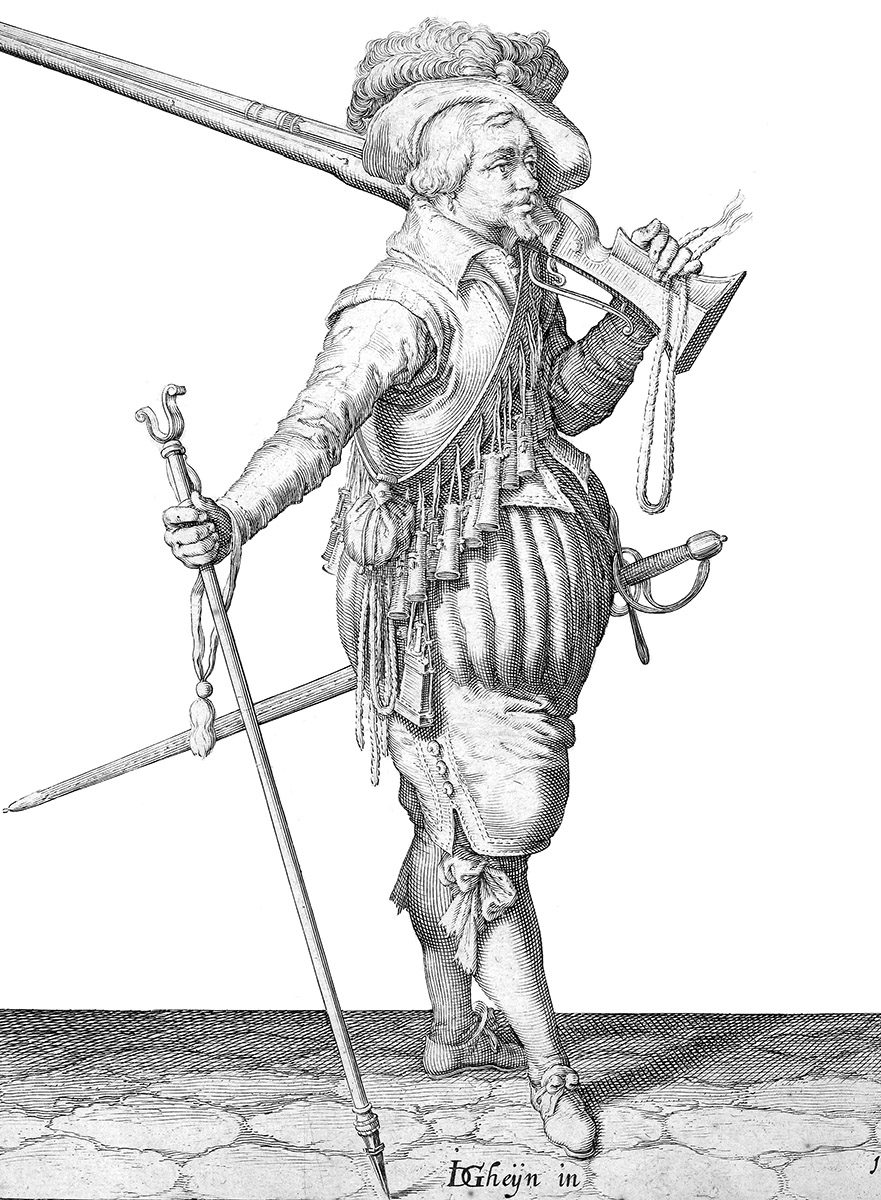
In the lab, Senior Conservator Dan Gamble is treating bandolier chargers chosen by Janene for inclusion in that artifact type’s reference collection. Bandolier chargers were filled with a pre-measured volume of gunpowder and were capped and then strung to a bandolier, a belt hung over one shoulder and then draped diagonally across the musketeer’s body. Each charger held enough gunpowder for one firing, simplifying the otherwise slow, complicated, and dangerous process needed to fire a musket. Dan peers through a microscope and uses a scalpel to remove corrosion and then uses a variety of chemical treatments including ethyl alcohol, acetone and benzotriazole to stabilize and preserve the chargers.
It is rare for organic artifacts to survive underground for hundreds of years. Proximity to copper is one of the few circumstances that enables that survival, due to copper-based chemical reactions that kill organics-consuming bacteria. But in this case, these reactions are a hindrance, causing corrosion that Dan needs to remove as part of his conservation process. Particularly corroded examples can take two or three days to complete.
Dan’s labmate Conservator Jo Hoppe, is treating a previously-conserved wine bottle, the mends of which are failing. It also feels dusty to the touch, a sign that the surface layers are degrading. A conservator’s job is never done and observation and retreatment are fundamental aspects of Jo’s job. What’s more, the science of archaeological conservation is always advancing, and new techniques and chemicals replace older ones if they prove to be superior. This bottle was found in a late-17th-century brick-lined wine cellar in 2004 along with several other well-preserved onion-shaped examples.

Jo first took the bottle apart so as to re-treat each individual piece. To achieve this, she placed the bottle in an acetone tent, whereby gaseous acetone gently weakens the bonds from the previous mending. She’s using Paraloid B-72 as a consolidant, to shore up the existing glass and to create a barrier from the environment to prevent further degradation. The substance serves many purposes in archaeological conservation, its use determined by the concentration of B-72 in solution. She uses a low concentration solution so that it penetrates into all the tiny crevasses of the glass. Once the individual pieces have been treated, she joins them again, using a higher concentration B-72 solution to create an adhesive that she applies to the shards’ edges. Hopefully this bottle will be stable for years to come, but regular checks ensure that it will receive any additional treatments it requires.
The exhibit “Following the Dragon: Chinese Ming Porcelain in Early Jamestown” has completed its run at Jamestown Settlement. Senior Curator Merry Outlaw, a prime mover of the exhibit and owner of some of the comparative, more complete examples displayed alongside artifacts found by Jamestown Rediscovery archaeologists, has spent much of July performing post-exhibit tasks. She is assessing the condition of the artifacts loaned by Jamestown Rediscovery to make sure nothing was damaged while they were in the care of Jamestown Settlement, a required post-exhibit task for museums who loan their items to other cultural institutions.

Merry is also working closely with Senior Staff Archaeologist Dr. Chuck Durfor to create a virtual version of the exhibit similar to those he created for the Archaearium museum and the University of Connecticut’s aDNA lab. Chuck is an accomplished photographer whose work serves as a visual record of the Jamestown Rediscovery project (including providing many of the images used in these dig updates). He and Merry are working to bring as much of the exhibit experience to web users as possible using virtual tour software. The software allows users to virtually roam the exhibit, walking through each area and examining every object on display, along with its accompanying text. Once it’s complete, the tour will be available on both the Historic Jamestown and Jamestown Settlement websites.
related images
-

- Staff Archaeologist Natalie Reid leads an exercise with campers in the Jamestown Rediscovery Center.

-

- Campers ask Staff Archaeologist Ren Willis questions as they try to figure out whose trash belongs to who.

-

- Campers try to mend reproduction ceramics in a conservation exercise.

-

- Kids draw their mended ceramics in their journals.

-

- Assistant Curator & Zooarchaeological Specialist Magen Hodapp gives a zooarchaeology lecture to the Kids Camp attendees.

-

- Campers troweling away north of the Memorial Church

-

- A screenful of artifacts found by Kids Camp attendees

-

- Archaeological Intern Natalie White guides a camper during his screening.

-

- An almost-complete projectile point found by a Kids Camp attendee

-

- The moment of discovery! A Kids Camp attendee finds something that catches his eye while screening.

-

- Archaeological Field Technician Katie Griffith guides campers in their excavations north of the Memorial Church.

-

- Ceramic sherds found by Kids Camp attendees

-

- A camper holds a sherd of ceramic that she found while screening.

-

- “We’re gonna need a bigger screen.”

-

- Staff Archaeologist Caitlin Delmas helps a camper discard soil that has been screened.

-

- A Nueva Cadiz bead found by a camper

-

- A Kids Camp attendee examines a ceramic sherd he found while troweling.

-

- Archaeological Field Technician Gaby Bombino works with a camper to screen excavated soil for artifacts.

-

- A Kids Camp attendee holds some of the (heavily corroded) nails she found while screening.

-

- A camper trowels soil in a square north of the Memorial Church.

-

- Staff Archaeologist Ren Willis helps a camper look for artifacts in excavated soil.

-

- A fragment of a pipe bowl found by one of the the Kids Camp attendees. This was made in Charles City, Va. by the “Star Maker” pipe makers ca. 1640. One of the arms of a star can be seen on the bowl.

-

- A camper displays a ceramic sherd he found while troweling.

-

- Staff Archaeologist Natalie Reid leads the kids on a tour of the 1680s Church Tower and Memorial Church.

-

- Director of Archaeology Sean Romo teaches Kids Camp attendees how to use the ground-penetrating radar machine.

-

- In the Ed Shed a camper picks through objects found in James Fort’s first well, sorting them by category.

-

- Kids Camp attendees sort tiny objects excavated from the John Smith Well.

-

- A camper uses a magnifying glass to zoom in on the tiny objects she’s sorting that were found in the John Smith Well.

-

- “What is it?” A camper carefully examines a small object in order to place it in the appropriate petri dish.

-

- Attendees of 2026’s first Kids Camp session

-

- Bullet molds in the Jamestown collection

-

- With its bonds weakened by the acetone tent, Jo can pry apart the previously-mended pieces without damaging the wine bottle.

-

- The wine bottle being conserved by Conservator Jo Hoppe sits in an acetone tent to allow gaseous acetone to gently weaken the adhesive holding its mends together.

-

- Volunteer Meredith Colburn conserves a bandolier charger.

-

- Following the Dragon virtual exhibit: One of many pop-up photos showing a close-up of a Jamestown artifact and related ceramic.

-

- Following the Dragon virtual exhibit: Photo and text describing the context from which artifacts were recovered.